 aiGrocery
Fake discounts at the supermarket: how to check if the Black Friday deal is real (and how to claim)
Team at aiGroceryWritten with AI assistance19 min readIn summary
- Spanish law is clear: if a supermarket strikes out a previous price, that price must be the lowest that has been applied to that same product in the 30 days prior, according to Article 20 of the Retail Trade Regulation Act.
- The Catalan Consumer Agency fined Lidl with a proposal of 77,001 euros, which the chain paid reduced to 38,500.50 euros for early payment; part of the fine is for advertising false discounts, according to Infobae's report on November 6, 2026.
- The OCU warns that on Friday, November 27, 2026, there will be more price increases than decreases during Black Friday: in its analysis of the previous year, only 35% of products decreased in price while 37% increased (El Independiente, November 6, 2026).
- In food, the tricks are not the crossed-out price of a television: they are the large packaging that costs more per kilo, the disguised shrinkflation as a sale, and the 2x1 with the unit price marked up.
- Without proof, there is no claim, and the proof is your previous receipt. Keeping receipts from November allows you to demonstrate in December that the "before" was not the before.
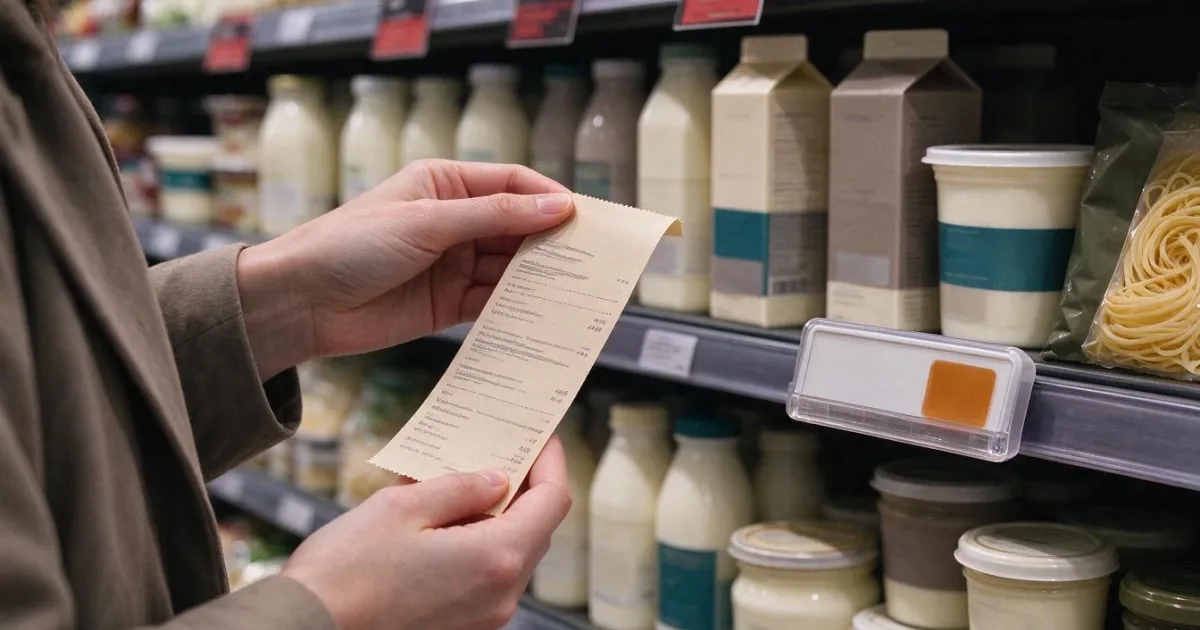
If you fill up the cart every week, you have already noticed: the basket does not return to what it used to cost. The general CPI remained at 4.9% in October 2026 according to the leading indicator from the INE published on October 30, 2026, and the OCU estimates that the shopping basket has accumulated a rise of 39.5% over five years. Against this backdrop, Black Friday arrives, along with a very specific question: when you see a crossed-out price on the shelf, is that "before" real? This guide explains what the regulation exactly states, how to check a food offer in two minutes, and how to claim with evidence. And since the proof is always the receipt, you will see at the end why a tool like aiGrocery, the miniapp from AIsToHire to scan supermarket receipts and track spending, fits perfectly into the gap left by this article.
What happened with Lidl in Catalonia and why it affects you
The Catalan Consumer Agency resolved in November 2026 a case against Lidl for, among other things, advertising false discounts. The proposed fine was 77,001 euros and the chain opted for the reduction for early payment, paying 38,500.50 euros, according to the information published by Infobae on November 6, 2026. It affects you because the case is not about electronics or fashion: it is about milk, pasta, and eggs.
The case was opened in April 2024 following a complaint from FACUA. According to that same information, inspectors found products with "previous" prices artificially inflated; the cited example is a carton of lactose-free milk offered at 0.99 euros with a crossed-out previous price of 1.03 euros, when 0.99 euros was already the usual price the previous month. In other words: the discount existed on the sign, not at the register.
| Lidl case data | Detail |
|---|---|
| Authority | Catalan Consumer Agency |
| Proposed fine | 77,001 € |
| Amount paid (early payment) | 38,500.50 € |
| Concepts | Deceptive advertising for false discounts (35,000 €), lack of cooperation with inspection (35,000 €), and receipts not written in Catalan (7,001 €) |
| Origin | Complaint from FACUA, case opened in April 2024 |
| Resolution | November 2026 |
Source: Infobae, November 6, 2026.
Two useful readings for shoppers. The first: false discounts in food are actually sanctioned, they are not just a forum complaint. The second, and more important: the case arose from a complaint with evidence. Someone had noted how much that carton cost the previous month.
What the 30-day rule says, in plain language
The rule is a single sentence: when a business advertises a product with a price reduction, the previous price shown must be the lowest that has been applied to identical products in the thirty days preceding. This is stated in Article 20 of Law 7/1996 on the Regulation of Retail Trade, which also requires that the previous and reduced prices are clearly displayed on each item.
It is not an isolated Spanish rule. It comes from the Omnibus Directive (EU) 2019/2161, which harmonized this obligation across the EU and has been applied in Spain since 2022. Therefore, the same rule applies in the supermarket aisle, on the chain's website, and in its app.
What the rule does allow and is good to know:
- New products. If the item is being sold for the first time, there is no previous price to show.
- Near expiration date. Article 20 expressly excludes from the calculation the prices applied to reduce food waste on products with expiration or preferred consumption dates approaching. That last-minute yellow sticker does not "reset" the reference price.
- Lowering the price and keeping it low. Nothing prevents a chain from lowering a price and keeping it low. What it cannot do is raise it to be able to cross it out later.
What the rule does not allow:
- Raising the price two weeks before the campaign and using that inflated price as "before".
- Crossing out a catalog price or a recommended retail price that the store has not actually applied in those 30 days.
- Presenting as a discount a difference calculated on a format or reference different from the one you are buying.
The fines are not symbolic. In Andalusia, for example, the penalties for consumer violations range from 150 to 10,000 euros for minor infractions, from 10,001 to 100,000 for serious ones, and from 100,001 to 1,000,000 for very serious ones, extendable up to ten times the illicit benefit obtained, according to Consumo Responde of the Junta of Andalusia. Each community has its own sanctioning regime, and the case of Lidl in Catalonia fits within that order of magnitude.
How many Black Friday discounts are real, according to 2026 data
The short answer: quite a bit fewer than what the sign announces. The OCU analyzed more than 14,000 prices in 60 online stores and concluded that in the last Black Friday only 35% of the products decreased in price compared to their minimum in September and October, while 37% were more expensive. These are data from electronics and appliances, not food, and it is worth mentioning: the OCU itself limits its sample there.
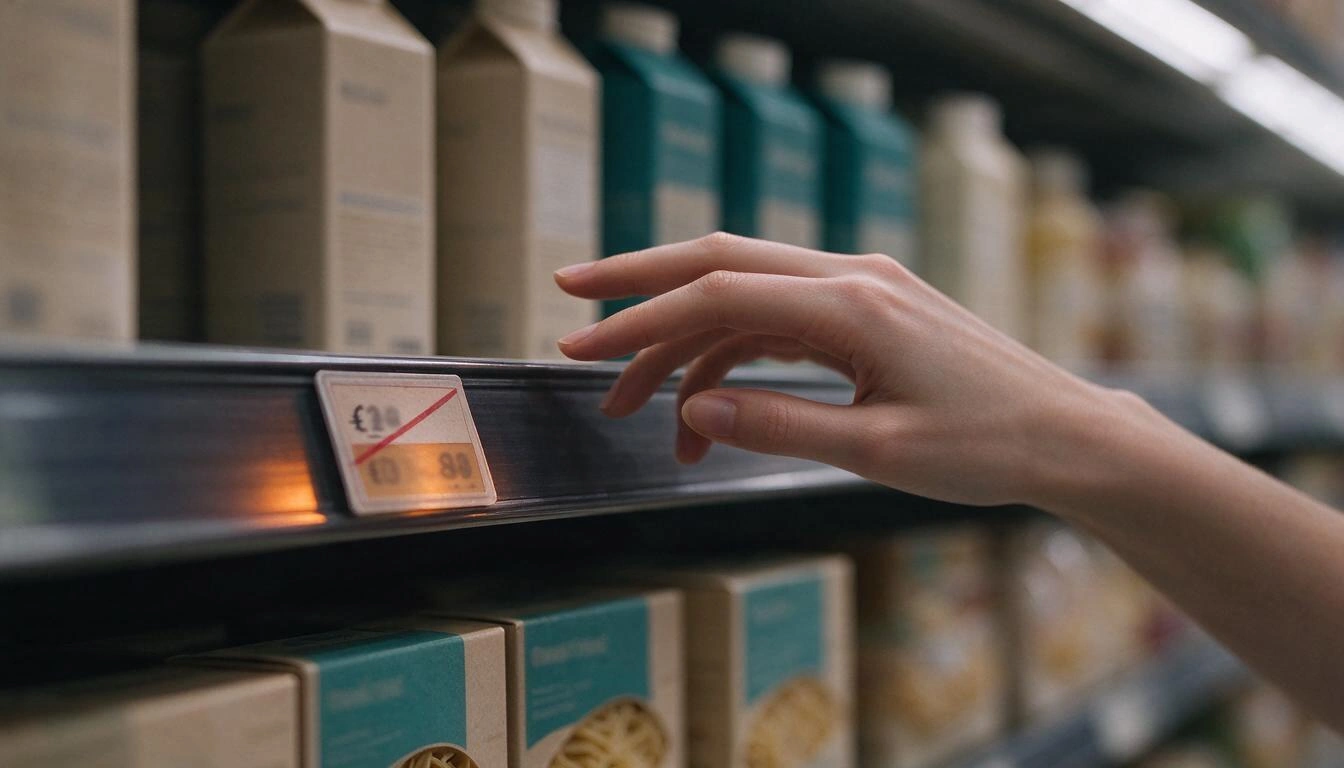
The hardest detail of the analysis: in seven specific platforms (Devoraprecios, Electrotres, Etendencias, Nuevoelectro, Electrónica Vicente, Mielectro, and ClickElectrodomésticos), 90% or more of the discounts were not calculated based on the reference price required by law, but rather on inflated prices. Again: these are electronics stores, not supermarkets. But they set the pattern that the inspection pursues and that the Lidl case demonstrates also occurs in food.
| Indicator (Black Friday, OCU analysis) | Figure |
|---|---|
| Products that decreased in price | 35 % |
| Products that increased in price | 37 % |
| Average decrease of those that decreased | 8 % |
| Average increase of those that increased | 12 % |
| Consumers who believe prices are raised before the campaign | 70 % |
| Consumers who still believe it is worth buying with information | 76 % |
Sources: El Independiente and Qué.es, November 6 and 7, 2026.
That the average increase (12%) is greater than the average decrease (8%) is the data that best summarizes the campaign: it is not that there are no offers, it is that there is more movement upward than downward.
Distrust has been widespread for years. In a survey by FACUA conducted between November 26 and 28, 2024 among about 2,000 people, 99.6% of respondents believed that businesses offer false discounts on some of their products (FACUA, November 28, 2024). It is perception, not price measurement, but it explains the climate with which the consumer approaches the aisle.
The four typical tricks in food pricing (and how they look on the shelf)
In the supermarket, deception is rarely a spectacular crossed-out price: it’s a difference of cents repeated thousands of times. These are the four patterns that are most useful to recognize, and the first three have something in common: they are detected by looking at the price per kilo or per liter, not the price of the packaging.
1. The inflated previous price a few days before. It’s exactly what Lidl was accused of: raising the usual price shortly before the promotion to have something to cross out. Warning sign: the crossed-out "before" is a strange number, very close to the promotional price, and does not match what you remember paying last month.
2. The discount on the large format when the price per kilo is worse. The sign promises a percentage off the family pack, but the price per kilo of the reduced large format is still higher than that of the small format without a discount. It’s legal; it just doesn’t benefit you. Warning sign: the offer only appears in a specific format.
3. The disguised shrinkflation as a promotion. The packaging maintains the design and the price drops a little, but the net quantity has decreased more. The package price drops and the price per kilo rises. Today, the obligation to notify on the shelf is still not in force: the draft Sustainable Consumption Law approved by the Council of Ministers on July 1, 2025 aims to require clear and visible information when the content is reduced, but as of November 2026, it is still in processing. Until then, the price per kilo is your only warning.
4. The 2x1 (or 3x2) with the unit price raised. The multi-unit promotion is real, but the unit price has been raised just beforehand, so the actual savings are much less than what the sign suggests. And if you only need one unit, there’s no saving: there’s extra spending.

| Trick | What you see on the sign | Where it falls short |
|---|---|---|
| Inflated previous price | "Before 1.03 € · Now 0.99 €" | Your ticket from last month says 0.99 € |
| Discount on the large format | "−20 % on the family size" | The price per kilo of the small one remains lower |
| Shrinkflation with offer | "New lower price" | The price per kilo rises because the package shrinks |
| 2x1 with unit price raised | "Get 2 and pay for 1" | The unit price rose days before the promotion |
How to check a supermarket offer in two minutes
Two gestures are enough: look at the price per unit of measure on the shelf label and compare the "before" with your own previous ticket. The first is mandatory and is right there; the second is the only proof you have of what you actually paid.
The price per kilo, liter, or unit is not an extra courtesy from the chain: the Royal Decree 3423/2000 on the indication of the prices of products offered to consumers requires it to be displayed alongside the sale price, in the same visual field, clearly and unambiguously. It’s in small print in the corner of the label, and it’s the only number that allows you to compare apples to apples.
The complete routine, in order:
- Look at the price per kilo/liter, not the packaging price. Compare it between formats of the same product and between the manufacturer’s brand and the store brand. If the "on offer" format has a worse price per kilo than another without an offer, you already have your answer.
- Check the net quantity. If the package you always buy has gone from 500 to 450 grams, the price per kilo will tell you even if the packaging looks identical.
- Contrast the "before" with your previous ticket. This is the step that almost no one takes and the only one that turns a suspicion into proof. If on your ticket from three weeks ago that product already cost the same as the "discounted price," the discount does not meet the 30-day rule.
- Take a photo of the sign and the shelf label. Make sure the previous price, the discounted price, the product, and, if you can, the date are visible. Promotional signs disappear on Monday.
- Keep the purchase ticket. It’s the document that proves what you paid, when, and at which store.
- If it doesn’t add up, don’t take it and ask at the counter. Many discrepancies are labeling errors and can be resolved right there.
This is where history weighs more than memory. Those who have noted the price per product and store in recent weeks don’t need to remember: they check it. And those who don’t have it, in December won’t be able to prove anything they see in November.
How to claim a false discount, step by step
The order is always the same: first the complaint form in the store, then the consumer agency, and in parallel the consumer association. The complaint to the consumer agency can lead to a sanction file against the company even if you do not get your money back: these are two different avenues and it is good to know this so you do not expect what is not due.
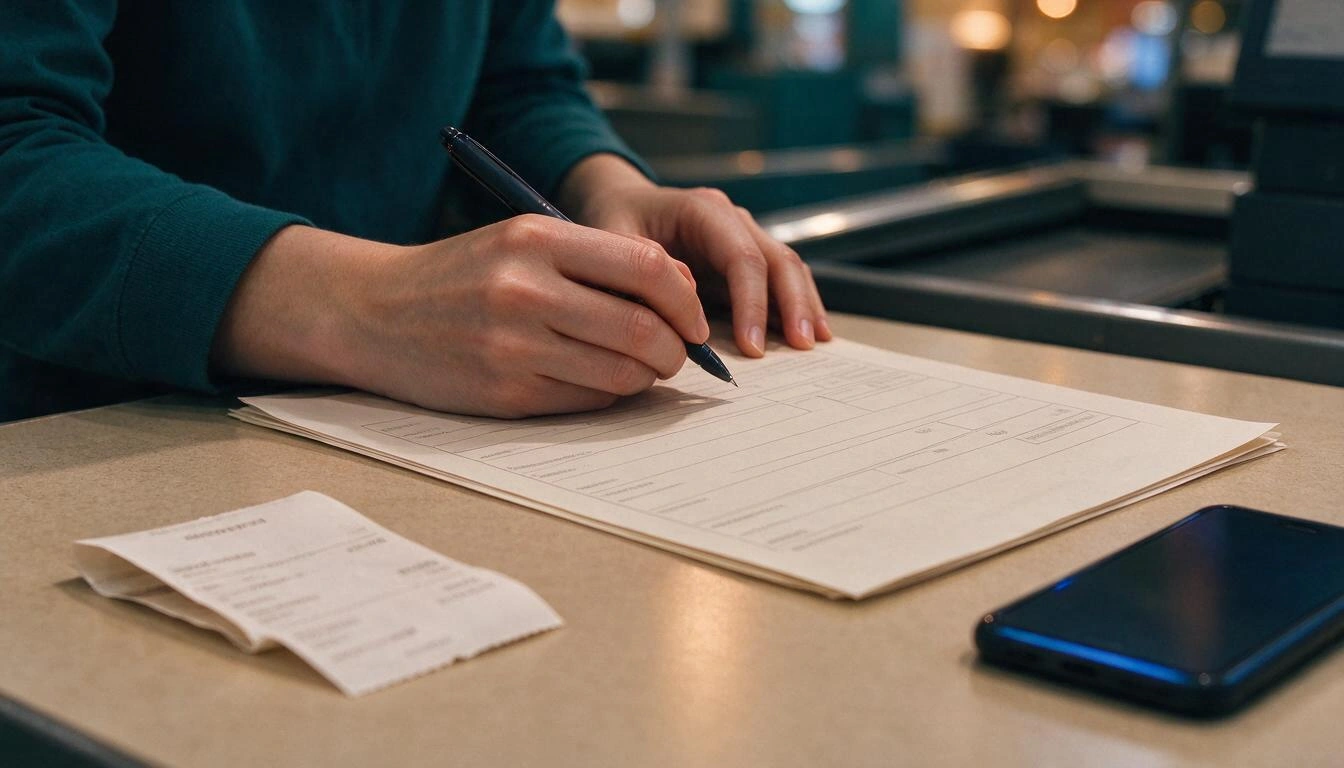
Step 1 · Complaint form at the establishment. Ask for it at the customer service counter. It is an official document with several copies: one is kept by the company, another is for you, and the other is the one you submit to the consumer agency. Describe the facts precisely (product, format, previously announced price, charged price, date, and time) and attach a copy of the ticket and photos.
Step 2 · OMIC of your municipality or General Directorate of Consumption of your community. You present your copy and the agency can mediate between the parties or open a file. According to the OMIC complaint guide from Marbella, if the company gives you the form, it is advisable to wait for their response (there they indicate a period of 10 days) before submitting it to the OMIC, and if they refuse to give it to you, you can request the intervention of the Local Police to draw up a report. The specific deadlines depend on the regulations of each autonomous community.
Step 3 · Consumer association. FACUA, OCU, and the regional associations process collective complaints and have the capacity to give visibility to the case. It is no coincidence that the file against Lidl originated from a complaint by FACUA: a well-documented complaint, combined with other similar ones, is what moves the inspection.
Step 4 · Arbitration Board for Consumption. If you want a binding resolution on your specific case and the company is adhered (or accepts arbitration), this is the fast and free route. According to the consumer arbitration information from the OMIC of Palma, it is a voluntary procedure for both parties and free of charge that ends with a binding award, with effects equivalent to those of a sentence.
| Route | What you achieve | Cost |
|---|---|---|
| Complaint form in store | Reasoned response from the company and official document to follow up | Free |
| OMIC / Regional Consumption | Mediation and possible sanction file against the company | Free |
| FACUA / OCU / association | Processing of the complaint and collective action | Membership fee according to entity |
| Arbitration Board for Consumption | Binding award on your case | Free |
What connects the four steps: none works without evidence. The photo of the sign proves what they advertised; the ticket proves what they charged you; and the previous ticket proves that the "previous price" was not the lowest in the last 30 days. Lacking the third, the complaint remains an opinion.
Why it is advisable to set your reference prices this week
Because the 30-day window that the law looks at for Black Friday on November 27, 2026 starts more or less now, and then comes the Christmas campaign. The prices you pay in the coming days are, literally, your reference proof for the two campaigns.
Today is November 12, 2026. This is the calendar that matters:
| Date | What happens | What you should have done |
|---|---|---|
| Second week of November | The 30-day window before Black Friday begins | Keep weekly purchase tickets and note prices by product |
| Week of November 16 to 26 | Pre-campaign: this is when the prior increases that OCU and FACUA report occur | Photo of the product signs you plan to buy |
| Friday, November 27, 2026 | Black Friday | Compare the announced "before" with your history and with the price per kilo |
| December | Christmas campaign, with seasonal increases in fresh products | Use October and November prices as real reference |
| January | Winter sales | Same criteria: the previous price must be the minimum of the last 30 days |
The underlying context justifies the effort. According to the supermarket study by OCU published on October 24, 2026, which compared 101,520 prices in 690 stores across 189 cities, the basket has accumulated a 39.5% increase in five years, the last year rose by 1.8%, 61.8% of products became more expensive, and choosing the right supermarket can save up to 1,310 euros a year. With those figures, arguing over a few cents per product stops being a habit: it is what separates one purchase from another at the end of the year.
Where aiGrocery Fits into All This
The turning point of this article is simple: no proof, no claim, and the proof is the receipt. This is where a receipt scanning tool stops being a whim for expense control and becomes the document that supports a claim.
aiGrocery, the miniapp from AIsToHire for analyzing supermarket purchases, does exactly that: it photographs the paper receipt or you upload the PDF of the e-ticket, and the AI extracts the store, the date, the total, and each line with its quantity, price, and category. Before saving anything, you see the complete draft and correct whatever is necessary, and if the total doesn't match, it alerts you. From there, you have what you need to check a "before": the historical prices of each product, which store is cheaper, if the packaging has shrunk, and your own personal inflation, as well as monthly and yearly breakdowns by category and by supermarket. The original receipt is accessible from the details, which is exactly what is attached to a complaint form.
And it's worth being honest about what it doesn't do: aiGrocery does not claim on your behalf, does not monitor shelf prices, nor does it tell you if a specific offer meets the 30-day rule. What it does is leave you with the history ready so that you can make that check in two minutes, with data instead of memories.
Frequently Asked Questions about Fake Supermarket Discounts
Is it illegal to raise the price before Black Friday and then lower it?
Raising a price is not illegal in itself. What is illegal is to later announce a reduction using that inflated price as the "previous price": Article 20 of the Retail Trade Regulation Act requires that the previous price be the lowest applied to identical products in the 30 days prior.
Does the 30-day rule also apply to supermarkets and food?
Yes. The obligation affects any offer with a price reduction in retail trade, including supermarkets. The case resolved by the Catalan Consumer Agency against Lidl specifically referred to food products such as milk, pasta, and eggs.
What evidence do I need to claim a fake discount?
At a minimum: a photo of the sign or label with the previous and reduced price, the purchase receipt showing what you were charged, and, if you have it, a previous receipt for the same product that shows what its actual price was in the 30 days prior. With those three elements, the claim is no longer a personal impression.
Where do I claim if I think a supermarket offer is fake?
First, ask for the complaint form at the establishment itself. Then submit your copy to the OMIC of your municipality or to the General Directorate of Consumption of your autonomous community. You can also report through a consumer association and, if you seek a binding resolution regarding your case, go to the Consumer Arbitration Board.
How do I know if a product has shrunk instead of just lowering in price?
By looking at the price per kilo or per liter on the shelf label, which is mandatory according to Royal Decree 3423/2000. If the package price goes down but the price per kilo goes up, the packaging has shrunk. The obligation to expressly notify about shrinkflation is provided for in the draft Sustainable Consumption Law, which as of November 2026 is still in processing.
Will I get my money back if I claim?
Not necessarily. The claim to consumption can open a sanctioning file against the company, which is an administrative route distinct from economic compensation. For a resolution on your specific case, the route is consumer arbitration or, ultimately, judicial. This article is informative and does not replace professional advice nor guarantee any outcome.
When is Black Friday 2026 in Spain?
Friday, November 27, 2026. Many chains extend promotions throughout the entire week prior and up to the following Cyber Monday, which expands the period during which it is advisable to have your reference prices set.
Arrive at Black Friday with Your Prices Already Noted
The difference between suspecting that you've been sold a fake discount and being able to prove it fits in a crumpled piece of paper in your pocket. If you start saving receipts from November now, on November 27 you will have something that most buyers do not have: the actual price you paid for each product during the 30-day window that the law uses as a reference.
Scanning the receipts from this week with aiGrocery, the free miniapp from AIsToHire to control supermarket spending based on your receipts, is the fastest way to arrive at Black Friday and the Christmas campaign with that history ready. Two minutes per receipt now, so you won't have to rely on memory in December.
Start scanning your November receipts with aiGrocery: it's free and in two minutes per receipt, you'll be ready for Black Friday and Christmas with your price history by product and store already done.
Start scanning your November receipts with aiGrocery: it's free and in two minutes per receipt, you'll be ready for Black Friday and Christmas with your price history by product and store already done.Keep reading
View all articles →
How much is spent on groceries per month in Spain (and how to know your actual figure in 4 weeks)

Discussing via WhatsApp or talking in person: what science says about couple conflicts through messages
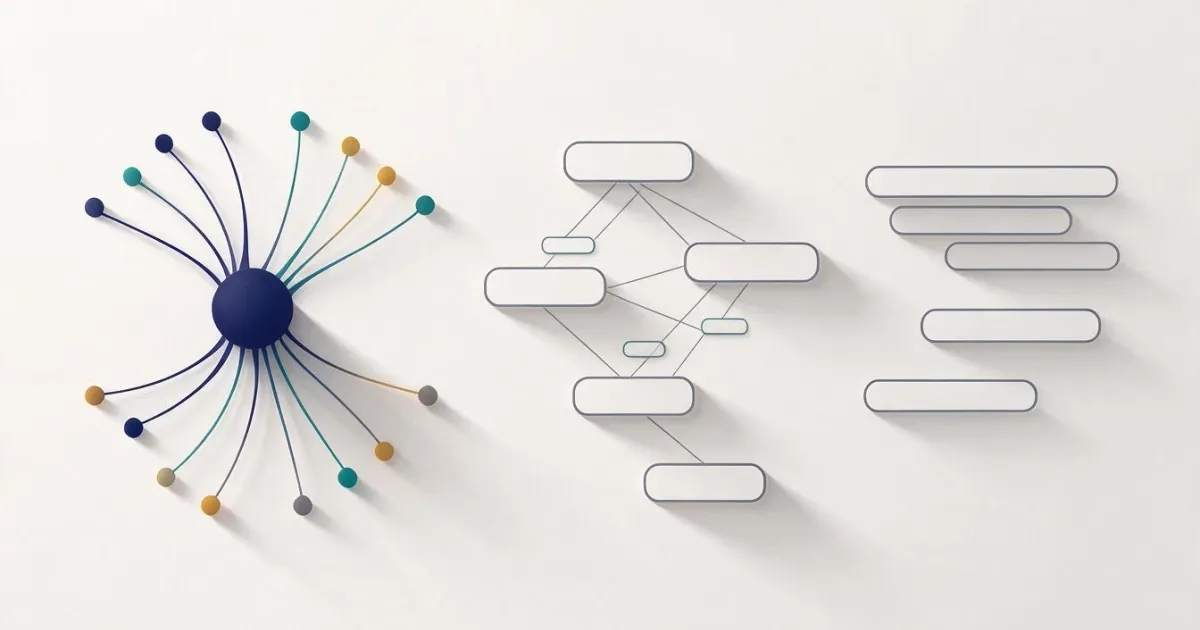
Mind map, concept map, and outline: differences and when to use each one