 TipsterCircle
Black Friday 2026 Discounts: Why Only 54% Believe Them and How to Know if an Offer is Real
Team at TipsterCircleWritten with AI assistance18 min readIn summary
- Only 54% of buyers trust that Black Friday prices are actually lower than usual, 1 in 5 actively distrusts and 22% plan to spend less because "there are deals all year round" (Boston Consulting Group, 04/11/2026, 10,220 consumers from 10 countries).
- In Spain, the numbers support the skeptics: in the last campaign, only 35% of products decreased in price, and 37% were more expensive than in the previous months (OCU, 06/11/2026, over 14,000 prices in 60 online stores).
- What generates trust are boring and verifiable things: store reputation and return guarantee (65 net points each), verified purchase reviews (59) and a clear comparison of price before and after (58). Influencers come in last, with 3 points, and AI-generated review summaries are second to last with 4.
- Since December 28, 2025, Law 10/2025 requires that a published review refers to a product or service purchased or used in the previous 30 calendar days and explains how it is verified (BOE).
- The most expensive mistake is not buying poorly on November 27: it is not having noted the price and store weeks before, when you first saw the deal.

Black Friday 2026 falls on Friday, November 27, and arrives with the most distrustful consumer in recent years. This guide gathers the data published in recent weeks —the global BCG study from November 4 and the OCU price analysis from November 6— and turns them into six concrete checks you can make in two minutes before considering a deal as good. We wrote it from TipsterCircle, the social network for recommendations and discoveries of AIsToHire where deal hunters save every find with their photo, store, and price and share it with their circle: precisely the habit that, as you will see at the end, decides whether a discount is a good deal or a bad one.
Can we trust the discounts of Black Friday 2026?
According to the study that Boston Consulting Group published on November 4, 2026, only 54% of buyers trust, at least to some extent, that the prices advertised in year-end campaigns are actually lower than usual. One in five (20%) actively distrusts those discounts, and 22% of those who plan to spend less or skip the campaign justify it by saying that "deals are available all the time," two points more than in 2025. The study is based on 10,220 consumers aged 18 to 75 in ten markets, with fieldwork conducted in September 2026.
Trust, moreover, is not equal everywhere: BCG places it around 67% in the United States and close to 33% in Denmark, the Czech Republic, and Germany. It should be stated precisely: Spain is not among the ten surveyed markets (United States, Canada, Australia, Germany, France, Czech Republic, Romania, Poland, Italy, and Denmark), so the 54% is an international average, not a Spanish figure.
What BCG calls promotion fatigue describes well the average buyer's feeling: if everything is always discounted, the discount stops being information. The report itself notes that the minimum discount that buyers consider sufficient to take action has relaxed to around 30%, and that inspiration via social media has dropped nine points to 46%.
What generates trust and what does not: the complete ranking
This is, probably, the most useful table in the report. BCG measured in net trust points (those who say an element generates trust minus those who say the opposite) what signals make a buyer believe an offer:
| Signal | Net trust points |
|---|---|
| Store reputation | 65 |
| Money-back guarantee / free returns | 65 |
| Verified purchase reviews | 59 |
| Clear comparison between usual price and discounted price | 58 |
| High rating, volume of reviews, and customer photos | 56-58 |
| Real-time scarcity messages ("3 left") | 8 |
| AI-generated review summaries | 4 |
| Influencer recommendations | 3 |
Source: BCG Year-End Sales Events Consumer Study 2026 (04/11/2026).
The contrast is striking: an honest price comparison generates almost twenty times more trust than an influencer. And this happens just when 56% of buyers say they will use generative AI to shop during the campaign (eight points more than the previous year, and 66% among Generation Z): they use AI to search and compare, but when it comes to believing a review, the automatic summary earns them almost as little trust as the influencer.
Are Black Friday discounts in Spain real?
In most cases, not as much as they seem. The Organization of Consumers and Users (OCU) analyzed over 14,000 prices of electronics and appliances in 60 online stores during the last campaign and concluded that only 35% of products decreased in price, 37% were more expensive than in the previous months, and 28% remained exactly the same (OCU, 06/11/2026).
And when there is a discount, it is modest. The products that decreased did so with an average saving of 8%, while those that increased became more expensive on average by 12%. In other words: the campaign raised prices more than it lowered them.
| What happened to the price | % of products | Average variation |
|---|---|---|
| Decreased | 35% | −8% |
| Increased | 37% | +12% |
| Stayed the same | 28% | 0% |
Source: OCU, over 14,000 prices in 60 online stores, published on 06/11/2026.
The OCU also filed complaints against 11 online platforms for false discounts. In seven of them —Devoraprecios, Electrotres, Etendencias, Nuevoelectro, Electrónica Vicente, Mielectro, and ClickElectrodomésticos— it was found that at least 90% of the discounts analyzed had not been calculated based on the lowest price of the previous thirty days, instead using recommended prices by the manufacturer that had never actually been charged.
One last piece of data that explains the atmosphere: 70% of consumers believe that there are establishments that raise prices in the weeks leading up to Black Friday to later present discounts that do not represent real savings (OCU, 06/11/2026). It’s not paranoia; it’s reading experience.
Why is the reference price inflated before Black Friday?
Because the discount percentage is not calculated on what you would normally pay, but on a "previous price" that the store chooses. If that previous price is raised for a few weeks, the same final amount can be announced as a huge discount without anyone saving a euro. It is the mechanism that the OCU describes in seven of the stores it reported.
Spanish law has been trying for years to close that gap. Article 20.1 of Law 7/1996 on the Regulation of Retail Trade, as amended by Royal Decree-Law 24/2021 (transposition of Directive (EU) 2019/2161, the so-called Omnibus Directive), establishes that when a price reduction is announced, the previous price must be indicated, and that this previous price is the lowest that the store has applied to the same product in the thirty days preceding (text of Article 20). Items sold for the first time are excluded.
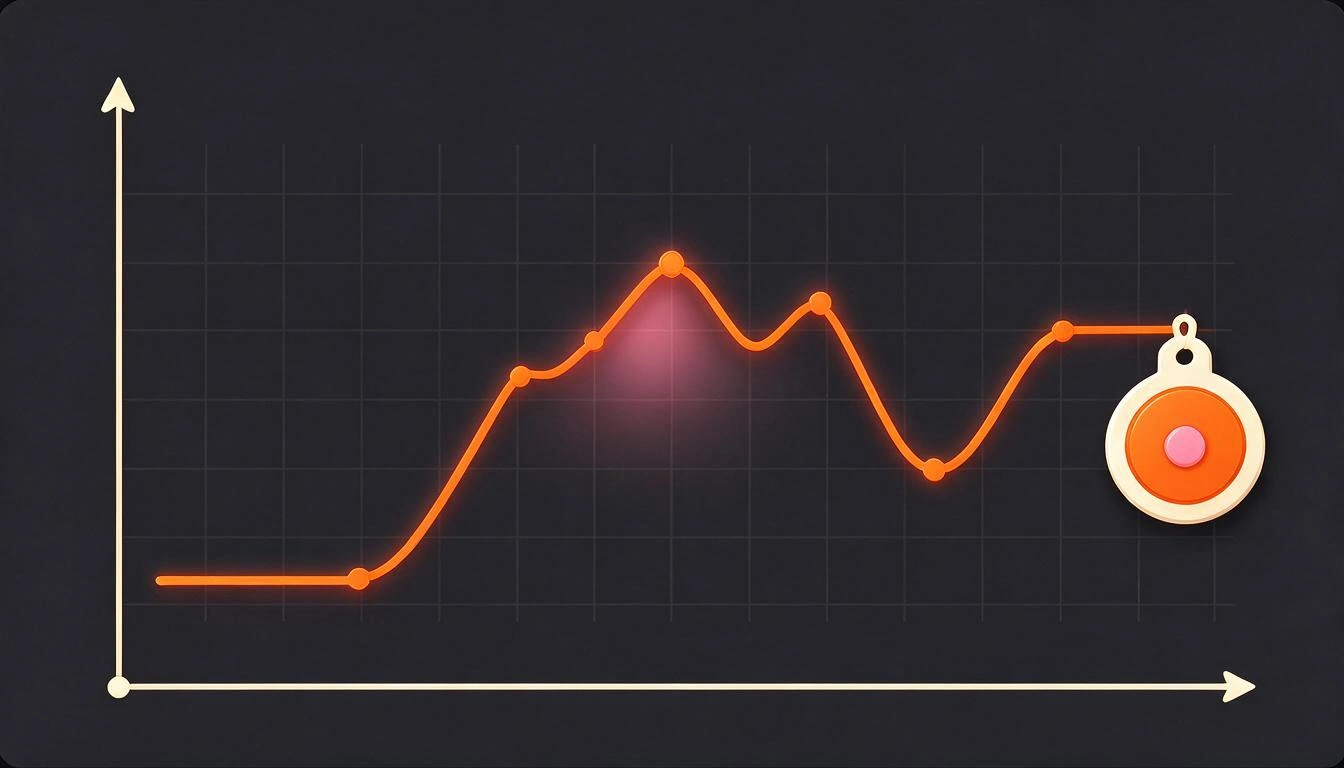
The practical consequence for you is very concrete: the legal reference is the price of the previous thirty days, so the window to know if a bargain is real starts at the end of October, not on November 27. Anyone who does not check the price beforehand has nothing to compare against; they are comparing against the number that the store has decided to strike out.
What did Law 10/2025 change in online reviews?
That a review can no longer be a loose text without anchoring in a purchase. The Law 10/2025, of December 26, on customer service (BOE of 27/12/2025, in force since December 28, 2025) reformed article 20.4 of the consolidated text of the General Law for the Defense of Consumers and Users and requires the entrepreneur to ensure that the published reviews are made by consumers who actually purchased or used the good or service.
The consolidated text in the BOE adds two requirements that you can check as a buyer:
- Reviews issued must refer to products or services purchased or used in the last thirty calendar days.
- The entrepreneur must provide clear information to consumers about how reviews are processed, that is, how they are verified.
In addition, the company can demand the removal of a review when it credibly proves that the person who signed it did not purchase the product or enjoy the service (Cuatrecasas).
What about reviews written with artificial intelligence?
Here we must be precise, because there is a lot of confusion. Article 20.4 of the TRLGDCU does not mention artificial intelligence: what it requires is authenticity, that is, that behind the review there is a real purchase or use in the last 30 days. A review generated by a model without anyone having bought anything violates that authenticity requirement and fits into what the Law 3/1991 on Unfair Competition (articles 27.7 and 27.8, reformed in 2022) defines as an unfair practice: adding or commissioning false reviews from consumers or distorting them to promote a product.
The explicit prohibition of reviews made with AI does exist, but on the other side of the Atlantic: the final rule of the Federal Trade Commission in the United States, announced on August 14, 2024 and in force since October 13, 2024, expressly prohibits reviews and testimonials that appear to come from someone who does not exist —including those generated with AI— with penalties of up to about $52,000 per violation (FTC).
How much risk does one take when publishing false reviews in Spain?
Law 10/2025 did not create its own sanctioning regime for reviews: it refers to the general consumer regime, the same one that applies to any violation in consumer protection.
| Type of violation | Fine |
|---|---|
| Minor | €150 – €10,000 |
| Serious | €10,001 – €100,000 |
| Very serious | €100,001 – €1,000,000 |
| Cross-border violation in the EU | up to 4% of annual turnover |
Sources: general regime of article 49 of the TRLGDCU, included in the analyses of the law on reviews and how to detect false reviews (October 2026).
In practice, regional consumer authorities can sanction the publication of a false review on platforms like Google or Tripadvisor with fines that start around €600, and a defamatory false review can reach criminal territory for serious insults made with publicity (article 209 of the Penal Code), according to the analysis published on 08/10/2026. What does not exist yet, and it is advisable not to take for granted, is a public register of resolved cases under the specific new article 20.4.
Checklist: 6 checks before trusting a Black Friday deal
These six checks can be done in two minutes and specifically target the signals that, according to BCG, truly generate trust: reputation, returns, verified reviews, and price comparison. The order matters: the first two eliminate most false discounts.
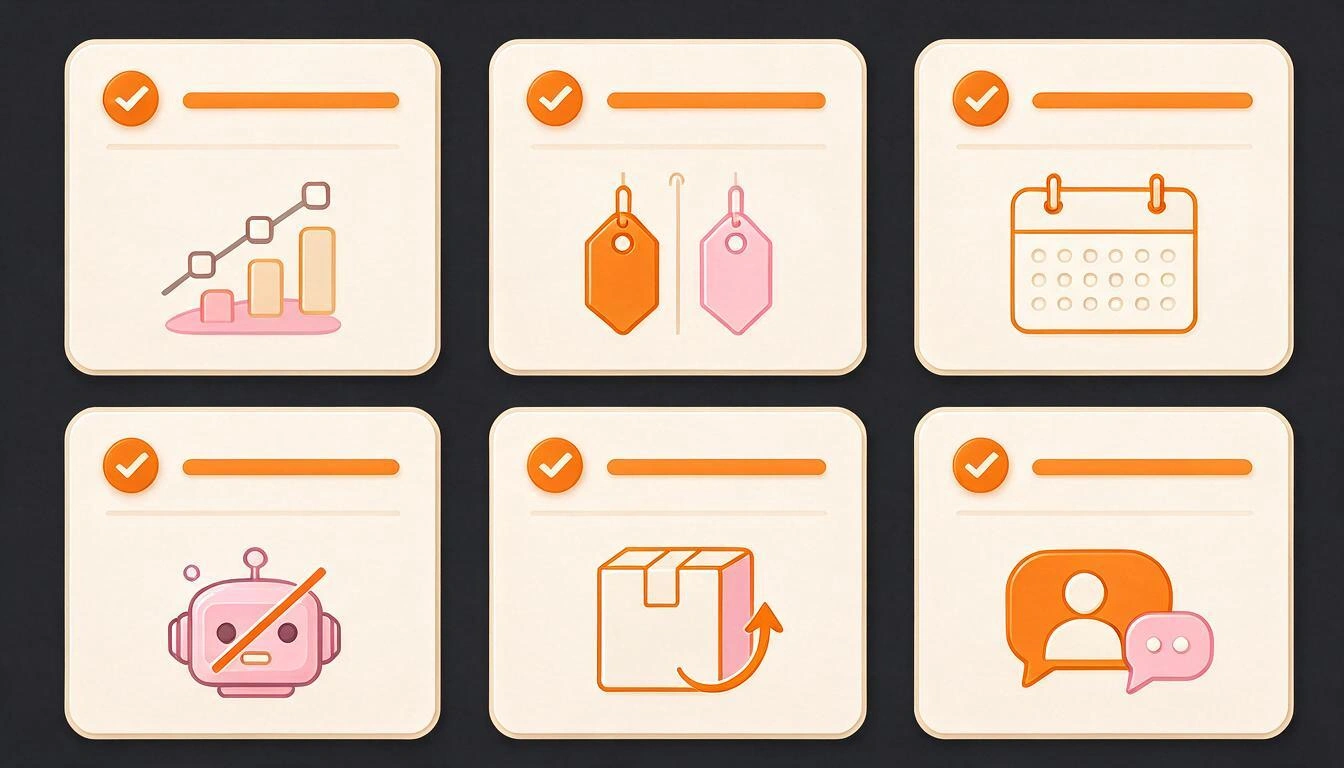
1. The price history of that product, not the percentage
Look at what that specific model has cost in recent weeks, not the advertised discount. The benchmark set by law is the lowest price in the previous thirty days (Article 20.1 of Law 7/1996), so if you don’t know what it was, the percentage means nothing. The OCU itself recommends starting to track the price in October and saving screenshots.
2. The same product in another store
A price is only good when compared to another real price at the same time. Check the exact model —reference, capacity, color, not "the similar version"— in two or three different stores. The fact that 37% of products were more expensive during the campaign means that the store next door might have it better without any signs.
3. The date of the reviews
Since Law 10/2025, reviews must refer to a purchase or use from the previous 30 calendar days. If the good ratings are all from two years ago, or if they all came in suddenly over three days, the signal is worth little. Verified purchase reviews are the third most reliable in BCG's ranking (59 net points); generic unverified ones are not in that ranking for a reason.
4. Signs of reviews written with AI or bought
There are patterns that reveal a fabricated review: sudden clusters of ratings in a few hours, accounts created solely to review a product, extremely high scores avoiding the perfect 5, links leading off the platform or requests for payment through another channel, and impeccable language that describes the product as a catalog sheet would but doesn’t mention a single detail of real use (guide to detecting fake reviews, 23/10/2026). Also check if the store publishes its verification method: the law requires it, and silence is already a clue.
5. Shipping, delivery time, and return conditions
The discount can easily be eaten up by shipping costs, and a complicated return turns a deal into a problem. This is not a minor detail: the money-back guarantee ties with the store's reputation as the factor that generates the most trust, with 65 net points in the BCG study. Read who pays for the return and in how many days.
6. The recommendation of someone real who has it
The last check is one that no website provides: ask someone who bought that same item, in that store, and is using it. It’s the opposite of the trust pyramid that BCG depicts: influencers and automated summary reviews at the bottom of the table (3 and 4 net points), and verifiable experience at the top. A screenshot of the order and a phrase about how it's going after two months are worth more than any ranking.
| Check | What to look for | Alarm signal |
|---|---|---|
| 1. History | Price of the model in October and November | You can't find any previous real price |
| 2. Another store | Same exact model, today | Only that store has it "discounted" |
| 3. Review date | Last 30 days | All old or all at once |
| 4. Authenticity | Patterns of fake or AI-generated reviews | They don't publish a verification method |
| 5. Shipping and returns | Cost, time, who pays for the return | Return at your expense or opaque timeframe |
| 6. Real person | Someone who bought it and is using it | Only sponsored recommendations |
The mistake that ruins Black Friday: not noting the price and store when you see the deal
The most expensive mistake is not made on November 27, but three weeks earlier: you see a good price, share it in a chat, and by the time Black Friday arrives, you no longer remember how much it cost or in which store it was. Without that data, you cannot perform checks 1 and 2 from the checklist, which are the ones that eliminate most false discounts. The OCU puts it in other words when they recommend tracking prices since October and saving screenshots.
The problem is that the group chat is the worst archive in the world. A link pasted on a Tuesday in October is, two weeks later, buried under two hundred messages, without the price it had that day, without the store name, and without the phrase from the person who found it explaining why they thought it was good. Just the three pieces of information you need.
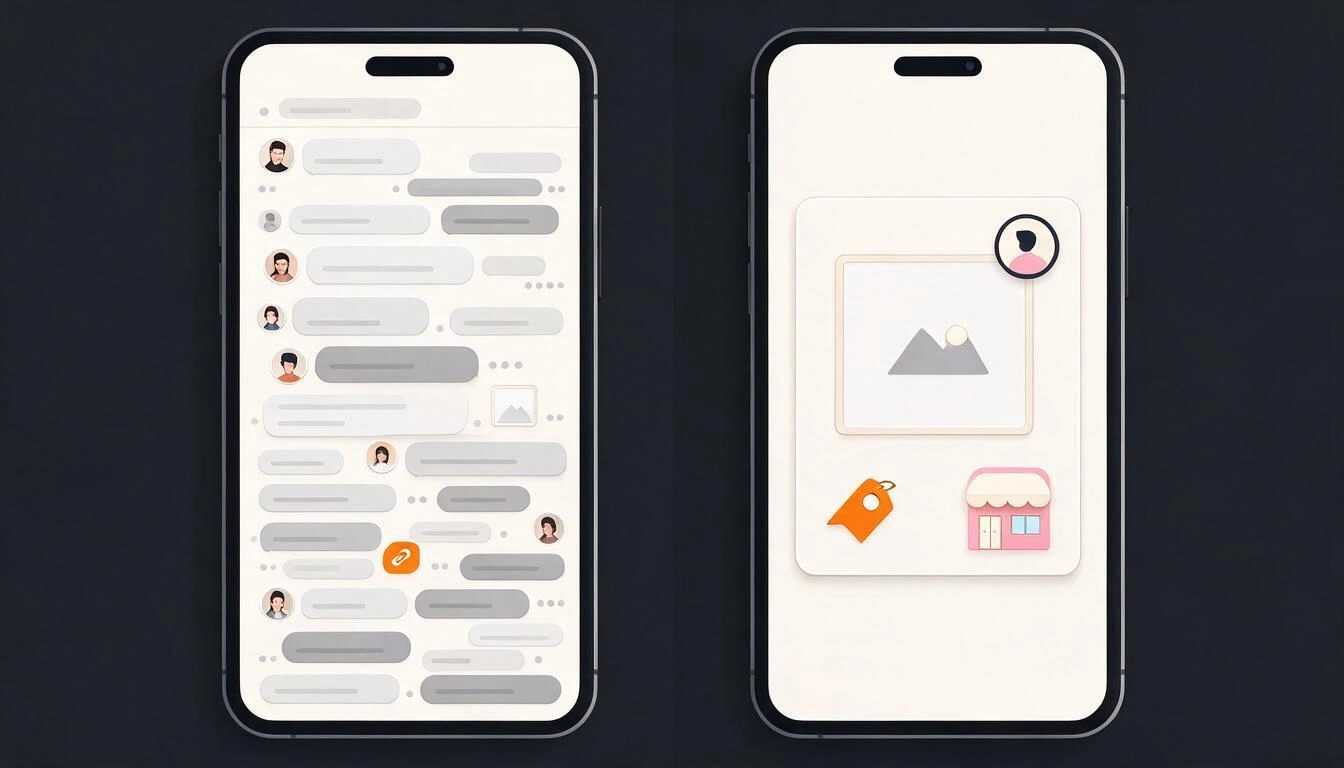
That's why TipsterCircle exists, the app from AIsToHire to share deals and recommendations with your circle: you paste the link and the card fills itself —photo, title, description, store, and current price, with the category suggested by AI— and you just add your personal opinion. That finding is saved with the price it had on the day you saw it, which is exactly the reference you lacked when the campaign arrives.
And you decide who sees it: public, only your followers, a private invitation-only circle with your friends from the past, or just for you. You can also save it with a tap in your private wishlist, which no one else sees, for things you are still considering. A private circle of four people tracking prices since October is, by far, the best anti-fraud tool you will have this Black Friday: it aligns with what the BCG study measures as the most reliable —verifiable and comparative price experience— and not with what it measures as the least.
Frequently asked questions about Black Friday discounts 2026
When is Black Friday 2026?
Black Friday 2026 is on Friday, November 27, the day after Thanksgiving in the United States. In practice, most Spanish stores extend the campaign throughout that week and continue it until Cyber Monday, November 30.
Are Black Friday prices really lower?
On average, less than they seem. In the latest campaign analyzed by the OCU (over 14,000 prices in 60 online stores), only 35% of products decreased in price and 37% were more expensive than in the previous months; those that decreased did so by an average of 8%. There are good deals, but they are in the minority and need to be identified one by one.
Is it legal to raise the price before Black Friday to then "discount" it?
Raising the price is not prohibited per se, but advertising a discount on a reference price that is not the lowest of the thirty days prior does violate Article 20.1 of Law 7/1996 on the Regulation of Retail Trade, as amended by Royal Decree-Law 24/2021 that transposed the Omnibus Directive. The OCU reported 11 platforms for this reason in November 2026.
How do I know if a review is fake or written by AI?
Look for clusters of reviews published in a few hours, accounts that have only reviewed that product, extremely high ratings that avoid a perfect 5, links that take you off the platform, and texts that describe the product like a catalog without detailing any usage. Also check if the store explains how it verifies reviews: Law 10/2025 requires it to inform about this, so not doing so already says a lot.
Are reviews made with artificial intelligence prohibited in Spain?
Spanish law does not explicitly mention them. What Article 20.4 of the TRLGDCU, amended by Law 10/2025 and in force since December 28, 2025, requires is that the review comes from someone who purchased or used the product in the 30 days prior; a review generated by a model without a purchase behind it violates that requirement and also fits as an unfair practice under Articles 27.7 and 27.8 of Law 3/1991. The explicit prohibition of AI-generated reviews is indeed in the U.S. FTC rule, in force since October 13, 2024.
What is the penalty for publishing a false review?
It depends on the severity: the general consumer regime ranges from €150 to €10,000 for minor offenses, from €10,001 to €100,000 for serious ones, and from €100,001 to €1,000,000 for very serious ones, with up to 4% of the annual turnover for cross-border offenses in the EU. For individuals, regional consumer authorities have handled fines starting around €600.
What is the best way to track a price before buying?
Note the price and the store on the day you see the offer, with a screenshot or a saved card, and repeat it a couple of times in the following weeks. The important thing is that the data is kept in a place where you can find it again: your own list or a trusted circle, not a group chat where it gets lost among messages.
How does sharing findings with a small group help me?
Because it multiplies the eyes on the same products. If four people track the price of what interests them since October, in November you have a real historical record to compare with, and the recommendation comes from someone who actually bought from that store, which is the type of signal that the BCG study ranks higher in trust compared to influencers and automated review summaries.
Conclusion: Black Friday is won in October, not on the 27th
The 54% distrust measured by BCG and the 37% of more expensive products detected by OCU tell the same story from two sides: the discount has ceased to be information and has become decoration. What remains are verifiable data —the price that product had three weeks ago, the price at the store next door, the date of the reviews, who pays for the return— and the word of someone real who bought it.
That is the idea behind TipsterCircle, the app from AIsToHire where you can save and share your findings with photo, store, and price instead of letting them die in a chat. Paste the link, add your opinion, choose whether everyone sees it, just your followers, a private circle, or no one but you. When November 27th arrives, the difference between a bargain and a scam will simply be that you did note the price.
Start noting your findings before Black Friday arrives: create your free account on TipsterCircle, paste the offer link, and save the card with a photo, store, and current price, along with your opinion, to share it with your followers or in a private circle.
Start noting your findings before Black Friday arrives: create your free account on TipsterCircle, paste the offer link, and save the card with a photo, store, and current price, along with your opinion, to share it with your followers or in a private circle.Keep reading
View all articles →
Wishlist: how to save what you want to buy without losing it in the WhatsApp group
Why Your Car Insurance Increased in 2026: Average Premium of €1,412 and Historic Record

Discussing via WhatsApp or talking in person: what science says about couple conflicts through messages