 AI Chef
97.5% of food waste occurs at home: the 2026 data and how to avoid it
Team at AI ChefWritten with AI assistance15 min readIn summary
- 97.5% of the food waste measured by the Government occurs within households: 1,101.8 of the 1,129.91 million kilos and liters thrown away in Spain in 2025, according to the annual food waste report from the Ministry of Agriculture, Fisheries and Food published on September 10, 2026.
- Each resident in Spain threw away 24.3 kilos or liters of food in 2025. Total waste decreased by 19.2% compared to 2020, but increased by 0.4% compared to 2024: progress has stalled.
- The number one cause is not gluttony or bad taste: it is forgetfulness (54%), according to the third edition of the Food Waste Barometer in Spanish Households from AECOC ShopperView and Phenix (2026).
- 77.5% of what is thrown away at home are purchased products that were never used, and fresh fruits and vegetables account for almost half of that figure. Cooked food is not thrown away: food that never got cooked is what is discarded.
- In monetary terms, Too Good To Go estimates the cost at 152 euros per second and about 4.745 billion euros a year. Half of the problem is logistical and the other half is not knowing what to do with what is left: that is where tools like AI Chef, the app from AIsToHire to prepare a recipe with the ingredients you already have come in.
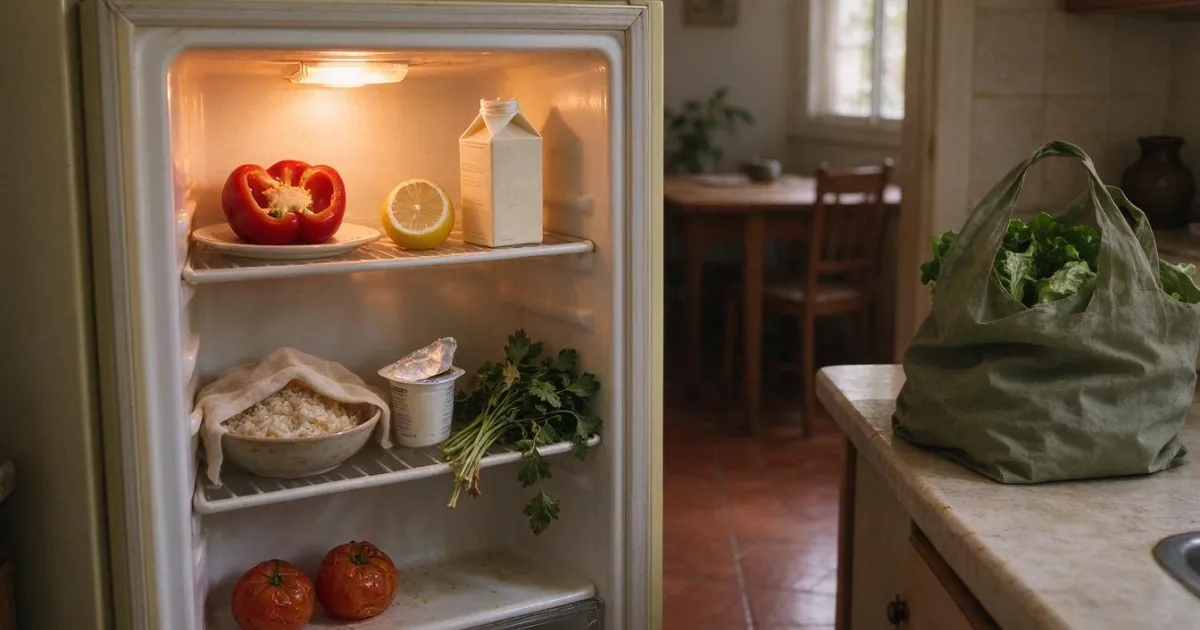
For years, the narrative of food waste pointed outward: supermarkets throwing away pallets, restaurants serving too much, fields left unharvested. The official data from 2025, published in September 2026, tells another rather uncomfortable story: within the circuit measured by the Ministry, almost all waste occurs in private kitchens. Not in a factory. In the home fridge.
This article reviews the real figures —with source and date— explains in which three specific points food is lost in a normal household and what can be done with what has already been purchased. And yes, it mentions a tool: AI Chef, from AIsToHire, because the last part of the problem (what to cook with half a pumpkin, an open yogurt, and yesterday's rice) is exactly what it does.
How much food is wasted in Spain and what part occurs at home?
In 2025, 1,129.91 million kilos and liters of food and beverages were wasted in Spain, of which 1,101.8 million (97.5%) correspond to households and 28.12 million (2.5%) to consumption outside the home. The average per inhabitant was 24.3 kilos or liters per year. These are data from the annual report of the Ministry of Agriculture, Fisheries and Food made public on September 10, 2026.
The underlying trend is good and it is worth mentioning: there is 19.2% less waste than in 2020, which amounts to 269.18 million kilos and liters that have not ended up in the trash. The problem is the short term: compared to 2024, waste increased by 0.4%. That is, the improvement curve has flattened just as legal obligations begin to be applied.
| Indicator (2025) | Data | Variation |
|---|---|---|
| Total waste | 1,129.91 M kg/l | +0.4% vs 2024 |
| In households | 1,101.8 M kg/l (97.5%) | — |
| Outside the home | 28.12 M kg/l (2.5%) | −20.4% since 2020 |
| Per inhabitant | 24.3 kg/l per year | −0.3% vs 2024 |
| Compared to 2020 | −269.18 M kg/l | −19.2% |
Source: Ministry of Agriculture, Fisheries and Food, food waste report 2025 (September 10, 2026).
An honest nuance about that 97.5%: it is calculated based on what the food consumption panel measures, which covers households and consumption outside the home. Losses in the field and in industry are quantified separately —Plataforma Tierra points to around 1.7 million tons reported by about 150 companies, 0.65% of their production— and are not included in that comparison. The correct headline is not "the industry throws nothing away," but "of the food that has already reached the consumer, almost all of what is lost is lost at home."
Why is food thrown away in households? Forgetting is the cause of 54%
The main reason why food ends up in domestic trash is forgetting: 54% of cases. This is followed by the perception that the food is worth little (26%) and incorrect quantity calculations (21%). This is stated in the Food Waste Barometer in Spanish households for 2026, prepared by AECOC ShopperView with Phenix.
This completely changes the type of solution that is needed. If the cause were over-purchasing, it would be enough to buy less. If the cause is forgetting, the problem is one of visibility and memory: products that get pushed to the back of the fridge until they can no longer be eaten. And if the third cause is miscalculating quantities, then the problem is with portions.
| Cause of waste in the home | Weight |
|---|---|
| Forgetting (the product spoils without being used) | 54% |
| Perception that the food is worth little | 26% |
| Incorrect quantity calculations | 21% |
Source: Food Waste Barometer in Spanish households, 3rd edition, AECOC ShopperView and Phenix (2026).
And there is a fact that confirms the diagnosis from the other side: 77.5% of domestic waste consists of purchased products that are never used, with fresh fruits, vegetables, and greens accounting for about 46% of that volume. We are not throwing away leftovers from cooked dishes: we are throwing away intact raw materials. The barometer agrees on the ranking: fruits and vegetables (33%) and bread and pastries (23%) top the list of what is most wasted.
Where is food really lost in a house? Three specific points
In a normal household, food is lost in three very identifiable points: unplanned shopping, a disorganized fridge, and half-used ingredients. All three have the same root — purchased food that loses visibility — and all three can be fixed with habits, not money.
1. Unplanned shopping
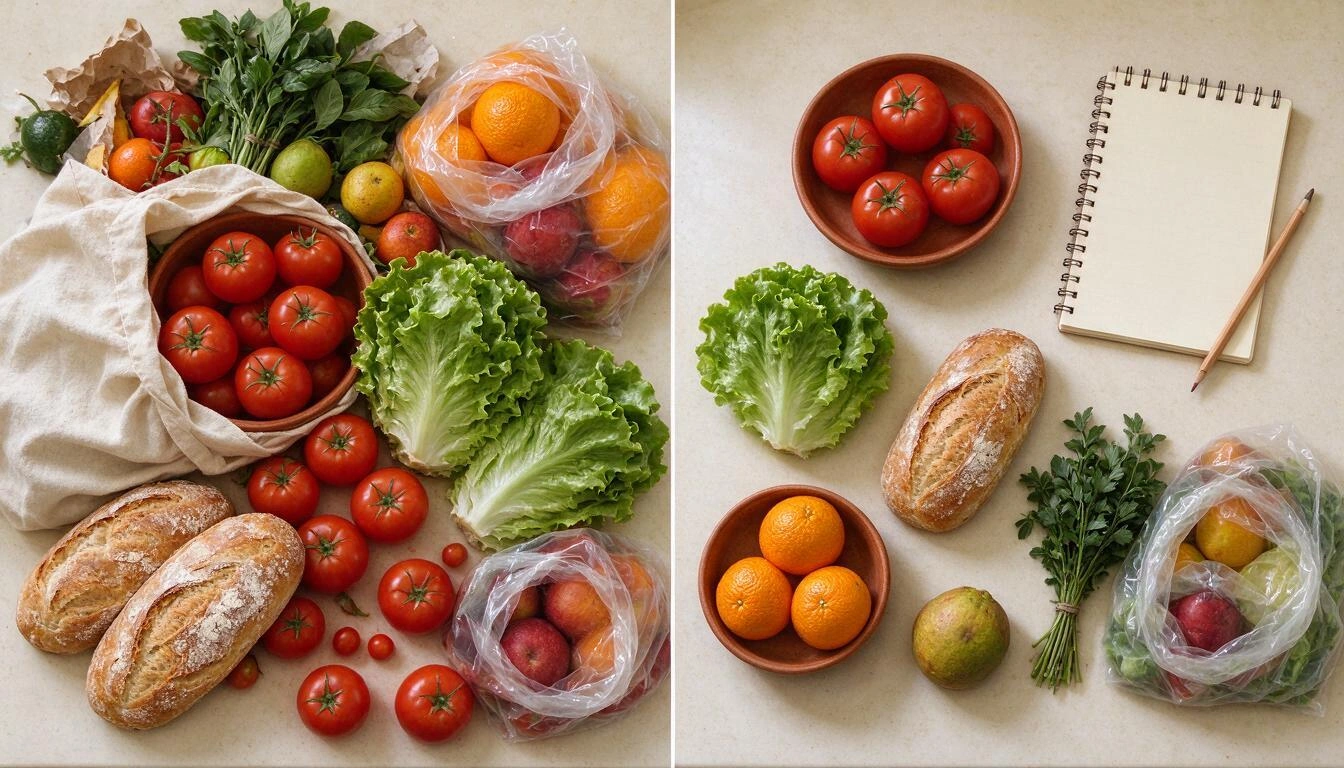
Shopping without knowing what will be cooked generates duplicates and quantities that do not match the household's actual consumption. The 2026 barometer shows that 69% of consumers already plan their shopping based on a weekly menu and that 80% check product dates: the habit is widespread, but the remaining 31% continues to shop blindly. And the classic pattern — going to the supermarket hungry, twice a week, without a list — produces three lettuces and two packages of bread.
2. Disorganized fridge
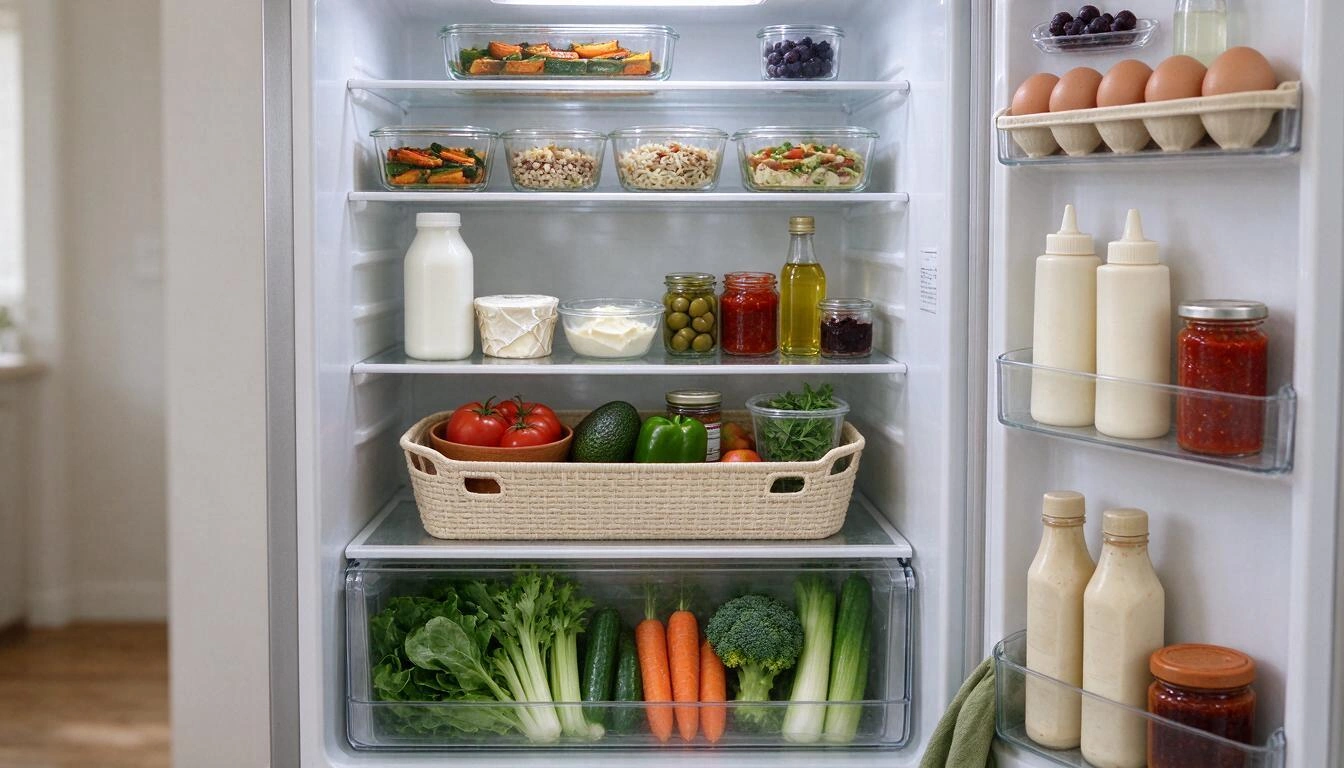
If 54% of waste is forgetting, the fridge is the crime scene. What is not seen, is not cooked. The measures that work are boring and effective:
- A "consume first" zone in plain sight, on the front line of the middle shelf: everything that is close to its date goes there and is cooked before anything else.
- Nothing at the back that cannot be seen. What is stored behind gets forgotten; what is stored in transparent containers does not.
- Rotation when storing groceries: the new goes behind, the old in front. It’s the principle used by any warehouse and in a fridge, it takes thirty seconds.
- Freeze as soon as the risk is seen. The Catalan Agency for Food Safety reminds us that it is advisable to check the fridge and freeze any food that starts to spoil if it is not going to be consumed soon: milk, cheese, cold cuts, vegetables, or fruit can be frozen.
3. Half-used ingredients
This is the blind spot. Half an onion, four tablespoons of cooked rice, an open yogurt, the end of a carton of cream, three mushrooms, a piece of hard cheese. None of these is "a recipe", and that’s why they are not cooked: they do not fit into any dish that the cook has in mind on a Tuesday at nine in the evening. They sit there until forgetting does its job.
The barometer measures exactly this gap: only 48% reuse leftovers in new recipes. More than half of households do not do this. It is not disinterest — the same study shows that 23% already claim not to throw away any food — it is a lack of a concrete idea at the right moment.
How much does it cost to throw away food?
The most cited economic estimates in Spain place the cost of food waste at 152 euros per second, equivalent to more than 13 million euros daily and about 4.745 billion euros annually; in volume, about 36 kilos of food every second. These are calculations from Too Good To Go released in September 2026 following the official report.
These macro figures are difficult to internalize, so it is worth translating them: 24.3 kilos per person per year is, for a family of four, nearly 100 kilos of purchased and paid food that ends up in the bin. As Minister Luis Planas summarized when presenting the report on September 10, 2026, "the most expensive food is the one that ends up in the trash".
A detail from the barometer with a clear economic reading: 68% of consumers actively seek offers for products nearing expiration. The Spanish consumer no longer associates "near date" with "bad product", and this opens up room for savings without throwing anything away.
What does Spanish and European law require by 2026?
The Law 1/2025, of April 1, on the prevention of food loss and waste —published in the BOE on April 2, 2025— requires industries, distribution, and the HORECA channel to have a prevention plan and to sign donation agreements in writing, with a hierarchy of priorities that places prevention above all else. The core obligations are fully enforceable from April 2026, with penalties that can reach 500,000 euros in serious cases.
Regarding households, the law does not impose duties: there is no fine for throwing away a tomato. However, there are two new developments in 2026 that affect the context in which we shop:
| Regulation / Measure | What it requires | Key Date |
|---|---|---|
| Law 1/2025 (Spain) | Prevention plan, hierarchy of uses, and donation agreements for industry, distribution, and hospitality | Published on April 2, 2025; obligations enforceable from April 2026 |
| National Control Plan (Spain) | Homogeneous control and inspection criteria among administrations | Public information opened on October 23, 2026, with a deadline until November 24, 2026; expected before 2027 |
| Directive (EU) 2025/1892 | Reduce waste by 10% in processing and manufacturing and 30% per capita in trade, catering, and households | Target by 2030, based on the average from 2021-2023 |
That 30% European figure is what should matter most to anyone cooking at home: the binding target explicitly includes households. With a starting point of 24.3 kilos per person, meeting it means reducing to about 17 kilos. And since 97.5% of measured waste is in the home, one cannot achieve that without changing what happens in private kitchens.
It is also worth noting that 51% of consumers already claim to know the law, compared to 36% the previous year: the regulation has educated even where it does not impose.
How can waste be avoided at home without complicating life?
What works is a sequence of three steps, in this order: plan before buying, make visible what is already at home, and resolve half-used ingredients on the same day you see them. The third step is what almost no one has figured out, and it is where half of the avoidable waste is concentrated.
- Before buying: menu first, list second. Deciding on five dinners and three lunches before writing the list avoids duplicates and absurd quantities. This is what 69% of consumers already do.
- When storing groceries: rotation and priority zone. Thirty seconds placing new items behind and creating a "consume first" tray deactivate the cause of 54% of waste.
- Distinguish expiration from best before dates. The expiration date is safety and should not be ignored; the best before date is quality, and a product can be consumed afterward if it has been stored properly, the packaging is intact, and there are no signs of deterioration.
- Cook with what you have, not with what you lack. Instead of looking for a recipe and buying its ingredients, start with the ingredients that are in the fridge and look for a recipe that uses them. It is the reverse of the usual approach and is what clears out the fridge.
- Freeze in portions. If you have cooked too much, the problem is not the excess: it is leaving it in the fridge for five days. Frozen and in portions, the excess becomes a future dinner.
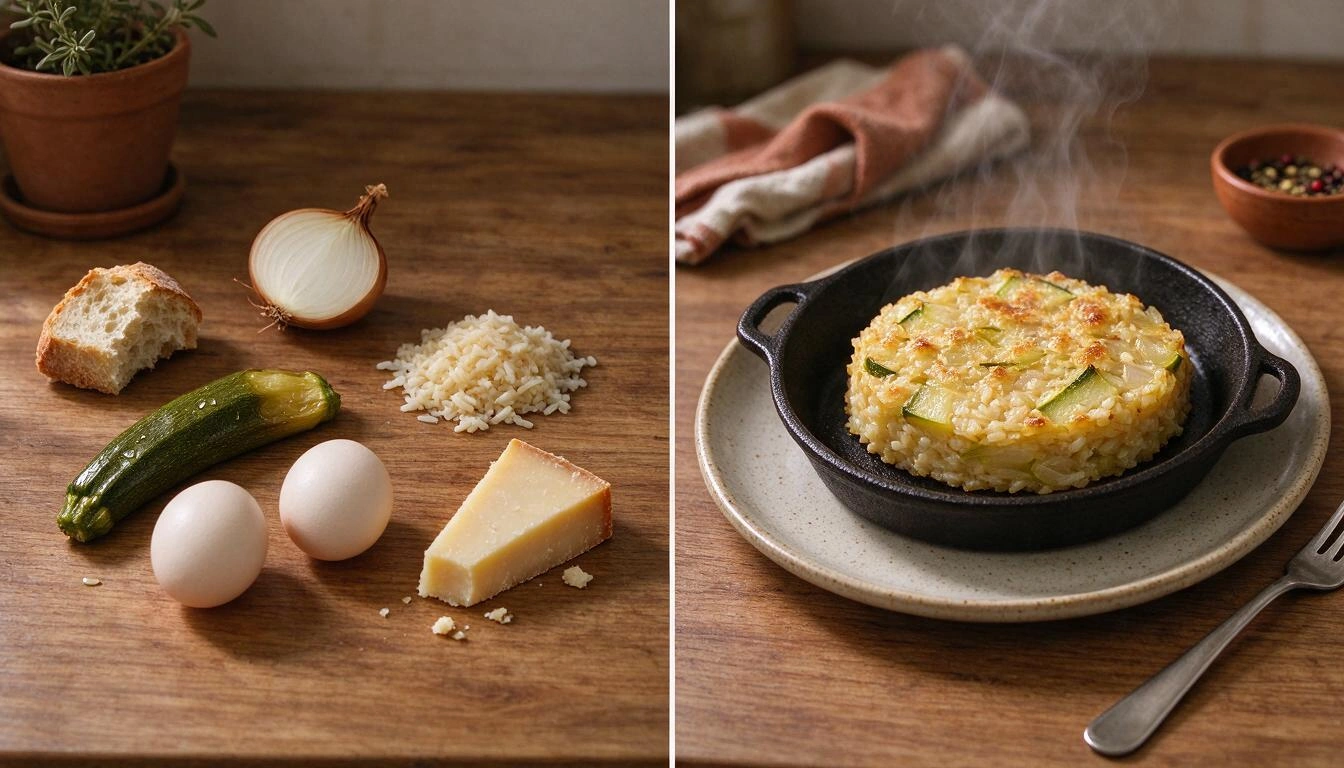
This is where a conversational tool changes the outcome. AI Chef, the miniapp from AIsToHire, is designed precisely for step 4: you tell it what you have —"half a pumpkin, cooked rice, two eggs, and a piece of cheese"— and it suggests a specific recipe with those ingredients, including its steps, time, and servings adjusted to how many people are at home, including adults and children. It has quick actions like "I have these ingredients…" to avoid lengthy explanations, respects any allergies and diets you have saved in your profile, and if what you want is the opposite —planning before buying— it generates a weekly menu and its shopping list. That is the difference between a forgotten half pumpkin and a dinner.
Frequently Asked Questions about Food Waste at Home
Is it true that 97.5% of food waste occurs in households?
Yes, with a caveat. According to the report from the Ministry of Agriculture published on September 10, 2026, of the 1,129.91 million kilos and liters wasted in 2025, 97.5% (1,101.8 million) corresponds to households and 2.5% to consumption outside the home. This distribution refers to waste measured at the consumption stage: losses from the field and industry are quantified separately and are not included in that percentage.
How many kilos of food does a person throw away each year in Spain?
24.3 kilos or liters per inhabitant in 2025, a 0.3% decrease from 2024, according to the Ministry of Agriculture, Fisheries, and Food. For a household of four people, this amounts to nearly 100 kilos of food per year.
What is the main cause of throwing food away at home?
Forgetfulness, responsible for 54% of cases according to the Food Waste Barometer in Spanish households of 2026 (AECOC ShopperView and Phenix). This is followed by thinking that the food is worth little (26%) and miscalculating quantities (21%).
What foods are thrown away the most?
Fruits and vegetables, accounting for 33% of domestic waste, followed by bread and pastries at 23%, according to the 2026 barometer. In the official report, fresh fruits, vegetables, and greens represent about 46% of the products that are purchased and never used.
Can food past its best before date still be eaten?
Yes, if it has been stored according to the label instructions, the packaging is intact, and there are no signs of deterioration in smell, color, or taste: the best before date indicates quality, not safety. The expiration date is different and should not be exceeded, as there is a microbiological risk. This is explained by the Catalan Agency for Food Safety.
Can I be fined by the food waste law for throwing food away in my home?
No. Law 1/2025 imposes obligations — prevention plan, hierarchy of uses, donation agreements — on industries, distribution, and hospitality, with penalties that can reach 500,000 euros for serious violations, but it does not establish duties or fines for individuals.
How much money is lost by throwing food away?
Estimates from Too Good To Go released in September 2026 put the cost at 152 euros per second, more than 13 million euros daily, and about 4.745 billion euros annually across Spain.
What should I do with half an onion, an open yogurt, and yesterday's rice?
Cooking them together on the same day is almost always possible: stir-fries, rice dishes, omelets, creams, and gratins absorb loose ingredients without a problem. If you can't think of a dish, this is the exact use case for a kitchen assistant: you provide the available ingredients and it returns a recipe that uses them, instead of asking you to buy more.
The Final Stretch: Knowing What to Cook with What's Left
The data from 2026 leaves a clear diagnosis. Food waste in Spain has decreased by 19.2% since 2020, but has stagnated in the last year; almost everything that is lost is lost at home; the dominant cause is forgetfulness; and 77.5% of what is thrown away is food that was purchased but never cooked. The European Union has also set a binding target to reduce food waste in trade, hospitality, and households by 30% per capita by 2030, so this will remain in the public conversation for several years.
The good part is that the most powerful lever doesn't cost money: it's a decision of order and a concrete idea at the right moment. Planning before buying solves the first half. Knowing what to do with what's left solves the second, and it's the one that most people have pending: only 48% of households reuse their leftovers in new recipes.
For that final stretch, there is AI Chef, the app from AIsToHire that turns what you have in the fridge into a specific recipe. Open the fridge, see what you have left, and request a recipe made with the ingredients you have right now: portions adjusted to your household, your allergies and diets respected, and, if needed, a weekly menu with its shopping list so that nothing is left over next week.
Open the fridge, see what you have left, and ask AI Chef for a recipe made only with those ingredients: servings for your household, without buying anything else and without throwing anything away.
Open the fridge, see what you have left, and ask AI Chef for a recipe made only with those ingredients: servings for your household, without buying anything else and without throwing anything away.Keep reading
View all articles →
What to cook with what's in the fridge: the 4-step method (and how to do it with AI)
Why Your Car Insurance Increased in 2026: Average Premium of €1,412 and Historic Record

Discussing via WhatsApp or talking in person: what science says about couple conflicts through messages