 AIsToRestaurant
New health registration for bars and restaurants in Madrid: deadline until March 28, 2027
Team at AIsToRestaurantWritten with AI assistance14 min readIn summary
- The Community of Madrid created in 2026 the Register of Food Businesses for Retail Trade of Food Products, through Decree 26/2026, of March 25, published in BOCM no. 73 on March 27, 2026, and in effect since March 28, 2026.
- It affects establishments that are outside the state General Sanitary Register: food stores, bars, cafés, restaurants, collective catering, street vending, vending machines, and homes where food is prepared for sale.
- Existing establishments have until March 28, 2027 to report their activity. New ones must do so at the start of their activity. Companies already registered as meat retailers will migrate automatically.
- The process is a communication or responsible declaration through the electronic headquarters, without fees.
- What really changes is what comes next: once registered, you are in the official control census, and what the inspection reviews is your HACCP self-control plan, temperature records, and the information on the 14 allergens dish by dish. Fines can reach €600,000 and temporary closure for very serious violations (Law 17/2011, art. 51).

If you have a bar, a café, a restaurant, or a bakery in the Community of Madrid, you have a date marked: March 28, 2027. Before that day, your establishment must be reported to the new regional sanitary register for retail food trade. This article explains the process —which is free and quick— and, above all, what almost no one tells you: that registering is the easy part, and what comes next is the inspection. For that second part, there is AIsToRestaurant, the app for managing allergens and HACCP records for restaurants from AIsToHire, which we will discuss at the end because it is where the sanitary registration number, allergen declaration, and daily records that the inspector will ask for are stored.
What is the Register of Food Businesses for Retail Trade of Madrid?
It is a unique, computerized, and managed by the General Directorate of Public Health of the Community of Madrid, created by Decree 26/2026, of March 25, from the Governing Council (BOCM no. 73, of March 27, 2026). Its function is to census retail food establishments that are excluded from the General Sanitary Register of Food Businesses and Foods (RGSEAA), the one from Royal Decree 191/2011, which only covers industry and businesses that do not sell directly to the final consumer.
Until now, a neighborhood bar in Madrid did not appear in any state sanitary register: it was in limbo between the municipal activity license and Public Health control. The new register closes that gap and assigns each establishment a unique registration number.
It is not an autonomous occurrence. The first final provision of the Royal Decree 1021/2022, of December 13 (BOE no. 305, of December 21, 2022) modified RD 191/2011 to establish that retail trade establishments must register in the registers of the autonomous communities through a communication or responsible declaration from the operator, a document that is not enabling: it does not authorize you to open, it only informs that you exist.
Important: reporting the activity is not asking for permission. You do not wait for a resolution to continue working, but in return, it does not serve as a shield if the self-control plan is not made.
Who is required to register in the sanitary register of Madrid?
All retail food establishments located in the Community of Madrid, regardless of their size: from an 80-seat restaurant to a market stall or a home kitchen selling pastries. According to the procedure published on the electronic headquarters of the Community of Madrid, the register is organized by types of activity and expressly includes commercial and collective catering.
| Type of establishment | Examples | Required? |
|---|---|---|
| Retail food trade | Stores, bakeries, warehouses, online sales | Yes |
| Commercial catering | Bars, cafés, restaurants, food trucks | Yes |
| Collective catering | School cafeterias, hospitals, residences, catering | Yes |
| Establishments without fixed location | Street vending, market stalls, sales vehicles | Yes |
| Vending machines | Vending of food and beverages | Yes |
| Private homes | Preparation of food at home for sale | Yes |
| Companies already registered in the RGSEAA | Food industry, manufacturers, wholesalers | No (already in the state register) |
| Primary production and related operations | Agricultural or livestock exploitation | No |
| Occasional preparation without profit | School parties, religious celebrations, charitable or municipal events | No |
That last exclusion is the one that generates the most confusion: the paella at the town festival does not count; the stall set up by a restaurateur at those same festivals does, because it is an economic activity.
What deadlines are there? The important date is March 28, 2027
The decree establishes a transitional period of one year from its entry into force, which occurred on March 28, 2026. Therefore, the deadline for establishments that were already operating is March 28, 2027. For those opening from now on, there is no grace period: the communication is submitted at the start of the activity.
| Situation of your establishment | What you need to do | When |
|---|---|---|
| Already active before 03/28/2026 | Communication or responsible declaration | By March 28, 2027 |
| New opening | Communication or responsible declaration | At the start of the activity |
| Change of ownership, activity, or data | Communicate the modification | When the change occurs |
| Already registered in the meat retailer registry | Nothing: migration by office | Wait for the new registration number |
| Cessation of activity | Communicate the cancellation | When it occurs |
Source of deadlines: Decree 26/2026 and the summary of the new food retail registry published in 2026 by APRODE.
How is the procedure done and how much does it cost?
A communication or responsible declaration is submitted in a standardized form to the General Directorate of Public Health, electronically via the electronic headquarters of the Community of Madrid, with a recognized certificate or signature system. The submission period is permanently open and the procedure does not require payment of fees.

What you need to have on hand before you sit down to fill it out:
- Holder's details: name or business name, NIF/CIF, and address for notification purposes.
- Establishment details: trade name, exact address of the premises, and, if you have it, the previous registration number.
- Activities you perform, all declared and not just the main one (if besides serving in the dining area you do takeout, catering, or online sales, it must be declared).
- Proof of representation, if it is submitted by a manager or consultancy on your behalf.
- In changes of ownership, documentation justifying the transfer signed by both parties.
For questions, the Community of Madrid has enabled the email [email protected] and the phone number 91 370 20 17, according to information collected by APRODE. Those not required to interact electronically with the Administration can submit it in person with an appointment.
Being registered puts you on the official control map: the next step is inspection
This is the part that does not appear in the headline. A health registry is, first and foremost, a census to schedule official control: once your establishment has a number, Public Health knows that you exist, what activities you declared, and where you are located. The practical consequence is that registration is usually followed, sooner or later, by an inspection visit.
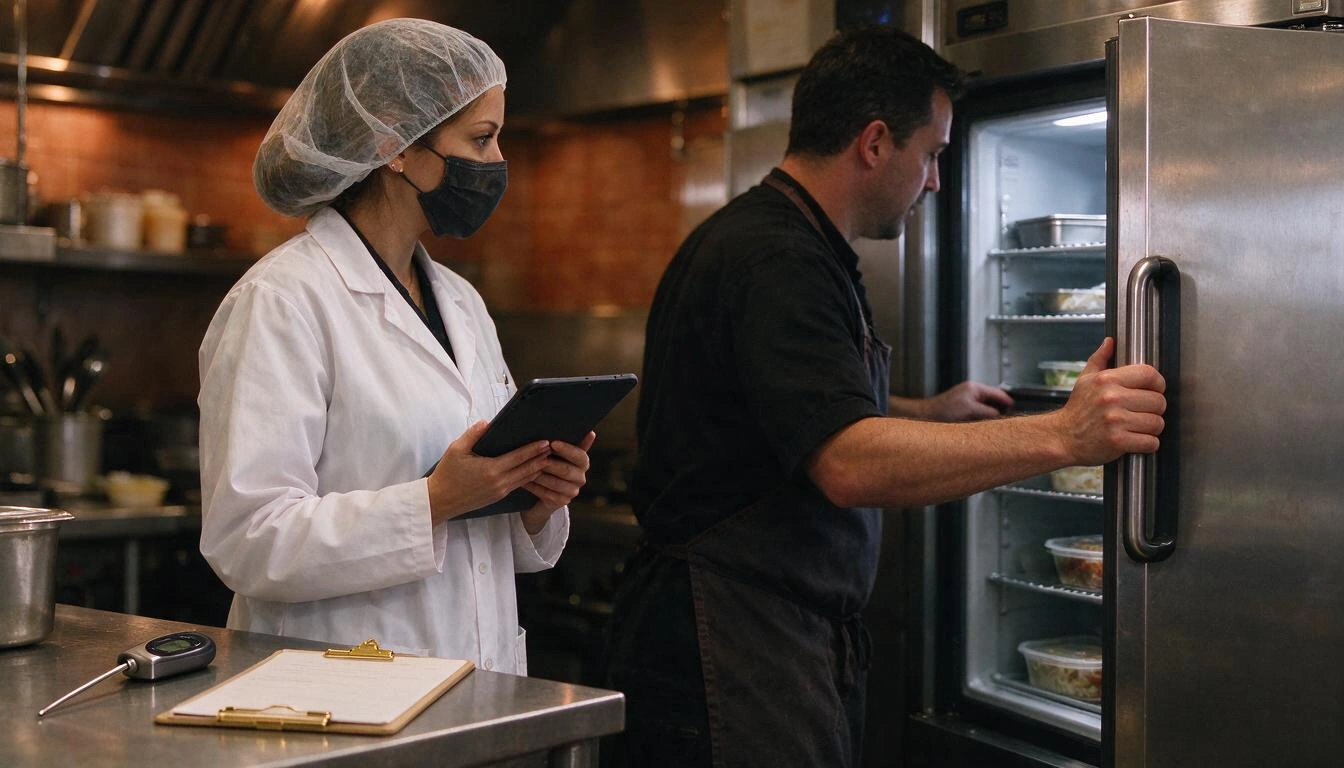
And during that visit, no one asks you for proof of registration —the Administration already has that—. What is reviewed is whether you have set up and documented the self-control system, because registration does not imply any prior verification of your facilities. In other words: communicating the activity is a morning's task; the self-control plan is the work of every day.
What does the inspection exactly check? HACCP, temperatures and the 14 allergens
Three blocks, all three documentary. First, the self-control plan based on HACCP principles, required by Article 5 of the Regulation (EC) 852/2004 and specified for retail in Article 20 of RD 1021/2022, which requires to "create, implement and maintain an updated permanent procedure" based on HACCP and to designate a person responsible for its implementation. Second, the records that demonstrate that this plan is being executed: temperatures of refrigerators and freezers, cleaning and disinfection, receipt of goods, traceability, and the corrective actions noted when a reading goes out of limits. Third, the allergen information.
| What is checked | Regulation that requires it | What must be visible |
|---|---|---|
| HACCP self-control plan | Art. 5 Regulation (EC) 852/2004 · Art. 20 RD 1021/2022 | Updated document, adapted to your activity, with designated responsible |
| Temperature records | HACCP plan (monitoring of CCP) | Dated readings of refrigerators and freezers, with defined limits |
| Corrective actions | HACCP principles | What was done when a temperature deviated, who and when |
| Allergen information | Annex II Regulation (EU) 1169/2011 · RD 126/2015 | The 14 declared allergens dish by dish and available in writing |
| Traceability | Regulation (EC) 178/2002 | Whom you buy from and what batch came in |
On allergens, it is important to be precise, because this is where most failures occur: the Regulation (EU) 1169/2011 establishes the 14 allergens that must be declared (gluten-containing cereals, crustaceans, eggs, fish, peanuts, soy, milk, nuts, celery, mustard, sesame, sulfites, lupins, and mollusks) and RD 126/2015 regulates how to provide them in unwrapped food. The information can be provided orally, but only if a sign indicates where to request it and the information is available in writing for staff and for the control authority. The "I ask the cook" without documentary support does not comply.
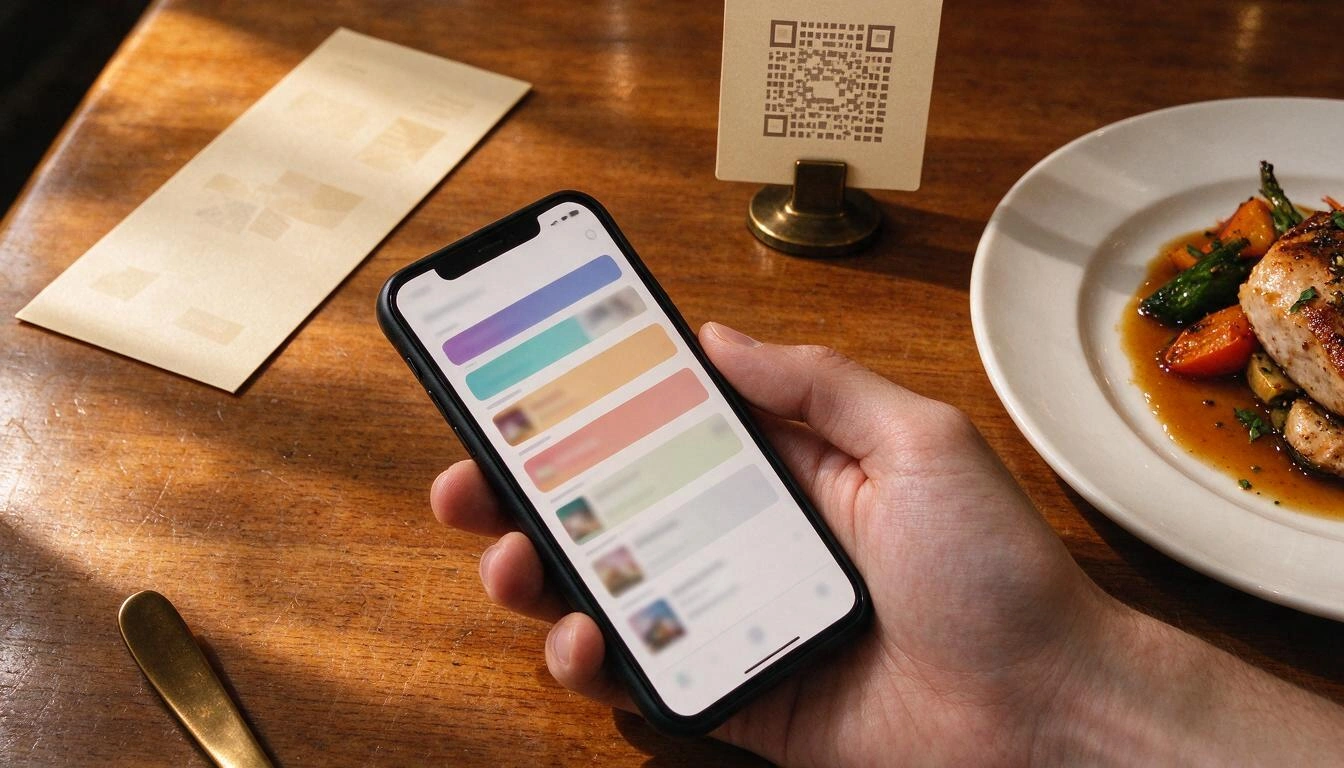
A detail that ruins many well-intentioned menus: leaving a dish blank does not mean "does not contain". A blank space in the allergen table is absent information, not a negative declaration, and a false negative in allergens is the failure with the worst possible consequences, both health-wise and legally.
How much does it cost not to have it? From €5,000 to closing the establishment
The sanctioning regime in food safety is governed by the Law 17/2011, of July 5, on food safety and nutrition. Its Article 51 classifies fines into three tiers and, in very serious cases, also allows for closing the establishment for up to five years.
| Type of infringement | Amount of the fine | Additional measure |
|---|---|---|
| Minor | Up to €5,000 | — |
| Serious | From €5,001 to €20,000 | — |
| Very serious | From €20,001 to €600,000 | Temporary closure of the establishment, maximum 5 years |
The qualification depends, among other criteria, on the risk to health, the degree of intentionality, the generalization of the conduct, and recidivism. That is why an allergen error is not measured the same as a wrongly placed label: it directly affects the health of the diner and easily escalates in tier.
Andalusia: 1,000 inspections in restoration in 2026, with allergens in focus
That regional control is tightening is not an impression. The Junta de Andalucía maintains during 2026 a campaign of inspection in restoration establishments from February to December with a minimum of 1,000 inspections, according to information published by Consumo Responde on August 6, 2026. Among the aspects reviewed is expressly the regulation on allergens and intolerances, along with complaint forms, price display, olive oil, and water labeling.
The data that should make any restaurateur think is from the previous campaign: in 2025, a 15.49% non-compliance was detected in the inspected establishments. One in six.
Madrid censuses, Andalusia inspects: they are the two halves of the same movement. And the framework that drives both is state-level —RD 1021/2022— so the restaurateur in any community can assume that the direction is the same.
Checklist: what to have ready before March 28, 2027
An honest review, in order of effort. The first one can be done in a morning; the rest is what you really risk in an inspection.
- Communication to the registry submitted and health registration number noted where you can find it in ten seconds.
- Complete legal data of the establishment in one place: business name, CIF, exact address, owner, and declared activities.
- Written HACCP self-control plan, adapted to your actual activity (if you don't have a freezer, don't copy a plan that talks about freezing) and with designated responsible person by name.
- Defined temperature limits for each chamber, freezer, display case, and showcase.
- Daily temperature records signed by the person taking them, with date and time.
- Documented corrective actions: every deviation must have written what was done with the product and with the equipment.
- Cleaning, receipt of goods, and traceability records up to date.
- The 14 allergens declared dish by dish, with the menu updated after each change of supplier or recipe.
- Visible sign indicating where to request allergen information, if you provide it orally, and written backup available.
- Staff training in allergens and handling, and a recoverable history of at least the last 12 months of records for when requested.
Frequently Asked Questions
Do I have to pay anything to register in the health registry of Madrid?
No. The communication or responsible declaration procedure to the Registry of Food Businesses for Retail Trade does not require payment of fees, according to the procedure itself published on the electronic headquarters of the Community of Madrid.
What happens if I do not register before March 28, 2027?
You are in a situation of non-compliance with an obligation to communicate activity, which may result in a requirement for correction and, if applicable, in a sanctioning procedure in health matters. The decree sets March 28, 2027, as the end of the transitional period for establishments that were already active.
My bar already has a municipal activity license, isn't that enough?
No. The municipal license or responsible declaration is an urban and activity title from the City Council; the regional health registry is a Public Health census for official food control. They are two different things and coexist.
If I am in the meat retail registry, do I have to register again?
No. Companies that were already listed in the meat retail registry of the Community of Madrid are registered ex officio in the new registry; what you need to do is wait to receive your new registration number and check that your data is correct.
Is a simplified HACCP valid for a small bar?
Yes. Article 20 of RD 1021/2022 allows applying procedures based on HACCP in a simplified manner, relying on guides of correct hygiene practices, according to community guidelines 2020/C 199/01. Simplified does not mean non-existent: it is still mandatory to have it written, applied, and updated.
Can I provide allergen information only verbally?
Only partially. RD 126/2015 allows providing it orally if there is a sign or equivalent means indicating where to request it, but requires that the information be available in writing for the establishment's staff and for the control authority that requests it.
How long do I have to keep temperature records?
The regulation does not set a single deadline for retail trade, so the usual practice of inspections is to request the recent history. Having accessible the last 12 months is the prudent criterion to avoid falling short during a visit.
Does this only affect the Community of Madrid?
The registry, yes: it is created by a Madrid regional decree. But the obligation for retail establishments to register in regional registries through communication or responsible declaration comes from the first final provision of RD 1021/2022, which is a state regulation. The rest of the requirements —HACCP, temperatures, allergens— are the same throughout Spain.
Put the registry, allergens, and HACCP in the same place
Filling out the registration form will take you a morning. What comes next —the updated allergen menu, the temperatures signed every day, the written corrective actions, and the recoverable history— is what really determines how an inspection ends, and it is exactly what today is kept in paper folders and spreadsheets that no one finds on the day the inspector arrives.
AIsToRestaurant, the AIsToHire app for hospitality, is designed for that second part. You store the legal data of the establishment and the health registration number once in the establishment's file, declare the 14 allergens dish by dish with a proposal from the AI that a manager must confirm and sign —the AI never decides alone on anything affecting health—, publish the menu in PDF with a QR code for the table, sign the HACCP records from your mobile with a four-digit PIN (even without coverage inside the chamber, synchronizing later), and on the day the inspector comes, you pull out the dossier of the last 12 months in PDF, with cover page, current limits, daily matrix, and the name of who signed each record. You can see it in detail on the allergens and HACCP records page for restaurants.
Get to March 28, 2027 with everything done: try AIsToRestaurant for free, keep your establishment's health registration number, declare the 14 allergens dish by dish, and start signing APPCC records from your mobile.
Get to March 28, 2027 with everything done: try AIsToRestaurant for free, keep your establishment's health registration number, declare the 14 allergens dish by dish, and start signing APPCC records from your mobile.Keep reading
View all articles →
HACCP for restaurants and bars: what records does Health require in 2026 and how to manage them from your mobile

Why Your Car Insurance Increased in 2026: Average Premium of €1,412 and Historic Record

Discussing via WhatsApp or talking in person: what science says about couple conflicts through messages