 aiCal
Missed appointments: why they happen and how to set up an online scheduling system to reduce them
Team at aiCalWritten with AI assistance16 min readIn summary:
- In Spain, absenteeism for scheduled medical appointments ranges, according to the study, between ~5% and 14.6%; and in a tertiary hospital, around 60% of absences had administrative causes —not knowing that the appointment existed, duplicate appointment, cancellation that was never recorded— and not due to the patient (General and Family Medicine, 2016).
- Reminders work and it is measured: the Cochrane review by Gurol-Urganci and others (2013) found a 67.8% attendance without reminder versus 78.6% with SMS reminder.
- The reminder that worked best in a randomized trial with 10,111 people was the one that stated how much the absence costs: it reduced no-shows from 11.1% to 8.4% (PLOS ONE, September 14, 2015).
- 38.1% of Europeans aged 16 to 74 made an appointment or booked online with a public administration in 2025 (Eurostat, March 12, 2026). Booking without calling is now the default expectation.
- The time change on October 25, 2026, closed the BOE calendar (Order PCM/186/2022), but it was not the last: the European Commission has already set the dates from 2027 to 2031. A schedule that does not keep time in UTC is disrupted twice a year.
Closing a half-hour meeting costs, on average, more emails than anyone admits: "Does Tuesday work for you?", "Thursday is better", "What time?", "In your time zone or mine?". And when it finally closes, between 5% and 15% of those appointments do not take place. This article collects what we know with data about why appointments are missed, which reminders really work, and what legal obligations a public booking page has today in Spain. At the end, you will see how aiCal, the scheduling and booking app from AIsToHire, fits into all this —and what things, honestly, it does not do.

Missed appointments are, above all, a failure of the scheduling system
Most absences are not the client's fault: they are the fault of the circuit that generated the appointment. In the study Patient Absenteeism at Specialized Outpatient Consultations in a Tertiary Hospital in Spain (University Hospital Complex of Albacete, published in General and Family Medicine in 2016, about 1,885 first appointments), the absenteeism rate was 14.6% and the authors concluded that around 60% of cases were due to administrative factors, that is, correctable by changing the system and not the patient.
The reasons stated by patients in that same study are devastatingly banal:
| Stated reason for not attending | % of cases |
|---|---|
| Did not know they had an appointment | 16.1% |
| Duplicate appointment or attended on another date | 15.6% |
| Had previously canceled the appointment | 15.1% |
| Forgot about the appointment | 12.9% |
| Improved before the date | 12.4% |
Source: General and Family Medicine, 2016 (case-control study, 276 cases and 215 controls).
Translated to an office, a consultation, or a commercial agenda: the client did not receive a confirmation they could keep, booked twice, canceled through a channel that no one read, or simply forgot it. All four things can be fixed with software, not with reproaches.
How much does a missed appointment cost?
The cost of an absence is the gap that you can no longer sell: a blocked hour that does not generate income and that also displaced another client. The most cited data in Spain was published by the Journal of Quality in Healthcare in 2017: at the Costa del Sol Health Agency (Marbella hospital plus two high-resolution centers), a 13.8% absenteeism in outpatient consultations resulted in an estimated cost of €3,386,919 in the twelve months analyzed (second half of 2013 and first half of 2014).
If you want the self-employed version, the arithmetic is straightforward and you can do it today:
| Variable | Your case | Example |
|---|---|---|
| Appointments per month | — | 60 |
| Absence rate | — | 10% |
| Lost appointments/month | appointments × rate | 6 |
| Average session price | — | 60 € |
| Direct monthly cost | lost × price | 360 € |
| Annual cost | × 12 | 4,320 € |
Does not include the time you spend rescheduling, which is the invisible cost: each manual reschedule means two or three more emails.
Do reminders really work? Here’s what the trials say
Yes, and with a large effect replicated in several countries. The Cochrane systematic review Mobile phone messaging reminders for attendance at healthcare appointments (Gurol-Urganci et al., 2013), with 8 randomized trials and 6,615 participants, found attendance of 67.8% without reminders compared to 78.6% with SMS reminders (relative risk 1.14, moderate quality evidence), and concluded that SMS is on par with phone reminders at a lower cost.
| Study | Where and when | Outcome |
|---|---|---|
| Cochrane, Gurol-Urganci et al. (2013) — 8 RCTs, 6,615 participants | International review | Attendance 67.8% without reminder → 78.6% with SMS (RR 1.14) |
| Hallsworth et al., PLOS ONE (14-09-2015) — 2 RCTs, 10,111 and 9,848 appointments | NHS hospitals, UK | Absences 11.1% → 8.4% with the message indicating the specific cost of absence (OR 0.74) |
| Closed-loop audit, BJPsych Open (20-06-2025) | Community mental health team, London | Non-attendance 7.5% → 5.0% with SMS one working day before (average improvement of 33.3%) |
| Observational study in two centers, Frontiers in Digital Health (02-05-2025) — 16,894 outpatient appointments and 81,173 hospital admissions | Ophthalmology, Germany | The use of SMS reminders increased from 11.4% to 25.4% and correlated with the drop in absences (Spearman r = −0.67; p = 0.0013); OR of the reminder: 0.93 |
Two honest nuances before you copy these numbers into your business plan: almost all good evidence comes from the healthcare sector, where absence is well measured, and the effect greatly depends on the starting rate —if you’re already at 3%, you’re not going to drop ten points—. And the strongest evidence is for SMS, not email.
The most effective reminder is the one that explains what happens if you don’t show up
The most actionable finding from the trial published in PLOS ONE on September 14, 2015, is that not all reminders are created equal: with the same channel, same time, and same cost, the message indicating the specific cost of an absence reduced no-shows from 11.1% to 8.4% (odds ratio 0.74), while messages saying "calling is easy" or social norm messages did not differ from the control. In the second trial of the same article, the specific cost message (8.2%) outperformed the generic cost message (9.9%), the empathetic message (10.7%), and the one reminding that the appointment was recorded in the calendar (9.6%).
The practical takeaway for a freelancer: your reminder shouldn’t just say "tomorrow at 10". It should say what happens if you don’t show up and how to cancel with one touch. Two sentences and a link.
Booking online is now the norm, even outside the client’s mobile
The habit is established and there is official data: according to Eurostat (note published on March 12, 2026), in 2025 71.9% of people aged 16 to 74 in the EU used websites or apps of public administrations, and 38.1% specifically used them to make an appointment or reservation. If an administration can achieve that, a paying client will not understand having to negotiate the time via email.
In other words: the booking page is no longer a luxury of tech consulting; it is the 2026 equivalent of the hours posted in the shop window.
The time change on October 25, 2026, was not the last: why your schedule needs UTC
On Sunday, October 25, 2026, at 3:00 AM local time, the clocks went back to 2:00 AM. That date closed the five-year calendar published by Order PCM/186/2022 (BOE of March 15, 2022) for the years 2022 to 2026, and from there headlines about "the last time change" emerged. It was not: the European Commission has already published, in application of Article 4 of Directive 2000/84/EC, the summer time calendar for 2027-2031.
| Year | Starts summer time | Ends |
|---|---|---|
| 2027 | Sunday, March 28 | Sunday, October 31 |
| 2028 | Sunday, March 26 | Sunday, October 29 |
| 2029 | Sunday, March 25 | Sunday, October 28 |
| 2030 | Sunday, March 31 | Sunday, October 27 |
| 2031 | Sunday, March 30 | Sunday, October 26 |
Source: Communication from the European Commission under Article 4 of Directive 2000/84/EC, published in the Official Journal of the EU in March 2026 (reference C/2026/1660); transitions occur at 1:00 UTC. The 2018 proposal to abolish seasonal time changes remains blocked in the EU Council due to lack of agreement among member states on which time to set.

This matters more than it seems. Two practical consequences:
- The time must be stored in UTC and displayed in each person’s zone. If you store "10:00" flat out, the appointment on November 2 booked in October shifts one hour. It’s the classic error of homemade agendas in spreadsheets.
- Spain and the rest of the EU do not change the time on the same day as the U.S. In 2026, U.S. daylight saving time ended on November 1 and European time ended on October 25: during that week, the difference between Madrid and New York was five hours instead of six. If you have clients across the Atlantic, that week is when missed calls happen.
Since June 2025, your booking page also has legal obligations
If you sell services online in Spain, two regulations directly affect you. What follows is disclosure, not legal advice: for your specific case, consult a professional.
- Accessibility. The Law 11/2023, of May 8, which transposes Directive (EU) 2019/882 (European Accessibility Act), applies its obligations from Title I starting June 28, 2025 and expressly includes e-commerce services. Its article 3.3 exempts microenterprises providing services —fewer than 10 employees and an annual turnover or balance sheet not exceeding 2 million euros—. Many freelancers and small offices fall under this exemption; that does not negate the fact that an accessible booking page (sufficient contrast, keyboard navigable, large buttons, alternative texts) is used by more people.
- Data protection and commercial communications. A confirmation email or a reminder of an appointment that the client has requested is not advertising: it is covered by the execution of the contract (art. 6.1.b of the GDPR). What does require consent or a prior contractual relationship, according to article 21 of the LSSI, is commercial communication. The boundary is clear and it is advisable not to cross it: if you sneak in a promotion in the appointment reminder, you have changed legal categories.
How to set up a self-defending appointment schedule: seven decisions
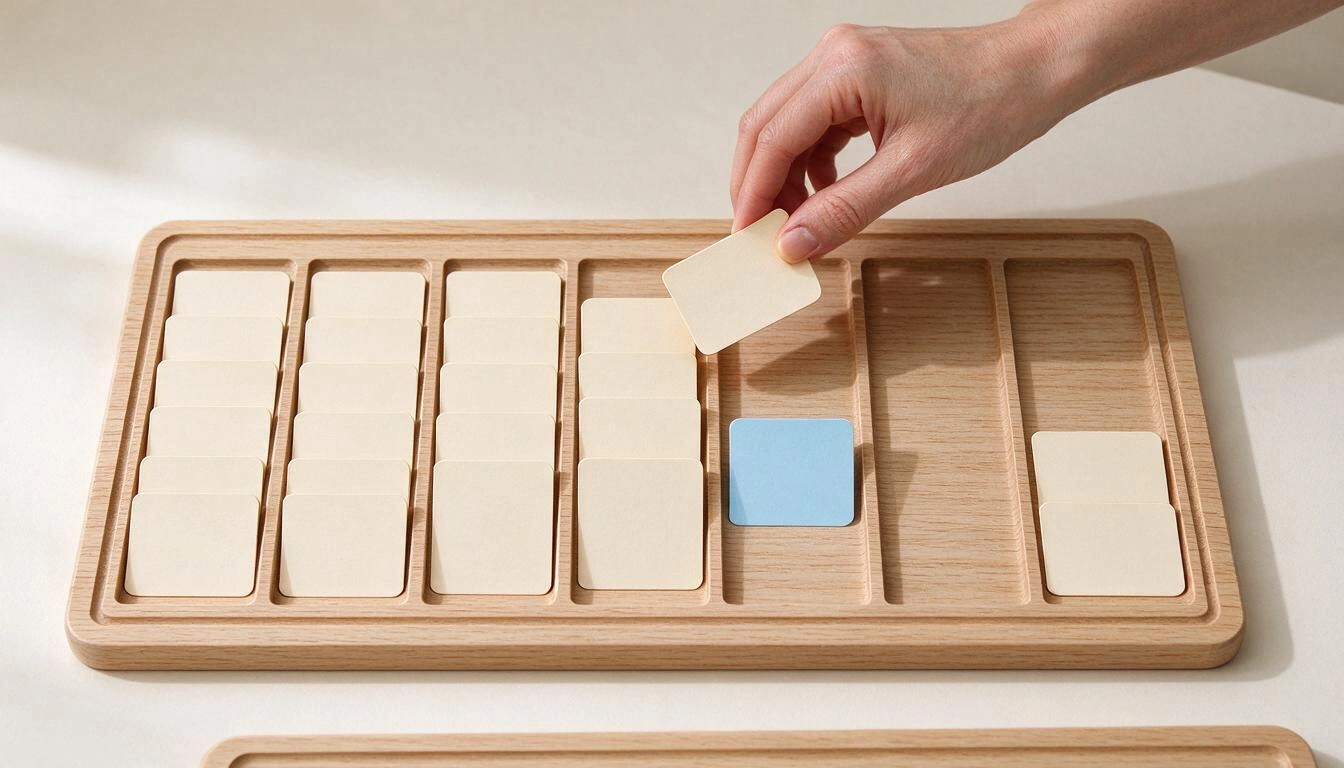
A decent booking system is not "a public calendar": it is a set of rules that protect your day. Here are the seven decisions to be made, in order, that determine everything else.
| # | Decision | What it solves | Reasonable starting value |
|---|---|---|---|
| 1 | Duration by type of appointment | So a "quick consultation" doesn't take an hour | 15/30/45/60 min, one per format |
| 2 | Granularity of starts | So appointments start on the hour or half-hour and not at 10:07 | 30 min |
| 3 | Buffer before and after | Notes, bathroom, travel, breathe | 10-15 min after |
| 4 | Minimum notice | So no one books for within 20 minutes | 12-24 h |
| 5 | Booking window | How far into the future you open | 30-60 days |
| 6 | Daily cap | The limit of meetings you can handle in a day | 4-6 |
| 7 | Change policy | Until when and how many times rescheduling is allowed | Up to 24 h before, one change |
Three rules that industry experience has distilled and are advisable not to skip:
- Separate duration from granularity. They are distinct things and confusing them is the most common silent mistake: with a schedule from 9:00 to 13:00, duration of 90 minutes, and generous buffers, you can end up with zero slots offered and not realize it until a client writes you "I can't find any available time."
- Do not cut the first slot of the day with the prior buffer. If you open at 9:00, 9:00 must be bookable; otherwise, you systematically lose the best slot of the morning.
- Allow the client to cancel and reschedule on their own. A cancellation with 48 hours' notice is a recovered slot; a cancellation that the client does not know how to make is an absence. Remember that in the Albacete study, 15.1% of absentees thought they had canceled.
Where aiCal fits in and what it does not do
aiCal is the scheduling and booking app from AIsToHire for those who sell their time —consultants, coaches, salespeople, lawyers, physiotherapists, trainers, freelancers— and do not want a CRM. It implements exactly the seven decisions above: types of events with their duration (from 5 to 480 minutes) and their granularity (15, 30, or 60), buffers before and after, minimum notice, booking window, daily cap, specific blocks, vacation mode, and manual approval of appointments you want to filter. The client enters your public link, sees only the slots that are truly available after applying all those rules, chooses one in their own time zone and books without registering; they receive confirmation with the .ics file and a personal link with which to cancel or reschedule themselves. You can share that link as is, as a QR code, or embedded in your website. All this is on the aiCal page, the online appointment and booking schedule from AIsToHire.
And what it does not do, in case it is decisive for you:
| What you need | Does aiCal do it? |
|---|---|
| Public booking page without client registration | Yes |
| Slots calculated with buffers, minimum notice, window, and daily cap | Yes |
| Visitor's time zone and time change | Yes |
Confirmation and reminders via email, with .ics | Yes |
| Cancel and reschedule by the client from a link | Yes |
| In-person, phone, or video call appointments with your fixed room | Yes |
| Appointment history and export to CSV | Yes |
| ICS feed to subscribe to your calendar | Yes, read-only |
| Bidirectional synchronization with Google Calendar | No |
| Automatically create video call rooms (Meet/Zoom/Teams) | No: it attaches a fixed URL of its own |
| SMS or WhatsApp reminders | No: reminders are via email |
That last point deserves emphasis because this article has just explained that the best evidence is via SMS: aiCal sends confirmations and reminders via email, with the attached .ics so that the appointment enters the client's calendar. The piece you do get is the one the Albacete study pointed out as 60% of the problem: the appointment exists in a unique place, the client has written confirmation, the cancellation is genuinely recorded, and there are no duplicate appointments.
Frequently Asked Questions
How do I avoid being stood up on appointments?
With four things in this order: immediate written confirmation that the client can save in their calendar (.ics file), a reminder before the appointment that includes what happens if they don’t show up and how to cancel with one click, a dedicated cancellation and rescheduling link, and a visible deadline policy when booking. The evidence from the reminder is published: 67.8% attendance without a reminder versus 78.6% with SMS in the 2013 Cochrane review, and a drop from 11.1% to 8.4% just by specifying the cost of absence (PLOS ONE, 2015).
Can I charge for a missed appointment?
You can agree on a cancellation policy, but enforceability depends on the contract, the type of service, and whether the client is a consumer; that is a legal matter you should consult with a professional. Practically speaking, what research shows works is not charging, but making the cost visible in the reminder and facilitating cancellation.
Do my clients have to register to book?
Not on a well-designed booking page. The client opens the link, sees your available slots in their time zone, fills in the fields you’ve defined, and confirms. In aiCal, the public page works without login and sends the confirmation with the .ics.
What happens with appointments on the weekend of the time change?
If your tool saves appointments in UTC and displays them in each participant's time zone, nothing happens: the appointment shows correctly on both sides. The problem arises when the time is saved "as is". Be careful with the week when Europe has already changed and the United States has not: in 2026, Europe changed on October 25 and the U.S. on November 1, so during those days the usual difference was reduced by one hour.
Is it mandatory for my booking page to be accessible?
It depends on your size. Law 11/2023 applies from June 28, 2025, to e-commerce services, but its article 3.3 exempts micro-enterprises providing services (fewer than 10 people and up to 2 million euros in turnover or annual balance). If you exceed that threshold, it applies to you. And even if it doesn’t apply to you, a navigable page with keyboard accessibility and good contrast will be reserved by more people.
How many slots should I open per day?
As many as you can sustain, not as many as you can fit. A daily cap of 4 to 6 meetings, a buffer of 10-15 minutes after each one, and a minimum notice of 12-24 hours is a conservative starting point that avoids a day of seven back-to-back meetings and last-minute notices.
Does a booking page sync with my Google Calendar?
It depends on the tool. There are two levels: the ICS feed, which publishes your appointments for your calendar to read (read-only), and two-way synchronization, which also reads your events to block slots. aiCal offers the first, not the second: if you have a personal calendar full of commitments unrelated to the app, you will have to block those times manually or with the weekly schedule.
Start with the link, not the calendar
If you are only going to change one thing this month, let it be this: stop negotiating hours via email and send a link with your real slots. Then adjust the buffers, the minimum notice, and the daily cap until the agenda the client sees is the agenda you can truly sustain. That is the mechanism that aiCal, the online booking and appointment app from AIsToHire, sets in motion in minutes: you create a type of event with a name and a duration, define your weekly schedule, and share the link.
Cited sources: Cochrane — Mobile phone messaging reminders for attendance at healthcare appointments (2013) · PLOS ONE, 14-09-2015 · BJPsych Open, 20-06-2025 · Frontiers in Digital Health, 02-05-2025 · General and Family Medicine, 2016 · Quality in Health Care, 2017 · Eurostat, 12-03-2026 · Order PCM/186/2022 (BOE) · Commission Communication C/2026/1660
Stop closing appointments through emails: create your free account on aiCal, set your schedule with your buffers and daily limits, and share your booking link today.
Stop closing appointments through emails: create your free account on aiCal, set your schedule with your buffers and daily limits, and share your booking link today.Keep reading
View all articles →
How much does a missed appointment cost: no-show rates by sector in 2026
Why Your Car Insurance Increased in 2026: Average Premium of €1,412 and Historic Record

Discussing via WhatsApp or talking in person: what science says about couple conflicts through messages