 aiContacts
Locksmith and emergency plumber scam: how much you should really pay and how to avoid falling for it
Team at aiContactsWritten with AI assistance19 min readIn summary
- On October 30, 2026, the National Police arrested two men in Burgos for fraud and coercion: they had agreed on €500 verbally to fix some drainage pipes, left the kitchen half dismantled, and demanded €1,173 to leave, according to Burgos Conecta.
- Opening a regular door during business hours costs between €60 and €100, and an urgent lock change between €200 and €300. The fake locksmiths charge €700–1,500 for the same service, according to the Union of Security Locksmiths (March 2, 2026).
- Nearly 60% of locksmith services in Spain are performed by unlicensed individuals, according to the president of UCES quoted by Escudo Digital (July 26, 2025).
- Seven signs reveal a false emergency professional: no written estimate, no NIF or invoice, payment in cash or Bizum, price increases during the job, no company name given, changing mobile numbers, and pressure to decide immediately.
- The effective defense is not haggling at three in the morning: it is having already noted down the locksmith, plumber, electrician, and air conditioning technician who did something well, along with what they charged you.
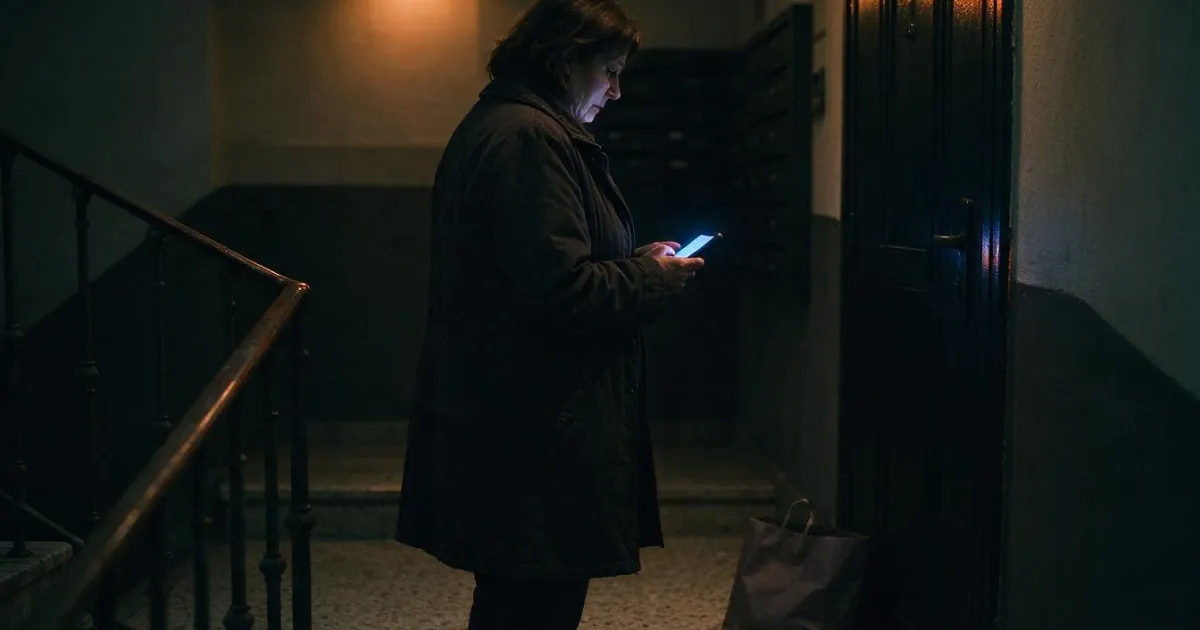
There is a type of scam that does not depend on your naivety. It depends on whether you are standing in the hallway with shopping bags on the floor, or barefoot in a kitchen with water, looking at your phone and calling the first number that appears. That urgency has a price, and the price is several hundred euros. This guide is a service article for homeowners and tenants: what happened in Burgos, how much an emergency really costs at home, how to recognize the person coming to scam you, and what to do if you have already paid. And, in the end, the only preventive measure that really works —having the four good phone numbers located before you need them— which is exactly the gap that aiContacts fills, the contact and trusted professionals directory of AIsToHire.
What happened in Burgos and why the pattern always repeats
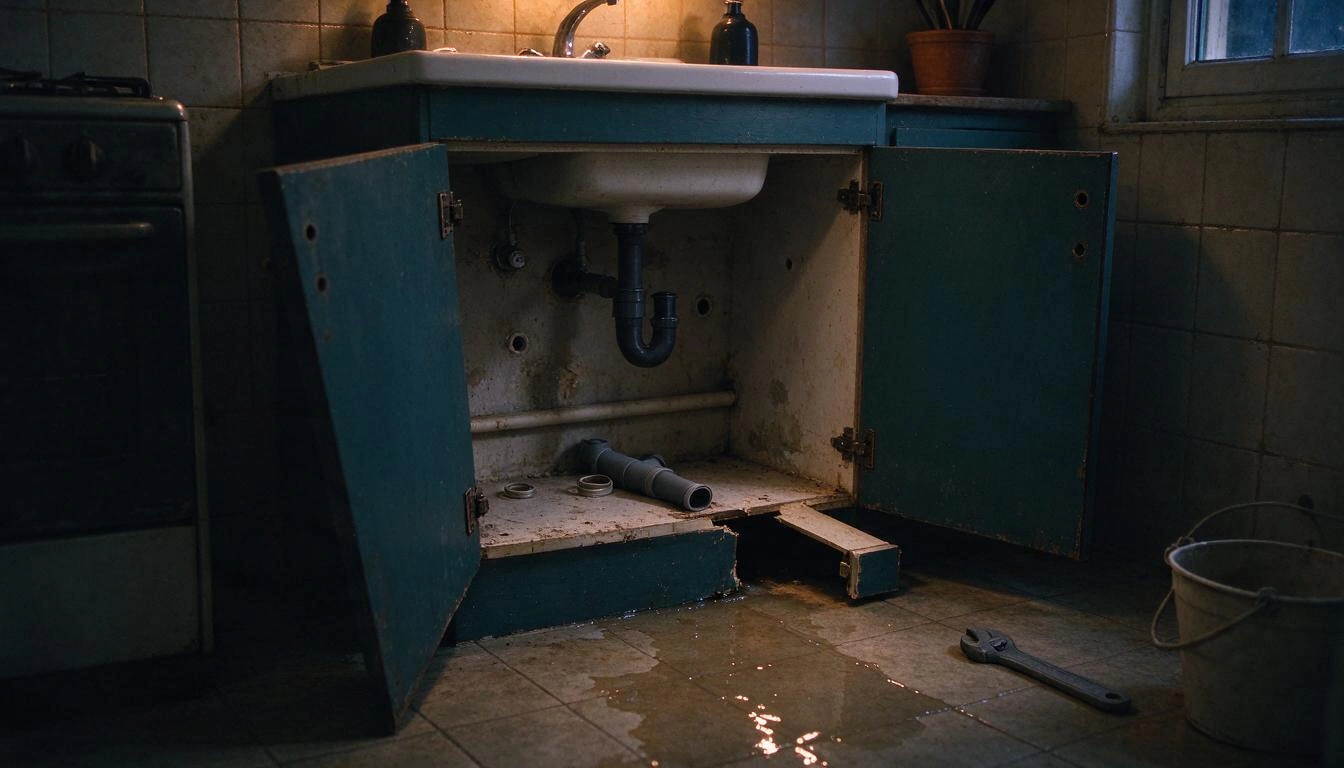
On October 30, 2026, the National Police arrested two men, aged 29 and 35, accused of fraud and coercion against an elderly couple from the southern district of the city. The events took place on September 18, 2026: they came to repair some drainage pipes for a verbally agreed budget of €500, dismantled the pipes and kitchen furniture, interrupted the work, and around nine at night announced they were leaving. When the owner asked when they would finish, one of them threatened him and demanded €1,173 to leave the house. Intimidated, the couple paid. Both detainees had a history of similar scams amounting to several thousand euros, according to Burgos Conecta.
What turns this case into a pattern and not an anecdote are three elements that repeat in almost all reports from the sector:
- The estimate was verbal. There is no paper to compare with the final figure, so the client has nothing to argue with.
- The house becomes unusable halfway through the job. With the sink dismantled and the furniture out, refusing to pay means staying that way.
- The final amount is demanded on the spot, at the home, and with pressure. There is no time to ask for a second opinion.
In locksmithing, the mechanism is identical and better documented. UCES summarizes it bluntly: the decisive factor is not the client's ignorance, but the pressure of urgency. Whoever calls has been outside for an hour, with children, cold, or a flight about to leave, and that is precisely what is charged for. The association places the classic complaint in ads "from €29" —a price that never includes travel, actual labor, or night surcharges— and in advertising with mobile numbers that are hard to trace and companies without a verifiable physical address.
It is also worth knowing that the channel through which most people find these services has already changed: since November 4, 2024, Google stopped accepting locksmith ads in Spain, a measure that had already been applied in Germany, Belgium, Sweden, and the Netherlands, precisely due to the volume of complaints about abusive prices, according to El Economista. The visibility of fraud has decreased, but not the fraud itself: now it slips through organic results, business listings, and stickers on portals and containers.
How much should an opening, a clearing, or a leak really cost?
A normal door opening during business hours costs between 60 and 100 €, an urgent lock change between 200 and 300 €, a clearing without a truck between 70 and 150 €, and the repair of a small leak from about 70 €. If the figure they give you upon arrival triples these ranges, you are not paying for an emergency: you are paying for a scam. UCES estimates that what fake locksmiths charge is 700–1,200 €, and the president of the association has described invoices of 1,000 to 1,500 € for opening a door and installing a lock.
| Service | Reasonable range (business hours) | What the fraud charges | Source |
|---|---|---|---|
| Opening a door closed suddenly | 60–100 € | 700–1,200 € | UCES (60–80 €) and price comparators 2026 |
| Opening with the key turned | 120–260 € | — | Presupuesta, 2026 |
| Opening a reinforced or armored door | 80–150 € | — | Presupuesta, 2026 |
| Urgent lock or cylinder change | 200–300 € | up to 1,500 € with the opening | UCES and Escudo Digital |
| Clearing without a truck | 70–150 € | — | Cronoshare, prices 2026 |
| Repair of a small leak | from ~70 € | — | Cronoshare, prices 2026 |
| Hour of plumber, normal day | 25–40 €/h | — | Cronoshare, prices 2026 |
| Hour of emergency plumber | 60–150 €/h | — | Cronoshare, prices 2026 |
Two important nuances before using the table as a weapon:
- These are market indicative ranges, not official rates. In Madrid and Barcelona, the high end increases, and a high-security lock, an armored door, or a blockage that requires a truck legitimately exceeds these numbers.
- The total of a night emergency can be high without being abusive. In locksmithing, at night, on Sundays or holidays, an invoice of 120–260 € is reasonable. What is not reasonable is jumping from there to four figures.
A locksmith from Málaga who published an anti-scam decalog in April 2026 adds a useful piece of information for discussion at the door: nine out of ten openings are resolved without breaking the lock, so "I had to break the cylinder" is not an explanation, it is an inflated bill, according to the decalog collected by Diario Siglo XXI.
What surcharges for night or holiday work are legitimate?
An emergency, night, or holiday surcharge is perfectly legal and common: the market operates at +30% to +100% over the normal rate, with a typical night surcharge of 30–50 € on the emergency rate itself, according to Cronoshare's plumbing prices 2026. What is not legitimate is for that surcharge to appear for the first time when the work is already done.
| Concept | What is reasonable | How it should appear |
|---|---|---|
| Emergency / out-of-hours surcharge | +30% to +100% over the base rate | Mentioned by phone before traveling |
| Night surcharge (night hours) | 30–50 € additional on the emergency rate | Separate line in the quote |
| Sundays and holidays | Within the same urgency range | Separate line in the quote |
| Travel | Fixed amount known in advance | Separate item from labor |
| Materials and parts | At market price, detailed | Separate item, with warranty |
The consumer administration is clear on this point. The home renovation guide from the Community of Madrid states that the company must inform, if asked, of the price of labor, travel, and emergency surcharges; that the invoice must match the accepted quote; and that if an additional problem appears when opening the wall, the professional needs your written authorization before proceeding. Adding amounts by surprise is not a technical unforeseen: it is a breach.
And regarding the prior quote: the Royal Decree 58/1988 requires that a written quote be provided for the repair of household appliances, and only exempts from this if the client renounces in writing and signing the phrase "I renounce the prior quote and authorize the repair". If someone makes you sign a paper in the hallway without reading it, it is very likely that it is that renunciation.
The seven warning signs of a false emergency professional
There are seven signs that, together or separately, are enough to stop the service and call another. None require understanding plumbing or locks: all are administrative, and that’s why they are reliable.
| # | Signal | Why it reveals fraud |
|---|---|---|
| 1 | Does not provide a written estimate before starting | Without paper, there is no figure to compare with the final invoice. It’s the mistake that sank the Burgos case |
| 2 | Does not provide NIF/CIF or issue an invoice | A registered professional has no reason to hide them |
| 3 | Demands cash or Bizum | A payment without a trace cannot be reversed or claimed from the bank |
| 4 | The price increases during the work | "I had to break the cylinder", "it’s worse than it seemed": the mobile estimate is the scam |
| 5 | Does not provide a company name or physical address | UCES points out the lack of a verifiable address as a hallmark of the house |
| 6 | The phone is a mobile that changes | Call centers that redirect to different freelancers every day, impossible to trace later |
| 7 | Pressures you to decide now | The hurry is their sales tool, not your technical problem |
Add an eighth criterion, which is more of a prior filter: beware of "from 29 €". That number does not exist as a final price anywhere in Spain, and UCES identifies it as the most common bait of fraudulent advertising.
What to ask by phone in 30 seconds before giving your address
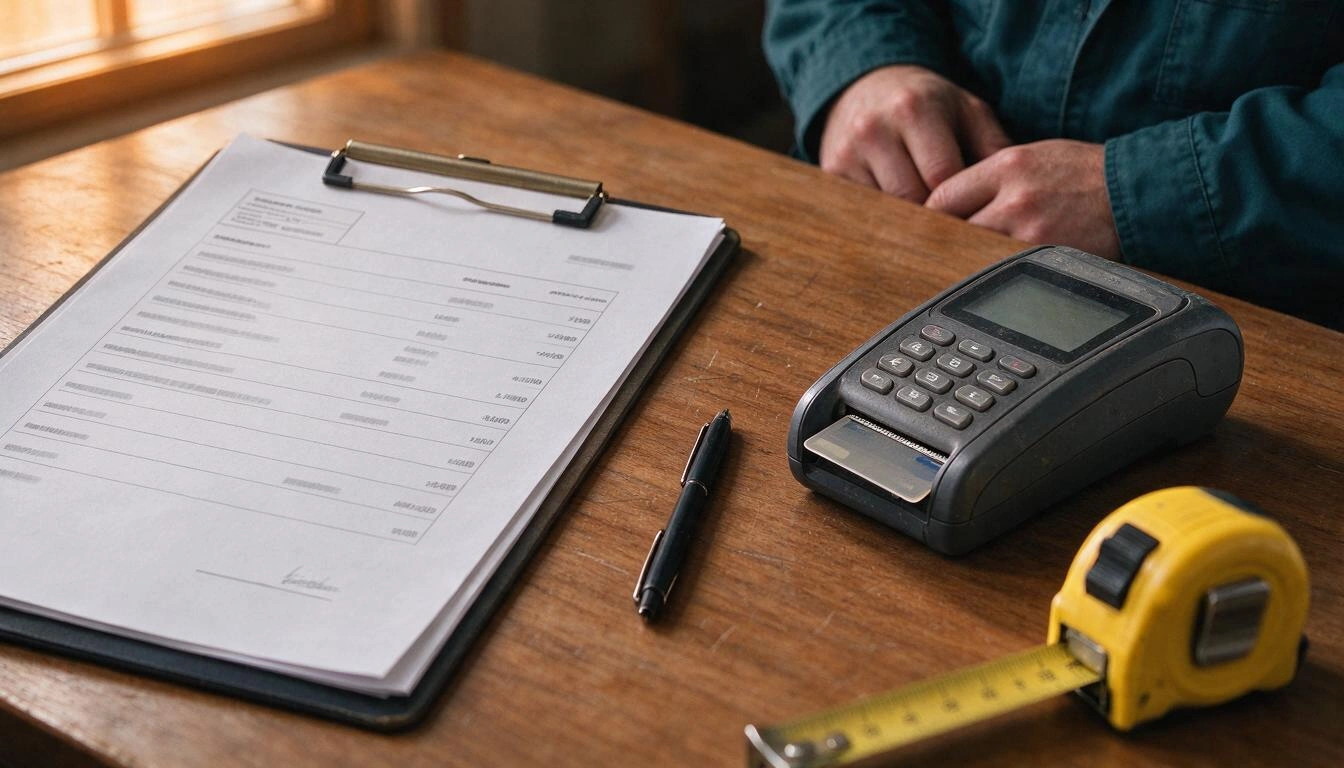
Before saying where you live, ask five questions. They take half a minute and filter out most scammers because a false locksmith does not want to commit to anything over the phone: they need to be at your door to set the price.
- "What is the name of the company and what is the NIF?" Write it down while they say it. Doubt or a vague answer is already the answer.
- "Fixed price or from?" Ask for a total figure, not a range or a "depends". The April 2026 decalogue states it as the first point: fixed price over the phone, not ranges.
- "What does it include and what is extra: travel, labor, materials, night surcharge, and VAT?" Have them list it out loud.
- "Can you send it to me via WhatsApp before coming?" An estimate by message is a written estimate, and it takes ten seconds to send.
- "Can I pay by card?" If the answer is cash only, hang up. It’s the cheapest and most reliable signal of all.
And a golden rule for the moment when they are already there: do not sign papers you haven’t read and, if the figure does not resemble the agreed one, do not pay and request the complaint form before the work is left unfinished. If you are already trapped in the logic of "with the kitchen dismantled I cannot refuse", call 091 or 112 from the bathroom: coercion to collect is a crime, and that’s how the Burgos case has been classified.
I have already overpaid: what can I do?
Yes, you can file a complaint, and there are three avenues that can be used simultaneously. The first is to gather evidence the same day: invoice or receipt, photos of the work and the damages, the number from which they called you, and the ad through which you found them.
| Avenue | Where | What it achieves | Detail to keep in mind |
|---|---|---|---|
| Complaint form | Ask the professional for it on the spot; if they refuse, at the OMIC or the regional consumer service | Opens an administrative file and may lead to a sanction | Practically every company or freelancer providing services to consumers is required to have it, and refusing is sanctioned according to the autonomous community (Infoautónomos) |
| Report | National Police or Civil Guard | Criminal route when there is deception or threats | In Burgos, the classification was scam and coercion, not a simple price disagreement |
| Chargeback | Your bank, in writing | Refund of the amount paid by card | The European Consumer Center in Spain warns that it is not a legal right: it is a rule of card schemes that the bank evaluates on a case-by-case basis |
From here comes the most important practical consequence of the entire article: pay by card. Not because it’s more convenient, but because a card payment is the only one that allows you to attempt a chargeback and the only one that leaves a trace with the name of the collector. In cash and in Bizum, the money is gone. That same note from the CEC reminds that the route only works with cards or payment gateways, not with transfers.
Two legal warnings that should not be confused. The first: the right of withdrawal of 14 days does not apply here, because the consolidated text of the General Law for the Defense of Consumers and Users excludes contracts in which you have expressly requested a visit for urgent repair —although it does apply to additional services or goods other than the essential spare parts that they may have slipped you. The second, in your favor: newly installed materials have three years of warranty, and that warranty covers both the product and the labor of its installation, according to the consumer guide of the Community of Madrid.
Urgency is earned before it happens
The real problem isn't the price: it's forgetting who you called the last time everything went well. This whole scam relies on a single gap in your memory, the ten seconds it takes to open your mobile's search engine because you have no one saved. If at that moment you have a trusted number, the scam has no way in.
Think of it the other way around. Almost everyone has already had a plumber at home who fixed things well and charged fairly, a locksmith who opened without breaking anything, an electrician who came the same day. The good service has already happened. What failed was the record: the number ended up as a missed call from two years ago, on a paper estimate that is in a drawer, in a WhatsApp that you can no longer find, or saved in your mobile's contacts as "Manuel 2" with no clue what Manuel did. When the next emergency arrives, that contact is as if it doesn't exist.
The scam doesn't start when you call the wrong number. It starts months earlier, the day you didn't write down the correct number.
And there's a second reason to also note the price: an estimate is only cheap or expensive compared to something. If you have noted "sink unblocking, €95, August", the figure of €600 that someone quotes you at the door stops being a mystery and becomes an absurd number that you can reject without hesitation.
The ten-minute routine: four contacts and a price note
Spend ten minutes today writing down four contacts: locksmith, plumber, electrician, and the air conditioning guy. Only those who have already solved something well for you. For each one, four details: what they do, the phone number, what they charged you, and whether you recommend them or not.
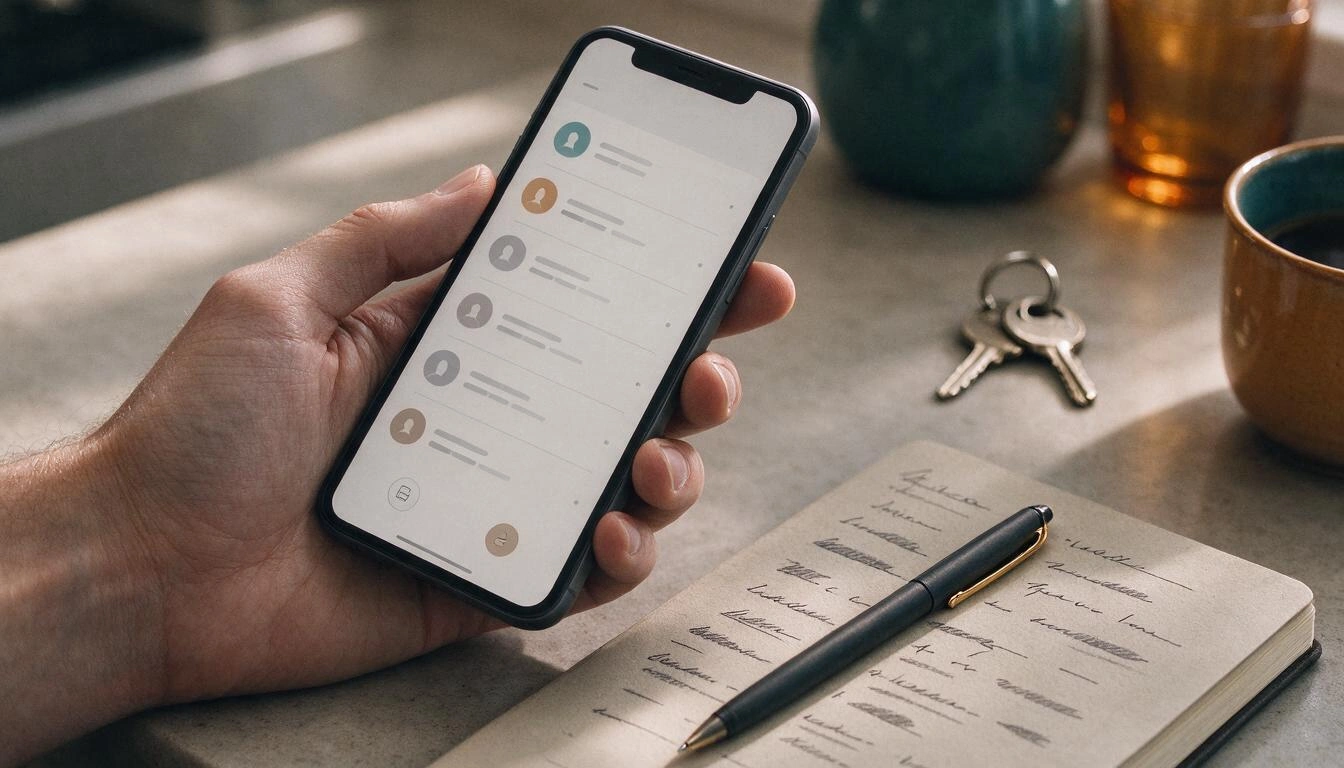
To find them, look in this order: the call log from months ago, the WhatsApp messages with photos of estimates, the delivery notes and invoices from the drawer, the neighbors or community group (the building's plumber is usually the best contact that no one has noted down), and if you're a tenant, ask the landlord or property management whom they call.
| Contact | What they do | What you note | Why it matters in an emergency |
|---|---|---|---|
| Locksmith | Opening and changing locks | Price of the last opening and whether they broke the cylinder or not | It’s the emergency with the most fraud: ~60% of services are done by unlicensed people |
| Plumber | Leaks, unblocking, heater | Hourly rate and whether they provide a written estimate | It's the trade in the Burgos case |
| Electrician | Panel, outlets, general failure | If they respond outside of hours and with what surcharge | A power cut doesn't wait for Monday |
| Air / heating | Installation and maintenance | Date of the last maintenance | The breakdown always comes in the first wave of heat or cold |
That's where aiContacts fits in: a mobile-first agenda where each entry is exactly that — name, what they do, phone, email, notes, and tags — with a thumbs up or thumbs down rating and the ability to mark favorites. Adding a contact is designed to be done in ten seconds from the "+" button, so you can note down the plumber while they pack up their tools, with the price note still fresh. And since the app's number one priority is global search, typing "plumber" or "air" finds the entry even if you don't remember the person's name: it searches by what they do, not by what they are called. From the entry itself, calling or opening WhatsApp is just a tap. It is deliberately an agenda and not a CRM: there are no funnels or stages, just useful contacts you want to find again.
Frequently Asked Questions
How much does a locksmith charge to open a door in 2026?
Between €60 and €100 during working hours for a standard door closed by force; €120–260 if it is locked with key turns and €80–150 for reinforced or armored doors. UCES sets the standard opening at €60–80 and the urgent lock change at €200–300. At night, on Sundays, or holidays, the total can rise to €120–260 without being abusive.
Is it legal for them to charge me more for coming at night or on holidays?
Yes. The surcharge for urgency, night service, or holidays is common and legitimate, ranging from +30% to +100% over the normal rate, with a typical night extra of €30–50. What is not legal is not informing you beforehand, and it appearing on the final bill: the consumer guide of the Community of Madrid requires informing about the cost of labor, travel, and surcharges if the customer requests it.
Can I refuse to pay if the final price is not what they told me?
You can refuse to pay the unagreed difference and request a complaint form on the spot. The invoice must match the accepted estimate, and any additional work requires your written authorization. If there are threats or they do not let you leave the situation, call 112: demanding payment through intimidation is a crime of coercion, as in the Burgos detention of October 30, 2026.
Will the bank refund me if I paid with a card to a fake locksmith?
You can try to do so through a chargeback, but the European Consumer Centre in Spain warns that it is not a legal right: it is a rule of card schemes (Visa, Mastercard, American Express) that the bank evaluates on a case-by-case basis. It only works with cards or payment gateways, not with transfers or cash. Strengthen the request by attaching the police report and evidence.
Do I have the right to withdraw from the service within 14 days?
Not for an urgent repair that you expressly requested: the General Law for the Defense of Consumers and Users expressly excludes such contracts from the right of withdrawal. It does apply, however, to additional services that you did not request and to goods other than the strictly necessary spare parts for the repair.
Why do I no longer see locksmith ads on Google?
Because since November 4, 2024, Google stopped accepting locksmith advertising in Spain, following what it had already done in Germany, Belgium, Sweden, and the Netherlands, due to the volume of complaints about abusive prices. Fraud has not disappeared: it has shifted to organic results, business listings, and stickers on portals and containers.
What should I note about a professional so I don't have to search on Google again?
Four things: what they do (plumber, locksmith, air...), the phone number, what they charged you last time, and if you recommend them. With those four pieces of information, you can already compare any price they quote you at the door and call without searching. In aiContacts, that is literally a contact card: name, what they do, phone number, notes, tags, and a thumbs up or down.
May the next emergency find you with the right number saved
Water on the floor is not the time to research the market. It’s the time to open the agenda, tap twice, and call someone who has already charged you fairly once. Everything else in this article —the price ranges, the seven signs, the five thirty-second questions— is the safety net for the day when you have no one noted down. Today’s ten-minute routine is what ensures that day doesn’t come.
aiContacts, from AIsToHire, exists for that short list: a directory of trusted contacts and providers where each card includes what they do, the phone number, the price note, and a thumbs up or down, with global search to find it in two taps and call or open WhatsApp directly from the card. Note down today the four who have already solved something well for you. You win the next emergency now, not at three in the morning.
In just ten minutes, add your locksmith, plumber, electrician, and air technician to aiContacts, noting what they charged you and giving a thumbs up or down, so you can call them in two taps when an emergency arises.
In just ten minutes, add your locksmith, plumber, electrician, and air technician to aiContacts, noting what they charged you and giving a thumbs up or down, so you can call them in two taps when an emergency arises.Keep reading
View all articles →
How to organize mobile contacts to find the plumber without remembering their name

Why Your Car Insurance Increased in 2026: Average Premium of €1,412 and Historic Record

Discussing via WhatsApp or talking in person: what science says about couple conflicts through messages