 UGC Ads Studio
20 UGC Ad Angles (with 10-Second Script Examples)
Team at UGC Ads StudioWritten with AI assistance19 min readIn summary
- An angle is not a hook: the hook is the first sentence, the angle is the complete narrative premise of the ad (storytime, before/after, unboxing, debunking a myth…). Changing the hook without changing the angle is repeating the same ad with a different cover.
- The correct angle depends on what your customer already knows. Eugene Schwartz's 5 levels of awareness (Breakthrough Advertising, 1966) are still the map: cold audiences need angles that create the problem; those who already know you need angles that address objections and close.
- Here are the 20 UGC angles grouped by level, with a hook example for each and three complete scripts of 10 seconds.
- TikTok recommends in its official documentation 3-5 creatives per ad group and 3-5 groups per campaign: between 9 and 25 pieces. At an average of €160 per UGC video in Spain (I UGC Study Spain, September 2026), that amounts to between €1,440 and €4,000 per round.
- UGC Ads Studio, the mini-app from AIsToHire, turns one of those 20 angles into a spoken clip of about 10 seconds with an AI avatar: you choose the campaign, format, methodology, angle, language, and avatar, and you get the MP4. It does not publish for you or measure results: that remains yours.
The most common question when a brand starts to buy or produce UGC is not "What do I record?", but "What is the video about?". Ten creators recording the same product with the same script produce ten ads that the algorithm treats as one. Ten different angles produce ten experiments. This article is the catalog of those angles: the 20 used by UGC Ads Studio, the mini-app from AIsToHire to create UGC ads with AI avatars, with the criteria to choose yours and the 10-second script template that fits any of them.
A UGC ad angle is not the same as a hook
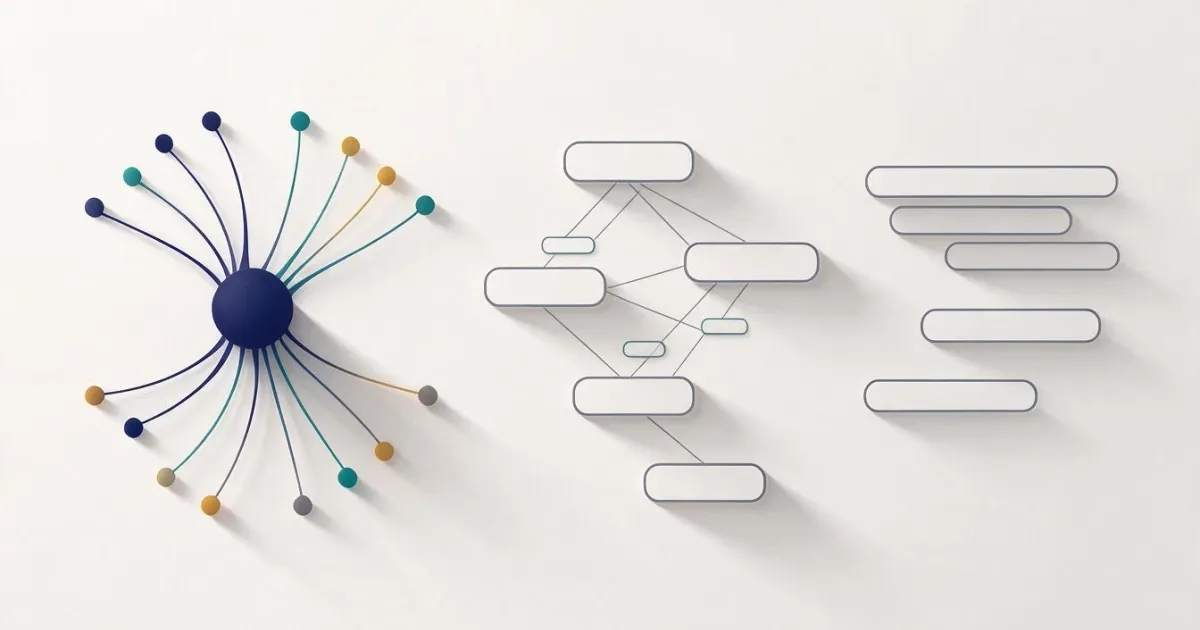
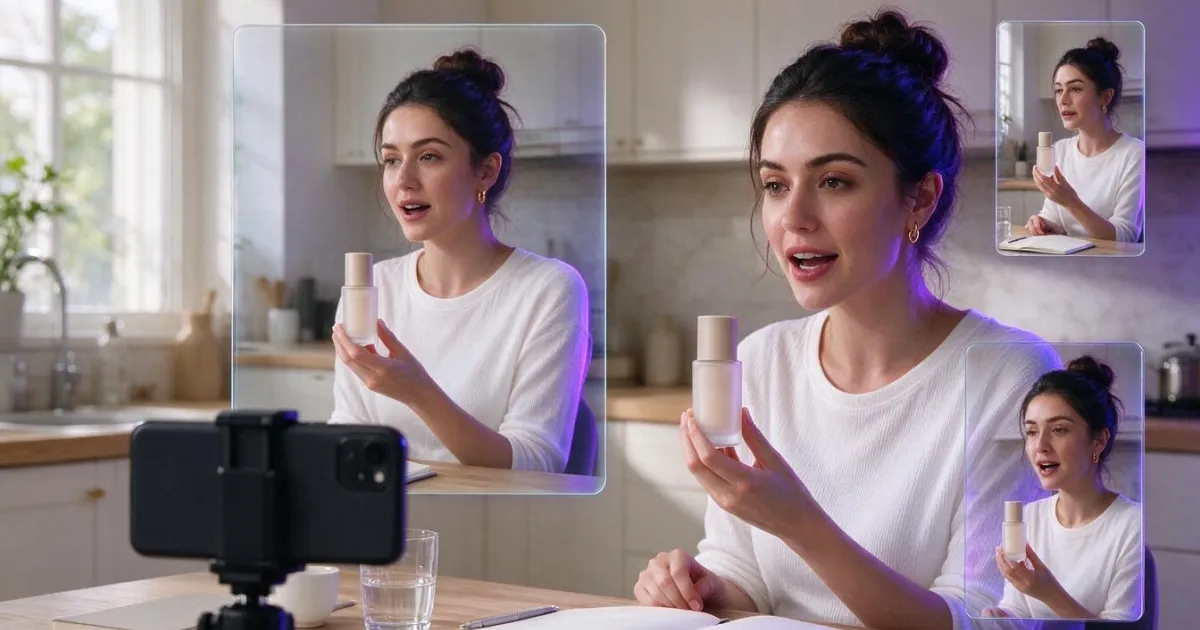
The hook is the first 2-3 seconds: the phrase that stops the scroll. The angle is the complete premise of the video: who is speaking, from what situation, what problem is named, and when the product appears. The same angle can have twenty different hooks; the same hook does not save an angle that does not fit your audience.
The difference matters for a practical reason: Meta and TikTok's delivery systems need real creative diversity to allocate budget wisely. Changing the first sentence and leaving the rest the same produces variants that the system treats almost as duplicates. Changing the angle produces pieces that compete for different audiences.
TikTok states it clearly in its official guide to creative best practices for performance ads: you must introduce the proposition in the first 3 seconds, prioritize the hook in the first 6, record in 9:16 and at least 720p, and work with 3-5 different creatives per ad group and 3-5 diversified groups per campaign. That number —between 9 and 25 distinct pieces per campaign— turns "choosing an angle" into an industrial problem rather than a one-off decision.
The correct angle depends on what your customer already knows
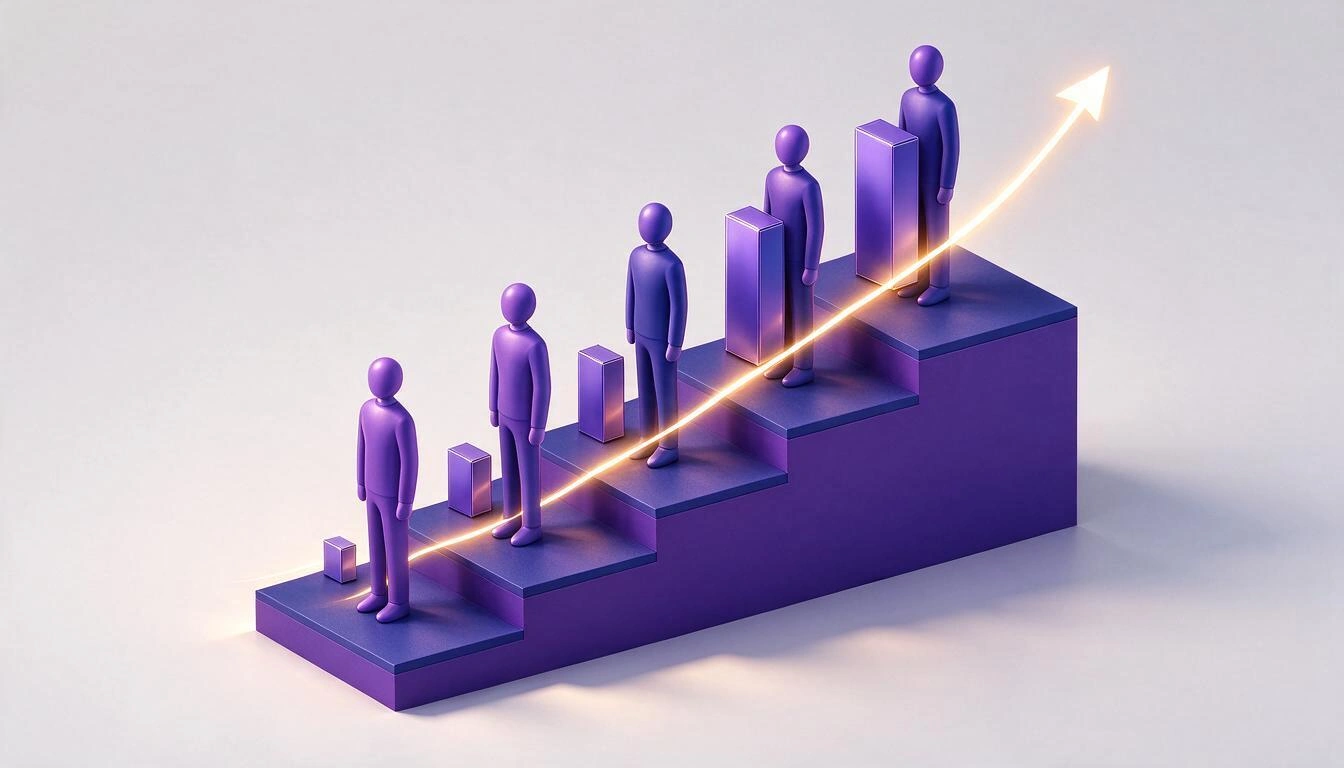
The criteria for choosing an angle is not taste, it is the level of awareness of the viewer: how much they already know about their problem, about possible solutions, and about your product. Eugene Schwartz described five levels in Breakthrough Advertising (1966) and they remain the vertical axis of any serious creative matrix in paid social.
The less the viewer knows, the later the product should appear. The more they know, the sooner: for someone who has already visited your website three times, a video that takes eight seconds to mention you is wasted time.
| Level of awareness | What the video needs to do | Where the product appears | For what campaign |
|---|---|---|---|
| Unaware (doesn't know they have a problem) | Create the problem; the viewer doesn't know anything is wrong | At the end, or hardly at all | Cold |
| Problem Aware (knows it hurts) | Name the pain better than they can themselves | In the middle, as a solution | Cold |
| Solution Aware (seeking solutions) | Differentiate your category from others | Soon, as a type of solution | Cold |
| Product Aware (knows you and has doubts) | Address the objection and provide proof | From second 1 | Retargeting |
| Most Aware (ready to buy) | Offer, guarantee, urgency | It is the entire video | Retargeting |
This table is literally the guide that UGC Ads Studio injects into the script before writing it. And from there comes the most useful distribution rule of the article:
Cold acquisition → angles from the levels Unaware, Problem Aware, and Solution Aware. Retargeting → angles Product Aware and Most Aware.
If you are burning cold budget with detailed reviews and testimonials from skeptics, the problem is not the creativity: it’s that you are talking to people who still don’t know they need you.
The 20 UGC Ad Angles, Level by Level
These are the 20 angles. This is not an inspirational list: it is the closed catalog that the app works with, each anchored to a level of awareness and with a different instruction on when to show the product. The hook example for each row is written with the actual limit recommended for UGC: 10 words or less.
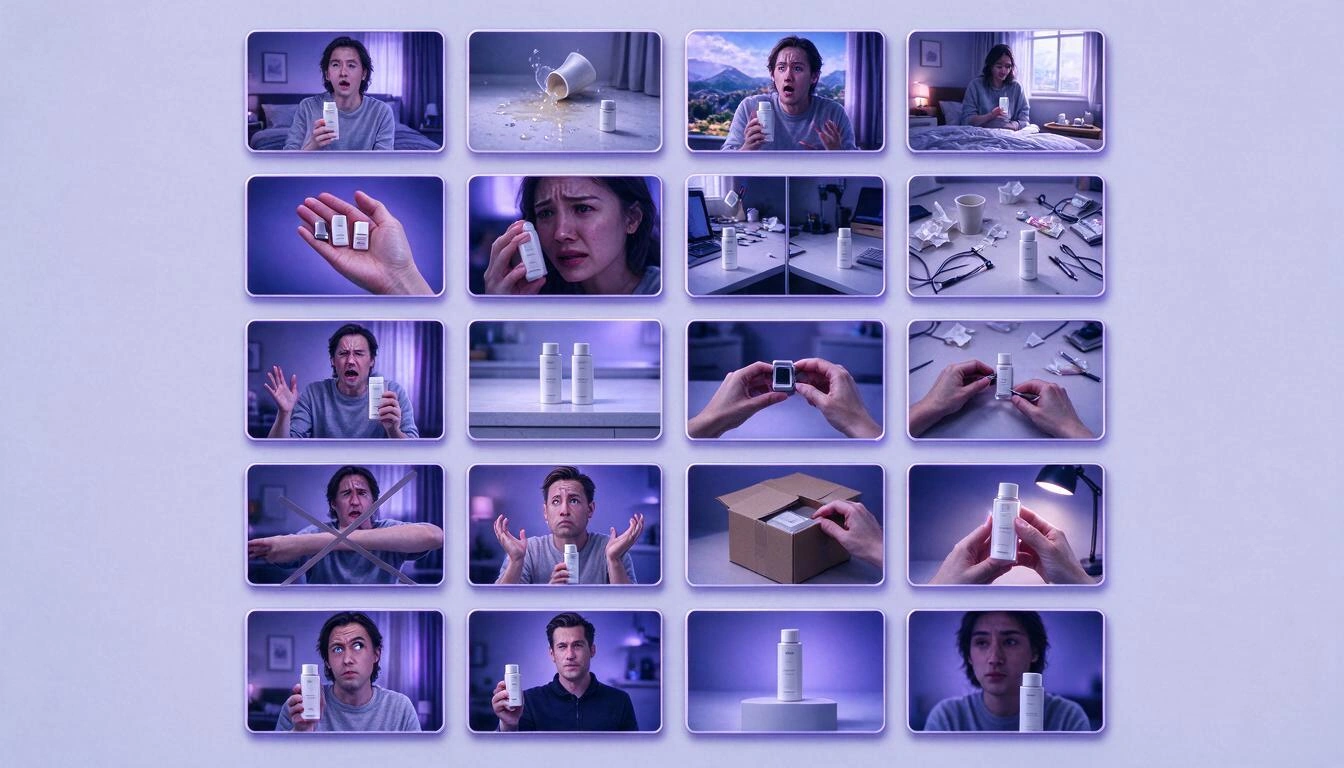
Level 1 — Unaware: five ways to create the problem
The viewer does not know that something is wrong. The video does not sell: it installs discomfort. The product appears at the end, almost as a footnote.
| Angle | What it consists of | Hook example |
|---|---|---|
| Storytime | Personal story in the first person; the problem is revealed gradually | "I've gone two years without telling anyone this." |
| POV / Skit | Mini-sketch that dramatizes an everyday situation; the problem is shown, not explained | "POV: it's seven and you've already lost the morning." |
| Green screen reacting | The avatar reacts live to a news item, a fact, or a post | "I just saw this fact and I can't believe it." |
| Day in the life | Snippets of a normal day where the product fits in without being the focus | "This is what a typical Tuesday looks like at my house." |
| Curiosity listicle | List of little-known facts that open an ignored problem | "Three things no one tells you about coffee." |
Level 2 — Problem Aware: four ways to name the pain
They already know something is wrong, but do not know what to do. The video wins when it describes their frustration better than they could describe it. The product comes in halfway, as a solution.
| Angle | What it consists of | Hook example |
|---|---|---|
| Testimonial of the struggle | Testimonial focused on the pain experienced before the solution | "I stopped appearing in photos for two years." |
| Before / after | Two halves: the painful before and the resolved after; the contrast is the message | "This was my table on Monday. Look at it now." |
| 3 things I tried before | Lists failed attempts and validates the viewer's frustration | "I tried three things before. All three failed." |
| Rant | Energetic venting about the problem; intensity is what connects | "I'm tired of being sold smoke with this." |
Level 3 — Solution Aware: four ways to win the category
They are already looking for solutions but comparing entire categories (gym vs app, agency vs software). The video has to differentiate your type of solution, not yet your specific brand. The product appears soon.
| Angle | What it consists of | Hook example |
|---|---|---|
| Comparison (I left X for Y) | Contrasts your category with the usual alternative | "I left the gym for this and I'm not going back." |
| Demo | Shows the solution in action so that it is understood what kind of thing it is | "Look how long it takes to do it: ten seconds." |
| Tutorial | Teaches something useful step by step; the solution is the tool of the tutorial | "Do it this way and you won't have to repeat it." |
| Debunking category myth | Breaks a widespread belief and repositions the way of thinking | "You don't need to do it every day. That's a lie." |
Level 4 — Product Aware: four ways to kill the objection
They know you and doubt. Here the problem is not explained: proof is given. The product is in frame from the first shot.
| Angle | What it consists of | Hook example |
|---|---|---|
| Skeptic testimonial | Speaks from the initial doubt and how it was overcome | "I thought it was another nonsense. I was wrong." |
| Unboxing | Opening and first impressions; tangible proof of what is received | "It arrived today. I'm opening it with you unedited." |
| Detailed review | Honest analysis with pros and cons | "A month using it. Two things I don't like." |
| Is it a scam? | Poses the maximum objection head-on and resolves it with proof | "Is it a scam? I'll tell you without filters." |
Level 5 — Most Aware: three ways to close
They are already convinced; they just need a nudge. Offer, guarantee, and urgency. The product is the video.
| Angle | What it consists of | Hook example |
|---|---|---|
| Direct ad | Goes straight to the offer, the guarantee, and the urgency | "If you left it in the cart, this interests you." |
| Price screen | Shows price and offer on screen, maximum clarity to close | "This is what it costs. No fine print." |
| Short testimonial | Brief and impactful testimonial that seals the decision | "Six weeks. This is what has changed." |
The 10-Second Script That Fits Any of the 20 Angles
A UGC paid social ad works with three timings and about 24 words. The account is based on the actual speed of advertising speech: about 2.4 words per second, which is the same rate that UGC Ads Studio uses to estimate the duration of a script and generate subtitles.
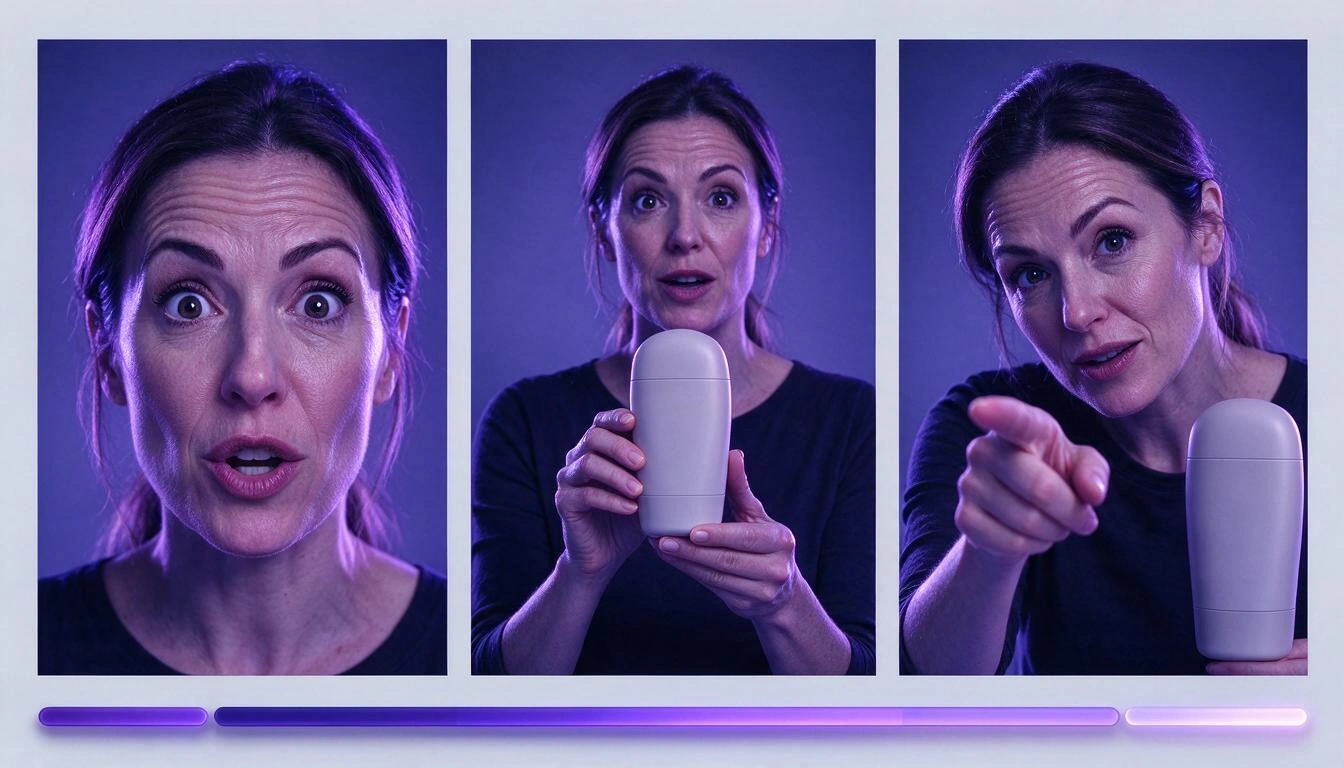
| Timing | What Goes | Limit |
|---|---|---|
| Hook | A phrase that stops the scroll | ≤ 10 words |
| Body | One or two spoken sentences that develop the angle | 1-2 sentences |
| Closing | The specific action you want | ≤ 8 words |
Three complete examples, one for each type of campaign:
Storytime · Unaware · physical product (water filter)
Hook:  I've been drinking tap water without thinking for two years.
Body:  Until I saw what was left in the filter after a week.
Closing:  See it for yourself.
Before / after · Problem Aware · service (online agency)
Hook:  My desk in January looked like this: bills everywhere.
Body:  Now I upload them with my phone and someone organizes them for me.
Closing:  Change your January.
Direct ad · Most Aware · retargeting product
Hook:  If you left it in the cart, this is for you.
Body:  Thirty percent off until Sunday and free returns if it doesn't convince.
Closing:  Ends on Sunday.
Notice what is not there: no brand presentation, no "at [name] we have been doing this for fifteen years", no three listed benefits. In ten seconds, there is room for one idea.
How Many Angles You Need Per Month: The Calculation Almost No One Does
If you follow TikTok's recommendation to the letter, a campaign calls for between 9 and 25 distinct creatives. Buying that volume from creators has a known price: according to the I UGC Study Spain 2026 (published on September 3, 2026, based on 1,012 content requests from over 500 companies and a base of over 7,000 registered creators), the average price of a UGC video in Spain is €160, with rates starting around €70.
| Scenario | Creatives | Cost at €160/video |
|---|---|---|
| Minimum recommended by TikTok (3 pieces × 3 groups) | 9 | €1,440 |
| Maximum recommended by TikTok (5 pieces × 5 groups) | 25 | €4,000 |
| Actual budget of 69% of Spanish companies | — | less than €1,000/month |
That same study indicates that 69% of companies allocate less than €1,000 per month to UGC content: at €160 on average, about six videos per month. Six pieces do not even cover the minimum of a single campaign, let alone the replacement rate that the format demands.
There are two honest ways out of this dilemma. One: reduce the number of angles and accept less creative diversity. Two: separate the production of the angle from the production of the shoot, and generate the variants synthetically. The second is what a tool like UGC Ads Studio resolves, and it is worth mentioning with what limits.
How UGC Ads Studio Turns an Angle into a 10-Second Video
UGC Ads Studio is a mini-app from AIsToHire that generates the script and video of a UGC ad based on your campaign's details. The flow is a funnel of decisions, not an editor: campaign → format → methodology → angle → language → avatar → video → versions.
- Campaign. The campaign is the product or service. You name it, mark if it is a product or service (the storytelling changes: a product is shown, a service is told by result), write a mandatory description —that description is the knowledge base with which the AI writes all messages— and upload up to 10 photos, marking one as a favorite.
- Format. 9:16, 1:1, or 16:9.
- Methodology. Cold acquisition or retargeting. Depending on what you choose, the app highlights the levels of awareness that fit and tones down those that do not.
- Angle. One of the 20 in this article, grouped by level of awareness, with the recommended ones in the foreground.
- Language. Spanish, English, French, German, Italian, or Portuguese, per ad.
- Avatar and image. You choose the avatar that speaks and which of the campaign photos is used as a reference. You can add a free brief if you want to guide the message.
- Video. The AI writes the ~10-second script following the cell (level × angle) and starts the generation. The video appears in the gallery of that angle when it is ready; it can be canceled midway and retried if it fails.
- Versions. From any video, you generate another version of the same angle with the message rewritten in another tone: more direct, less direct, more emotional, more provocative, or more explanatory. You can also change the avatar or the photo without changing the angle.
There are two types of avatars and the difference is relevant:
| Type of Avatar | How It Is Created | Voiceover | What You Get |
|---|---|---|---|
| AI-Generated Avatar | From a photo, a prompt, or a library of 12 curated profiles | Without lip-sync: the clip is animated with one of the available effects (talking to the camera, thumbs up, heart gesture…) | Clip with the avatar on screen, without synchronized voice |
| Actor with Lip-Sync | Catalog of actors from HeyGen, with voice and speech speed selection (0.8× to 1.2×) | Synthetic voice that reads the hook, body, and closing, with synchronized lips | Real spoken clip, narrated from start to finish |
Each video comes with an automatic technical name that includes avatar, scene, and format (like UGC_H0_A70012_C0_selfie_9x16) so you can paste it directly into your ad manager, and it downloads in MP4. You can also download a .srt subtitle file with the estimated timing based on the script.
What UGC Ads Studio DOES NOT do
This is as important as the previous point, because it marks where your work is still needed:
- Does not publish your ads. There is no connection with Meta Ads Manager, TikTok Ads, or Google Ads. You download the MP4 and upload it yourself.
- Does not measure results. There is no performance analytics, no CTR, no CPA, nor automatic detection of creative fatigue. You read those numbers on your ad platform.
- Does not create multi-layered videos. Each ad is a spoken clip of about 10 seconds, not an edit with B-roll, multiple shots, or transitions. Angles that depend on a long edit —a six-step tutorial, for example— remain in their condensed version.
- Does not burn subtitles into the video. The .srt is downloaded separately; embedding it is up to your editor or the ad manager itself.
- Does not clone your voice or create a digital twin of you. The avatars are synthetic or licensed catalog actors.
- Does not spy on the competition nor tells you which angles are saturated in your sector.
- Does not add music or sound effects.
If what you need is a long advertising edit with multiple shots, you still need a shoot or an editor. If what you need are twenty different premises in vertical format to feed a test round, that’s where this tool fills the gap.
Notify that the ad is made with AI: what changed on August 2, 2026
Since August 2, 2026, the transparency obligations of Article 50 of Regulation (EU) 2024/1689 (Artificial Intelligence Regulation) are applicable. Regarding an ad with a synthetic avatar, there are two components: providers of generative AI systems must mark the outputs in machine-readable format and detectable as generated by AI (art. 50.2), and the deployers —that is, the advertiser— must disclose the content when it involves a deepfake, defined as content that resembles existing people and would appear authentic (art. 50.4). Non-compliance is punishable by fines of up to 15 million euros or 3% of the global annual turnover, whichever is higher.
UGC Ads Studio marks each video with a default AI disclosure label, which you can consciously deactivate before generating. That label resides in the video’s profile within the app: it is not embedded in the MP4. Making the notice visible in the published creative, or activating the "AI-generated content" checkbox already offered by Meta and TikTok in their managers, remains the responsibility of the advertiser.
This is general information about the state of the regulation, not legal advice. If your case involves resemblance to real people, regulated sectors, or campaigns in multiple countries, consult your legal advisor.
A four-week plan to test angles without going crazy
The usual trap is to change three things at once and not know which one worked. Change one variable at a time:
- Week 1 — isolate the angle. Same avatar, same format, same language. Three videos: one Unaware, one Problem Aware, and one Solution Aware. What you measure is which premise engages your cold audience.
- Week 2 — isolate the message. Take the winning angle and generate three versions of the same angle with different tones: more direct, more emotional, and more provocative. Now you know what tone your audience tolerates.
- Week 3 — isolate the casting. Same angle and same tone, three different avatars (age, style, gender). The casting is targeting: in UGC, who says it changes the outcome as much as what is said.
- Week 4 — close the loop. With what you’ve learned, set up retargeting with Product Aware and Most Aware angles for those who have already seen the cold ads.
At the end, you have something more valuable than four videos: a map of what level of awareness, what tone, and what profile work in your niche, which you can reuse every time you launch a new product.
Frequently Asked Questions
What exactly is an angle in a UGC ad?
It is the narrative premise of the video: who is speaking, from what situation, what problem is named, and at what moment the product appears. The hook is the first 2-3 seconds; the angle is the idea that holds the ten. "Storytime," "before/after," or "unboxing" are angles; "You won't believe what happened" is a hook.
How many different angles should I try before deciding?
The minimum useful is one per level of awareness that interests you. For cold acquisition, there are three (Unaware, Problem Aware, and Solution Aware) and for retargeting, two (Product Aware and Most Aware). TikTok's official guide recommends 3-5 creatives per ad group and 3-5 groups per campaign, so between 9 and 25 distinct pieces per campaign is the reference range.
How much does a UGC video cost in Spain?
According to the I UGC Study Spain 2026, published on September 3, 2026, based on 1,012 content requests, the average price is €160 per video, with rates starting around €70. The same study indicates that 69% of companies allocate less than €1,000 monthly to this type of content.
Do I have to record or hire someone to use UGC Ads Studio?
No. You provide the description of your product or service and its photos; the person appearing in the video is a synthetic avatar generated with AI or a licensed catalog actor. No one is recorded or your voice is cloned.
Do the videos have voice synchronized with the script?
It depends on the avatar. With a catalog actor with lip-sync, yes: the synthetic voice reads the hook, body, and closing, and the lips move with the text. With an AI-generated avatar, no: the clip is animated with a visual effect and does not have synchronized voice.
How long does each ad generated by the app last?
About 10 seconds, which is the fixed goal of the generator: around 24 spoken words. If you need to tell more, the way is not to extend the clip but to generate several versions of the same angle and chain them like a sequence of ads.
Can I generate the same ad in multiple languages?
Yes, the language is chosen per ad among Spanish, English, French, German, Italian, and Portuguese. Note the nuance: a new ad is generated in that language, it is not translated or dubbed from an existing video.
Does the app publish the ads on Meta or TikTok?
No. UGC Ads Studio produces the MP4 and, if you want, a .srt subtitle file; you upload it to Meta Ads Manager, TikTok Ads, or wherever yourself. It also does not measure performance: that data is still read in your advertising platform.
Do I have to disclose that the ad is made with AI?
As of August 2, 2026, the transparency obligations of Article 50 of Regulation (EU) 2024/1689 apply, which include disclosure when the content resembles existing people and would seem authentic. The app marks each video with a disclosure label activated by default, but that label is not embedded in the MP4: putting the notice in the published creative and using the AI-generated content checkboxes of each platform is the advertiser's responsibility. This is general information, not legal advice.
What if my product is a service and I have nothing physical to show?
When creating the campaign, you mark that it is a service, and that changes the storytelling: instead of revolving around an object, the script is built around the before/after and the result of hiring it. Photos become optional, while in a product campaign at least one reference image is required.
UGC Ads Studio is the mini-app of AIsToHire that converts one of these 20 UGC angles into a spoken ad of about 10 seconds with an AI avatar, in six languages and in 9:16, 1:1, or 16:9 format, ready to download in MP4. It is available at UGC Ads Studio — UGC Ads with AI Avatars. Choose the angle; it takes care of writing the script and putting on the face.
Choose your angle and generate the first UGC ad for your campaign
Choose your angle and generate the first UGC ad for your campaignKeep reading
View all articles →
Ads with AI Avatars: What Legal Notice You Need Before January 1, 2027

Why Your Car Insurance Increased in 2026: Average Premium of €1,412 and Historic Record
Discussing via WhatsApp or talking in person: what science says about couple conflicts through messages