 aiToLotto
Sharing a Christmas Lottery ticket via WhatsApp: why the photo proves nothing and how to put in writing who plays and how much
Team at aiToLottoWritten with AI assistance15 min readIn summary
- A photo of the ticket in the WhatsApp group does not prove who plays. The ticket is a bearer title: the administration or the bank pays whoever presents it, and the distribution depends on the agreement among participants, not on the image.
- The National Police reminded us on November 10, 2026: you must photograph the ticket on both sides and write down the number, series, fraction, and date of the draw, along with the list of participants, the amount each one contributed, and their signatures (Aragón Digital).
- The chat is useful, but as a complement: it preserves the conversation, the express consent of all, and the payment receipts; a loose screenshot is weak evidence.
- If you paid via Bizum and nothing is written down, the payment concept, the screenshot of the receipt, and a confirmation message from the organizer are your backup. It's better to do this now than on December 22.
- Beware of seasonal frauds: mirror WhatsApp groups with the Bizum number changed, cloned administration websites, and tickets without an identified issuer. And reselling a 20 euro ticket for more than 24 is an infringement.
Every November the same scene repeats: someone buys a ticket, photographs it, sends it to the office or group chat, and writes "let's go ten at two euros each." It works 99% of the time because no one disputes a ticket that doesn't win. The problem arises on the day it does win. This article gathers what the National Police, the Tax Agency, and legal practice say about how to share a Christmas Lottery ticket, what value a WhatsApp photo has, and what needs to be put in writing before the draw on December 22, 2026. We publish this from aiToLotto, the app from AIsToHire for lottery groups and shared tickets, because it is exactly the problem we see repeating every campaign.
What does a photo of the ticket sent to the WhatsApp group prove?
It proves that this number exists and that someone had it on the day the photo was taken. It does not prove who participates, how much, or that there is an agreement on distribution. The National Police summarized it in their warning campaign on November 10, 2026: a WhatsApp image does not alone certify the distribution of the prize, and they recommend accompanying it with the full conversation, the consent of all involved, and the payment receipts (Aragón Digital, 10/11/2026).
There are two distinct reasons why the photo falls short:
- It does not identify anyone. An image of the ticket does not say whether there are five or twelve people in the group, nor how much each one contributed. Without that list, the distribution is a conversation, not an agreement.
- It is manipulable. Messaging screenshots can be edited and cropped, and that is why in a conflict they are worth less than people think. The offices that handle these cases insist on a signed document precisely for that reason (Legálitas).
What does add value is the photo of both sides —front and back— kept with the rest of the documentation. The back is where it is noted who is holding it, and in many traditional groups, who participates.
Who really collects a shared ticket
The person who presents the physical ticket collects it. The National Lottery ticket is a bearer title —its nature stems from the Decree of 1956 that regulates the General Instruction on Lotteries— so the administration or the bank pays whoever has it in hand, without asking about the others. The agreement among participants does not change who gets paid: it changes who can claim the distribution later.
That does not mean the others are left without rights. Legal practice distinguishes between the possession of the title and the reason for which it is possessed: if the ticket was acquired jointly and there is an accredited distribution agreement, the holder is obliged to give it that destination, and keeping it whole turns a legitimate possession into appropriation of someone else's amount. A column in Noticias Jurídicas about the legal keys of shared lottery reviews that line, citing among others the doctrine on the obligation of verbal distribution agreements and the ruling of the Provincial Court of Lugo 194/2017 on the appropriation of someone else's ticket (Noticias Jurídicas).
The practical difference is brutal: with a documented agreement, the distribution is requested at the bank window before collecting. Without it, it is requested in a court afterward.
The ticket decides who collects. The agreement decides who keeps the money. These are two different questions and only the second is in your hands.
There is a second, very prosaic reason to identify all participants before collecting: if the holder collects the full prize and then distributes on their own, those payments can be treated as donations instead of as part of the prize. When co-participants and their percentages are declared at the time of collection, each one receives their share as a prize.
The checklist requested by the National Police for distributing a lottery ticket
The official recommendation for the campaign on November 10, 2026, is a signed document with complete data, not a message. These are the elements that the National Police lists, as reported by the media covering the campaign (COPE Navarra, 10/11/2026):
- Photograph or photocopy of the ticket on both sides, taken on the same day of purchase.
- Number, series, and fraction, as well as the date of the draw. Without series and fraction, a number does not identify a specific ticket.
- Who keeps the original and where.
- List of participants with first name, last name, and identification document.
- Exact amount or percentage of each, in euros, not "equally" by eye.
- Signatures of all participants on that document.
- Payment receipts for each contribution.
- Saved conversation —with a backup copy— in which everyone explicitly expresses their agreement.
- Purchase receipt from the administration or the official channel.
Point 8 is the one most people skip and the easiest to fulfill: it is enough for each participant to write in the group a line like "I confirm my participation of X euros in number Y, series Z, draw of December 22, 2026" and for that conversation not to be deleted.
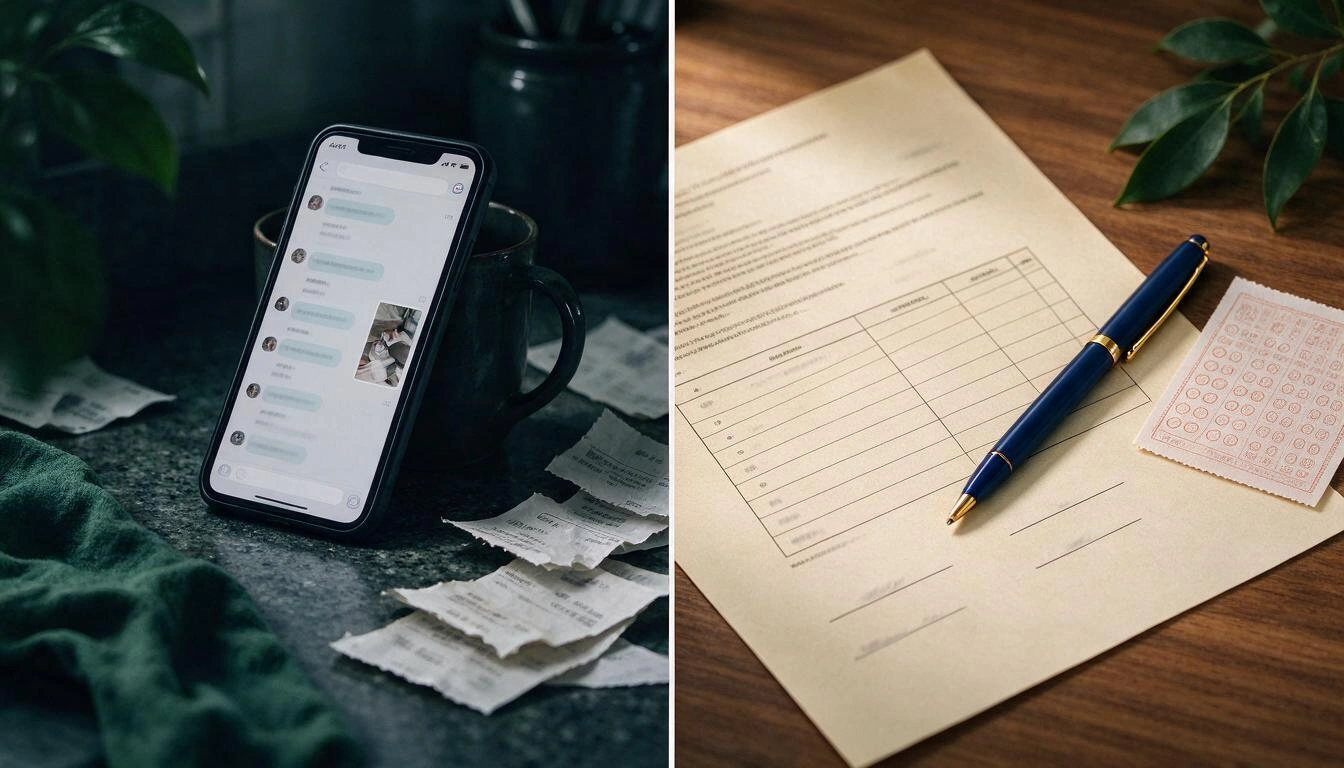
Informal participation vs. documented agreement: what really changes
Three things change: who can be claimed against, with what proof, and at what moment. With a documented agreement, the distribution is resolved at the bank before collection; with informal participation, it is resolved through discussion, and if there is no agreement, through judicial means. This is the point-by-point comparison:
| Aspect | Informal Participation (photo + "let's split") | Documented Agreement |
|---|---|---|
| Identification of participants | Not recorded; depends on the group's memory | List with name, ID number, and share of each |
| Identification of the ticket | Usually lacks the series and fraction | Number, series, fraction, and date of the draw |
| Proof of payment | A Bizum with the concept "lottery" | Receipt per participant, with amount and number |
| Evidentiary value | Weak: manipulable screenshots and without express agreement | Document signed by all, dated before the draw |
| Timing of distribution | After collection, at the holder's discretion | At collection: the bank registers each participant and their percentage |
| Tax treatment of distribution | Risk of being treated as a donation between individuals | Each participant collects their part as a prize |
| If someone refuses to distribute | Judicial claim with weak evidence | Claim with signed document and receipts |
| If the ticket is lost or stolen | Report without documentary support from the group | Report with a copy on both sides and list of participants |
None of this requires a notary. A printed sheet, signed and photographed by all, meets what the checklist asks for. What does not meet it is the chat alone.
I paid my share via Bizum and there’s nothing written: what to do now
Reconstruct the trail today, not on December 22. Three ordered actions: ask the organizer for the number, series, and fraction in writing in the group; upload your payment receipt to the same chat; and ask each participant to confirm their amount by message. A thread with those three elements is much more than a loose photo.
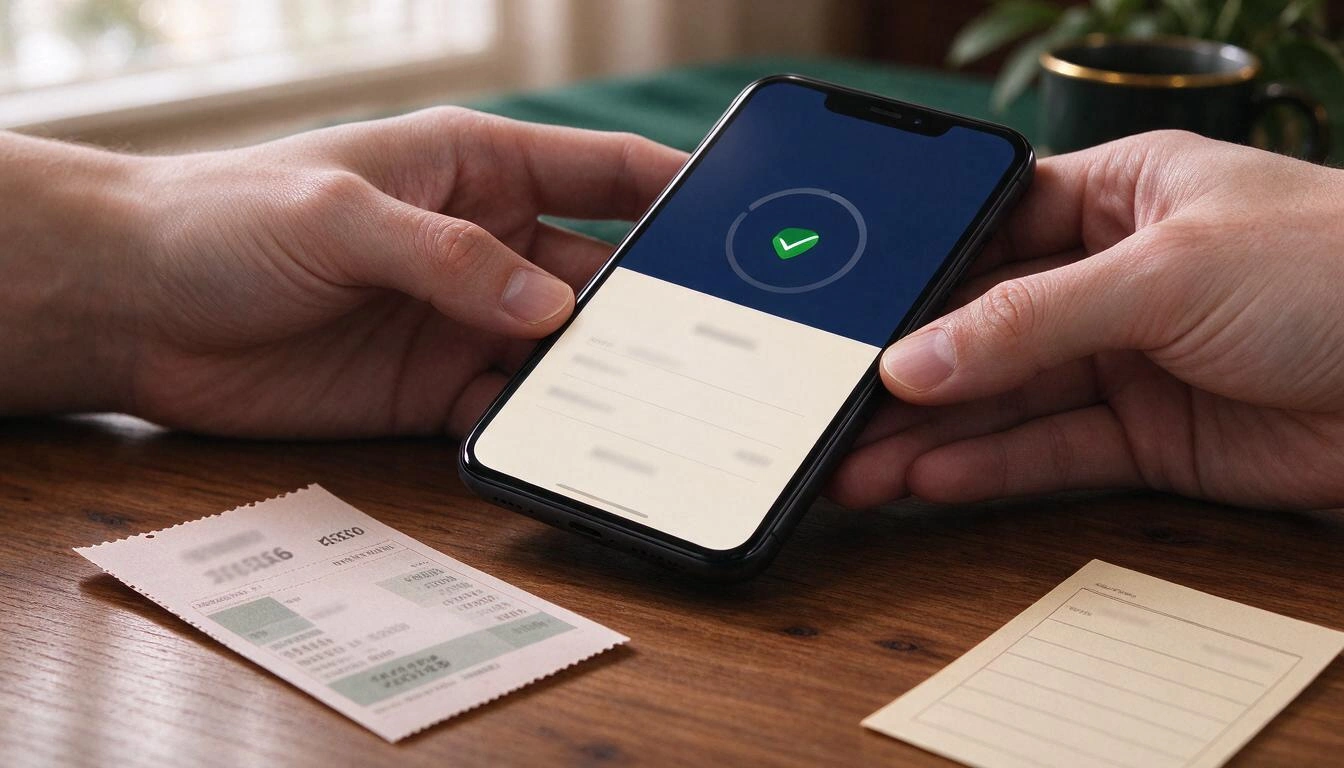
Two details that make a difference in payment:
- The concept of the Bizum should not be left blank or as "lottery." Write the ticket number and the amount you contribute. It is the only part of the payment that is recorded in your bank with your text.
- The screenshot of the receipt is shared in the group. This way, all participants have the same information, and the organizer is not the only one with the complete history.
If the organizer resists putting anything in writing, that is the relevant data. There does not have to be bad faith —it is normal that it hasn’t occurred to them— but a group in which no one wants to sign the list is a group to avoid.
Typical frauds of the campaign: mirror groups, cloned websites, and unissued tickets
Seasonal frauds do not attack the draw: they attack the moment of payment and the moment of illusion. The National Police pointed out in its campaign on November 10, 2026, the false prize alerts that ask for an advance payment, the suspiciously priced sales websites, and the classic scam of the tocomocho, the one where a stranger offers a winning ticket that "cannot be cashed" (Aragón Digital, 10/11/2026).
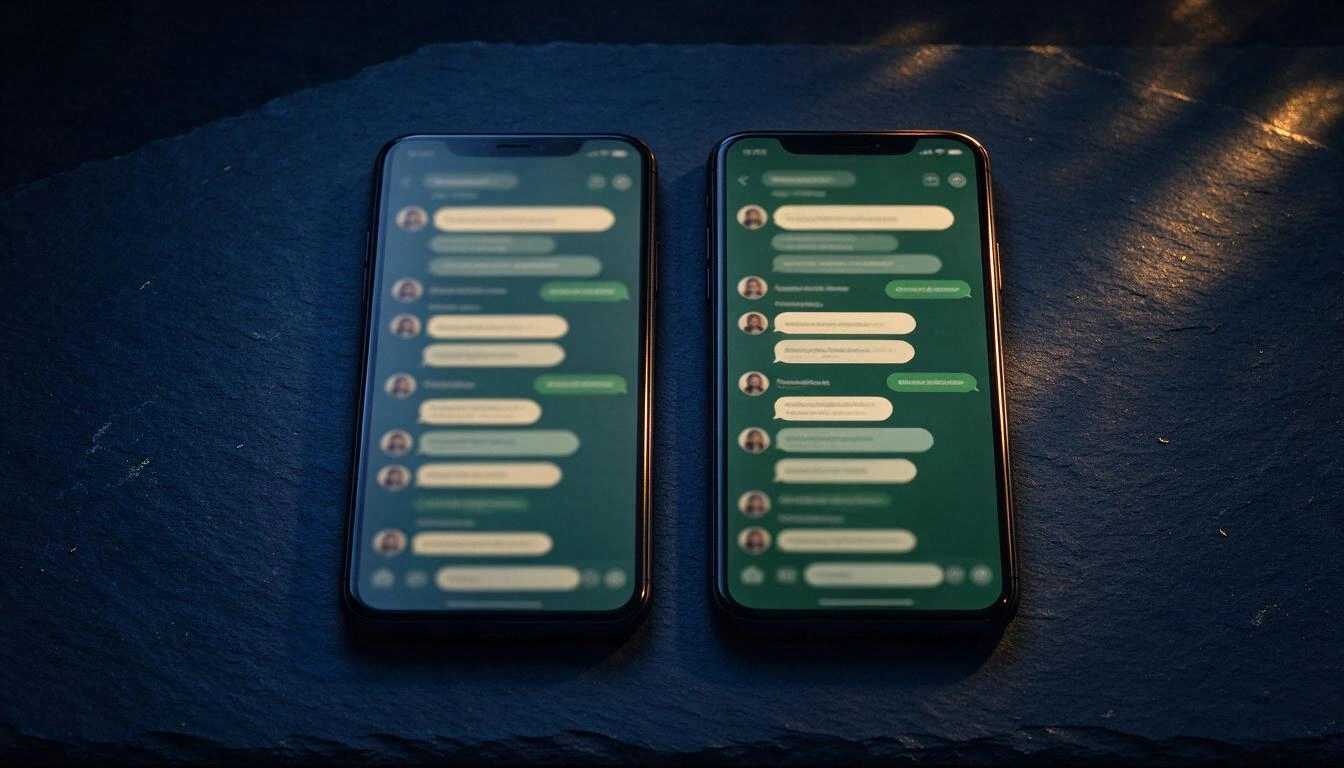
In addition to this, there are three variants that live on the mobile:
- Mirror WhatsApp groups. The scammer copies the real message announcing shares from a club, a school, or an association, creates a nearly identical group, and replaces the Bizum number with their own. Before paying, confirm the number through a different channel: a call, not the chat itself (que.es).
- Reverse Bizum. Instead of sending you money, they send you a request for money that looks like a legitimate charge. INCIBE has documented this as a fraud technique on WhatsApp: unexpected payment requests are to be rejected (INCIBE).
- Shares without an identified issuer. Tickets from associations and businesses are not tenths: they are shares on a tenth that someone is holding. They must identify the issuer, the number, the series, and the draw. If they do not do so, there is no one to claim against.
The purchase rule that the Police repeats is simple: authorized administrations or the official channel of State Lotteries and Betting, and always keep the receipt.
Reselling a ticket with a surcharge: the ceiling is 24 euros
A Christmas Lottery ticket costs 20 euros and the maximum authorized surcharge is 20%, that is, 24 euros as the final price. Going over that, or reselling without authorization, is an infraction: the tickets are "stagnated effects" under the General Instruction of Lotteries, and only certain entities —non-profit associations, sports clubs, or traditional groups— can resell with prior authorization from SELAE (El Debate, 25/10/2026).
This affects more than it seems to the groups. If you sell shares of 5 euros on a 20 euro ticket and the sum of the shares exceeds 24 euros, you are charging a surcharge above the limit, even if you call it "for expenses." Reselling at a markup and selling winning tickets through unofficial channels are also under the radar of the Tax Agency, with penalties that in the case of winning tickets can go far beyond an administrative fine.
| Concept | Amount |
|---|---|
| Official price of the ticket | 20 € |
| Maximum authorized surcharge | 20 % |
| Maximum price of authorized resale | 24 € |
| Who can resell | Entities previously authorized by SELAE |
What changes when the prize is large: the 40,000 euros exempt
Prizes of up to 40,000 euros are exempt, and above that amount only the excess is taxed, with a withholding of 20%. The key in a shared prize is that the exempt amount is distributed among the participants in proportion to their percentage: that is why identifying each one before collecting is not bureaucracy, it is money (Agencia Tributaria).
With the prizes from the 2026 draw on the table, the calculation is quickly understood. These are the official allocations per ticket for this year's campaign, which distributes 2.870 billion euros in prizes over an issuance of 4.100 billion and 205 series (Diario Palmero, 09/07/2026):
| Prize | Amount per ticket | Taxable? |
|---|---|---|
| The Gordo | 400,000 € | Yes, on what exceeds 40,000 € |
| Second prize | 125,000 € | Yes, on what exceeds 40,000 € |
| Third prize | 50,000 € | Yes, on what exceeds 40,000 € |
| Fourths and fifths | Below the threshold | No |
A Gordo shared among ten people at 2 euros each is 40,000 euros per participant, and each applies their proportional part of the exemption. That same Gordo collected by a single person who then "distributes" is another operation for tax purposes. The difference lies in the list of participants.
Dates to Note for the December 22, 2026 Lottery Draw
The draw takes place on Tuesday, December 22, 2026, and the deadline to claim prizes is three months, until March 22, 2027. Prizes of up to 2,000 euros can be claimed at the local administrations; above that amount, payment goes through a banking entity (Aragón Digital, 10/11/2026).
| Milestone | Date / Info |
|---|---|
| Extraordinary Christmas Draw | Tuesday, December 22, 2026 |
| End of Claim Period | March 22, 2027 |
| Claim at Administration | Prizes up to 2,000 € |
| Claim at Bank | Prizes over 2,000 € |
| Campaign Issuance | 205 series · 4.1 billion euros |
| Total Prize Amount | 2.87 billion euros (70% of issuance) |
The distribution agreement must be signed before the draw. A document dated after December 22 explains much less than one from November.
Frequently Asked Questions
Does a photo of the ticket via WhatsApp count as proof that I played?
As the only proof, no. It verifies that the number existed and that someone had it, but not who participates or how much. The National Police recommends accompanying it with a signed document including the number, series, fraction, draw date, a list of participants with their amounts, and payment receipts, as well as keeping the conversation with everyone's consent.
Who claims a shared ticket if it wins?
The person who presents the physical ticket claims it, as it is a bearer title. The other participants do not claim at the counter themselves: they claim because the holder declares them when cashing in or because they can prove the distribution agreement. Therefore, the signed document before the draw is the real backing for the others.
How is a lottery prize distributed in a group without issues with the tax office?
By identifying all participants and their percentage at the time of cashing in, at the banking entity. This way, each one receives their share as a prize, and the exemption of 40,000 euros is prorated among all. If one person claims the total and then transfers to the others, those payments can be treated as donations.
Are Christmas lottery shares legal?
Yes, as long as they identify the issuer, the number, the series, the fraction, and the draw, and that the surcharge does not exceed the authorized limit. The tickets from associations or businesses are not tickets: they are a right against the issuer. If it is not known who issues them or where the original ticket is, there is no one to claim against.
Can I sell my Christmas ticket for more than I paid for it?
Not above 24 euros, and only if you are authorized. The maximum surcharge is 20% on the 20 euros of the ticket, and resale is reserved for entities with prior authorization from SELAE. Reselling at a markup or selling winning tickets through unofficial channels is an infringement with administrative consequences and, in some cases, criminal.
What should I do if I paid via Bizum and no one put anything in writing?
Ask now in the group for the number, series, and fraction of the ticket, upload your payment receipt to the chat, and ask each participant to confirm their amount by message. If you are still on time, the best thing is to print and sign the list of participants. Doing so before the draw is worth much more than trying afterward.
How do I know that a WhatsApp group selling shares is the real one?
By confirming the Bizum number through a channel different from the chat itself, usually a call to the organizer. Mirror groups copy the original message and only change the payment number. And unexpected requests for money are always rejected: INCIBE has documented them as a fraud technique.
The agreement shouldn't depend on anyone deleting the chat
All of the above summarizes into an uncomfortable idea: in most Christmas groups, the proof of who plays and how much lives in a mobile conversation that anyone can delete, archive, or lose when changing phones. Signing a sheet in November resolves the problem, and if you organize the office group or share a ticket with family, it is worth dedicating ten minutes to it.
The other way is for the agreement not to live in a chat. aiToLotto, the state lottery app from AIsToHire, is built just for that: you manage the order and an allied administration buys and holds the real ticket, each fraction of the ticket remains nominative —half, a quarter, a tenth, or the amount you decide—, the group shows who has taken shares and who still needs to pay, and the distribution agreement is associated with the digital receipt of the ticket, with its chain of custody and downloadable certificate. If it wins, the app checks the draw, notifies, and distributes the prize share by share as agreed, without anyone having to reconstruct a WhatsApp thread. You can see it in detail on the lottery groups and shared tickets page, which also covers Euromillions, La Primitiva, Bonoloto, El Gordo de la Primitiva, and the El Niño draw.
Create your Christmas group or share your ticket on aiToLotto: each fraction is registered to a person, you can see who has paid, and the distribution agreement travels with the ticket receipt. If it wins, the prize is distributed as agreed without relying on a chat.
Create your Christmas group or share your ticket on aiToLotto: each fraction is registered to a person, you can see who has paid, and the distribution agreement travels with the ticket receipt. If it wins, the prize is distributed as agreed without relying on a chat.Keep reading
View all articles →
How to share a Christmas lottery ticket without arguments: shares, proof, and prize distribution

Why Your Car Insurance Increased in 2026: Average Premium of €1,412 and Historic Record

Discussing via WhatsApp or talking in person: what science says about couple conflicts through messages