 aiLook
Hairstyles 2027: the trends already shaping salons
Team at aiLookWritten with AI assistance16 min readIn summary
- The bob is still leading in 2027, but less rigid: the architectural bob coexists without layers with softer versions like the cloud bob, the butterfly bob, and the short French bob with layered bangs (Perfect Corp, October 30, 2026).
- The short style loses its fear: the bixie (bob + pixie) and the shixie (shag + pixie) are the gateways to short hair for those who don’t want a classic 90s pixie.
- Search data confirms the shift towards movement: in Pinterest's first beauty report (October 6, 2026), "long layered bob haircuts" grows by 622% and "French bob with wispy bangs" by 394%.
- In barbershops, the end of the fade is being discussed: industry experts point to longer cuts, scissor texture, and soft low taper instead of very marked fades (BarberEVO, November 5, 2026).
- What truly determines the result is not the trend, it's your face and texture: the same bob changes completely depending on density, curl, and proportions.
If you are thinking of changing your look this season, 2027 comes with a clear idea: fewer closed shapes and more movement. This article reviews what industry reports and salons themselves are indicating for the season —bob in all its variants, bixie, shixie, long pixie, invisible layers, wispy bangs— and the debate that has opened in barbershops about the end of the fade. It is also the natural terrain of aiLook, the AIsToHire app to see what type of haircut suits you best: you can check out the shapes of 2027 in the haircut simulator on your own photo before sitting in the chair.
What haircuts set the trend in 2027?
The shapes dominating 2027 are the bob in various versions (architectural, cloud bob, butterfly bob, short French bob), the short hybrids bixie and shixie, the new generation longer and blended pixie, and layers with movement accompanied by light bangs. The common thread is not a specific length: it is the shift from a rigid line to a worked texture. This is reflected in both the compilation of nine haircuts for 2027 from Perfect Corp (October 30, 2026) and the autumn-winter 2026-2027 review from Marie Claire España (November 9, 2026).
| Cut | Approximate length | Ideal texture | What to ask for at the salon |
|---|---|---|---|
| Architectural bob / scandi bob | Jaw length | Fine or straight (gains apparent density) | Straight line, no layers, with weight at the ends |
| Cloud bob | Between jaw and collarbone | Medium, straight or wavy | Rounded volume, inward tips, soft edges |
| Butterfly bob | Between jaw and shoulders | Medium or dense | Long layers framing the face over a bob base |
| Short French bob | At cheekbone or jaw level | Soft straight or wavy | Short carré, defined but not rigid line, light bangs |
| Bixie | Above the jaw | Fine or medium; also wavy | Between short bob and pixie, soft layers, clean not extreme nape |
| Shixie | Short with lengths around the face | Fine (gains volume) | Pixie structure with shag layers and bangs |
| New generation pixie | Short, elongated nape | Any, better with some body | Longer on top, blended contours, no hard lines |
| Long layers with face framing | Medium-long | Straight, wavy or curly | Layers that do not thin the ends and adapted face framing |
The bob of 2027 is no longer a rigid line: four distinct versions
In 2027, the bob has branched out into families that hardly resemble each other. At one end is the architectural bob, graphic, without layers and at jaw height; at the other, deliberately soft versions —cloud bob, butterfly bob, short French bob with layered bangs— built on layers and movement. The practical difference is not aesthetic: it changes who it flatters and how much drying work each day requires.
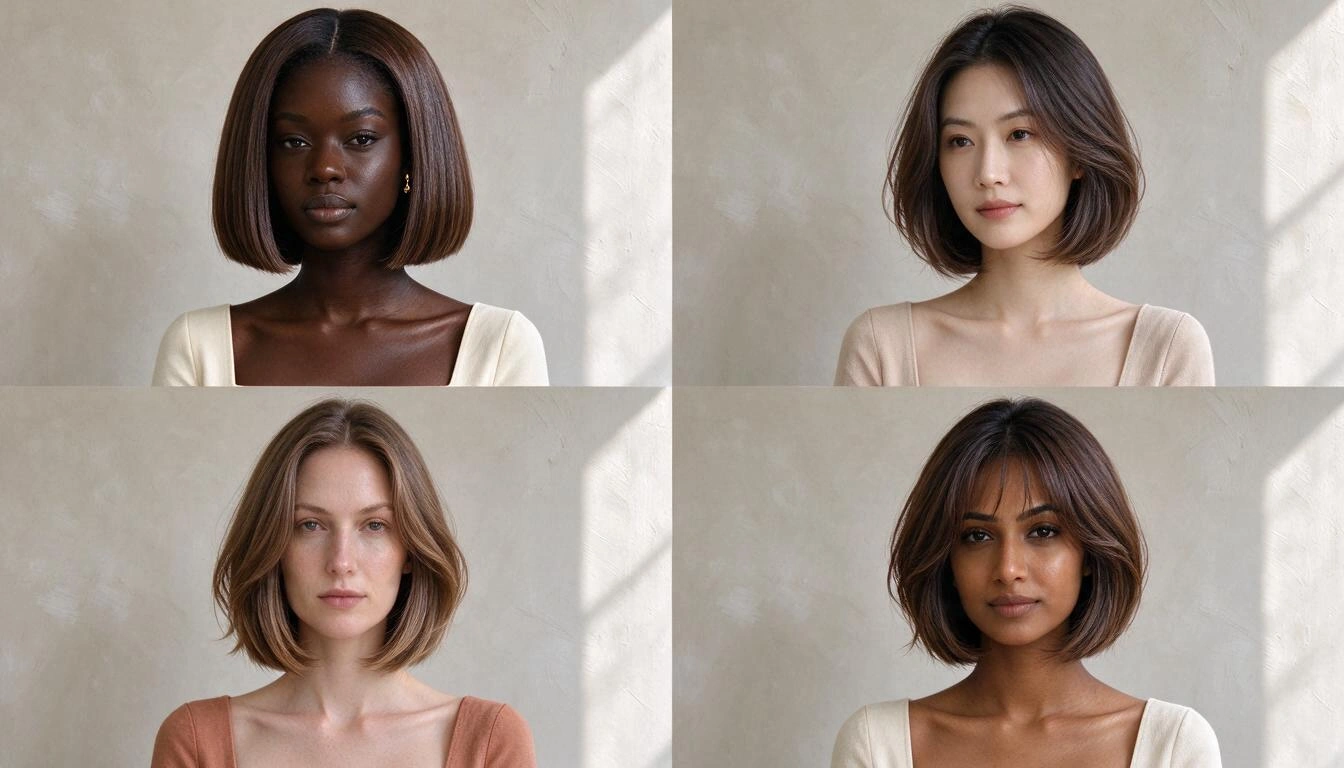
- Architectural bob: it is the cut with a clean line. Parisian stylist Gianni Coppa explained to ELLE that this cutting line "creates a sense of density," something especially useful in fine hair, as noted by Perfect Corp (October 30, 2026).
- Cloud bob: the opposite reading. Airy volume, rounded inward tips and soft edges that fall around the face; ask for some natural body or minimal heat to maintain the shape.
- Butterfly bob: transfers the front layers of the butterfly cut to a bob base that falls between the jaw and shoulders. It is the most "effortlessly styled" version and the one that best disguises a very dense mane.
- Short French bob: the classic that doesn’t go away. Cheekbone or jaw height, straight or parted bangs, and in 2027 almost always with the tips of the bangs layered instead of cut blunt.
Watch out for the classic bob trap: the same length that falls to the jaw when straight, in wavy hair rises two or three fingers when drying. If your hair is curly, the cut should be requested on dry hair or accounting for that shrinkage.
Bixie, shixie, and long pixie: why the 2027 short cut isn't so scary
The short hair of 2027 is not the rigid pixie of the 90s, but rather an in-between zone: the bixie mixes bob and pixie, the shixie mixes shag and pixie, and the new generation pixie comes longer on top with an elongated and blended nape. That’s the reason for the appeal: they provide a radical change without the feeling of having nothing to style.
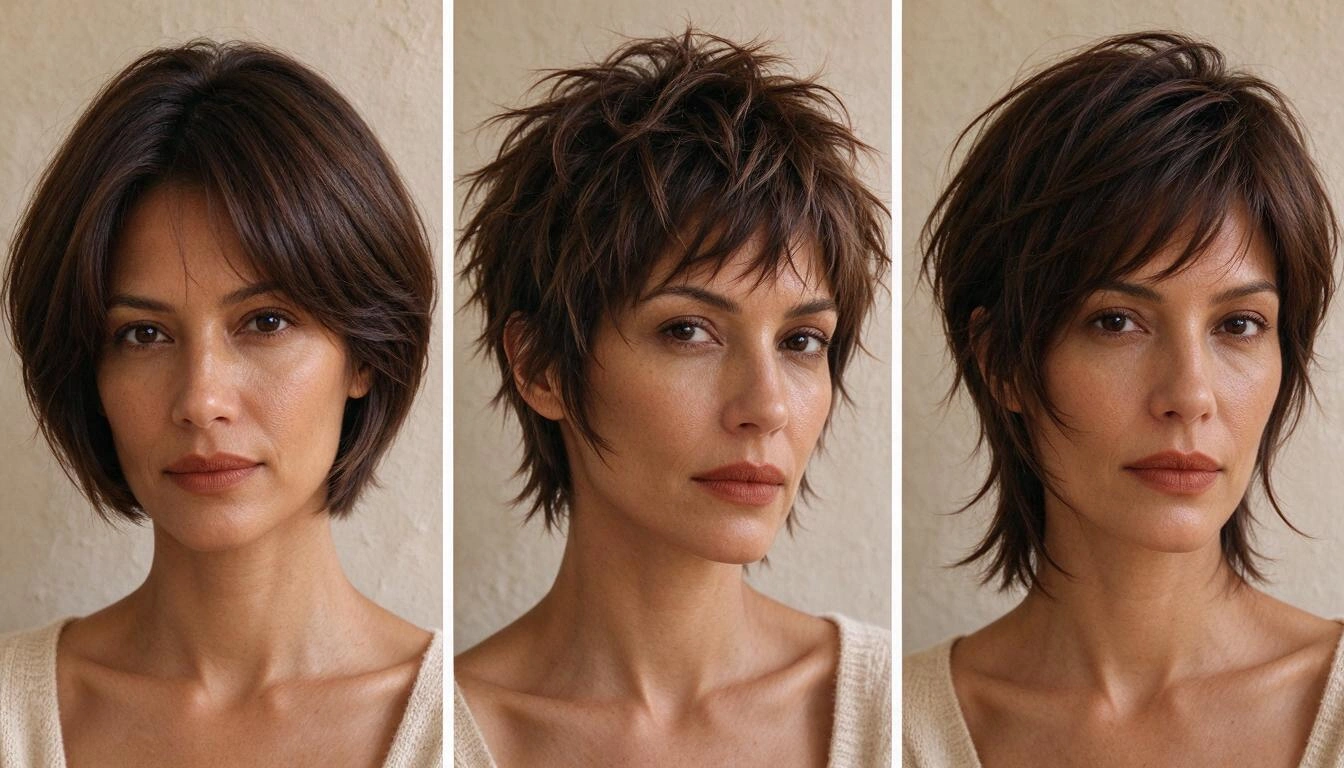
The bixie is, according to Marie Claire Spain (November 9, 2026), one of the eight cuts of the season, and is requested as "a bixie between short bob and pixie, with soft layers, clean but not extreme nape"; it flatters mainly fine or medium-density hair and wavy hair.
The shixie, described by Bustle as the shag-pixie hybrid of the moment, retains the very layered crown of the shag and combines it with the short length and lowered nape of the pixie, leaving more softness and length around the face. It is the most interesting option for fine hair because the visible layers create volume where there is none.
| If you’re unsure between… | Choose bixie if… | Choose shixie if… | Choose long pixie if… |
|---|---|---|---|
| Risk level | You want the most reversible short | You like the messy effect | You’re looking for the most drastic change |
| Density | Fine or medium | Fine, you need volume | Medium or dense |
| Daily styling | Quick blow-dry and little more | Texturizing product, fingers | Wax or paste on the crown |
| Growth | Grows into a short bob | Grows into a shag | Grows into a bixie |
Layers with movement and wispy bangs: the trend that isn’t a cut
The cross-cutting trend of 2027 is not a silhouette, it’s a technique: layers that relieve weight without shortening the visible length and light, feathered bangs that can be swept to the sides. It works on almost any base —bob, lob, long hair— and explains why two people with "the same cut" can have different results.
The so-called invisible layers are exactly that: a technique that subtly removes volume without hardly touching the length, as described by Perfect Corp (October 30, 2026) among the cuts of 2027. And the light bangs appear as the star addition of the season in Marie Claire Spain (November 9, 2026), which requests it as "a light and feathered bang that can be swept to the sides".
Three things to know before asking for layers or bangs:
- Layers are not about thinning the ends. Asking for "layers that don’t thin the ends" is literally the instruction that Marie Claire includes for long layers with a face frame. If the hair ends in fine points, the movement disappears.
- Wispy bangs require touch-ups, not styling. Being feathered, they are worn pretty much as they come out, but need cutting every three to four weeks to avoid becoming a curtain.
- In curls, the face frame is the important decision. The curly version of the butterfly cut is one of the searches that is growing the most, and what stands out is where the front layers start, not the total length.
What do search data say about hair for the upcoming season?
The most concrete public data comes from the first beauty trend report from Pinterest, published on October 6, 2026, and all point in the same direction: people are no longer searching for "bob," they are looking for a specific bob with texture and bangs. These are growths in searches, not actual quotas of people wearing the cut, but they serve to see where the demand is moving that then comes through the salon door.
| Search (Pinterest, beauty report 2026) | Growth |
|---|---|
| Long layered bob haircuts | +622 % |
| Short layered bob haircuts | +571 % |
| French bob with wispy bangs | +394 % |
| Textured French bob | +338 % |
| French bob hairstyles | +310 % |
| Flipped bob hairstyles | +299 % |
| Shag bob with curtain bangs | +288 % |
Source: Pinterest beauty trend report 2026, October 6, 2026. The report itself summarizes the logic of the change: these cuts maintain the shape "but work with the texture instead of fighting against it." According to the analysis by PPC Land, 23 of the 120 searches collected in the report grow by 500% or more, indicating how quickly the demand for very specific looks is moving.
An honest methodological note: the percentages from Pinterest are global text searches and compare two moments of the year; they are not sales or salon appointments. Use them as a thermometer of intention, not as a census.
Barbershop 2027: Has the fade really come to an end?
It hasn't come to an end, but it has ceased to be the default answer. In the trend review for 2027 published by BarberEVO on November 5, 2026, several professionals point to less pronounced fades, longer on top and scissor-cut texture, with the soft low taper as the dominant style compared to the high fade with extreme contrast.
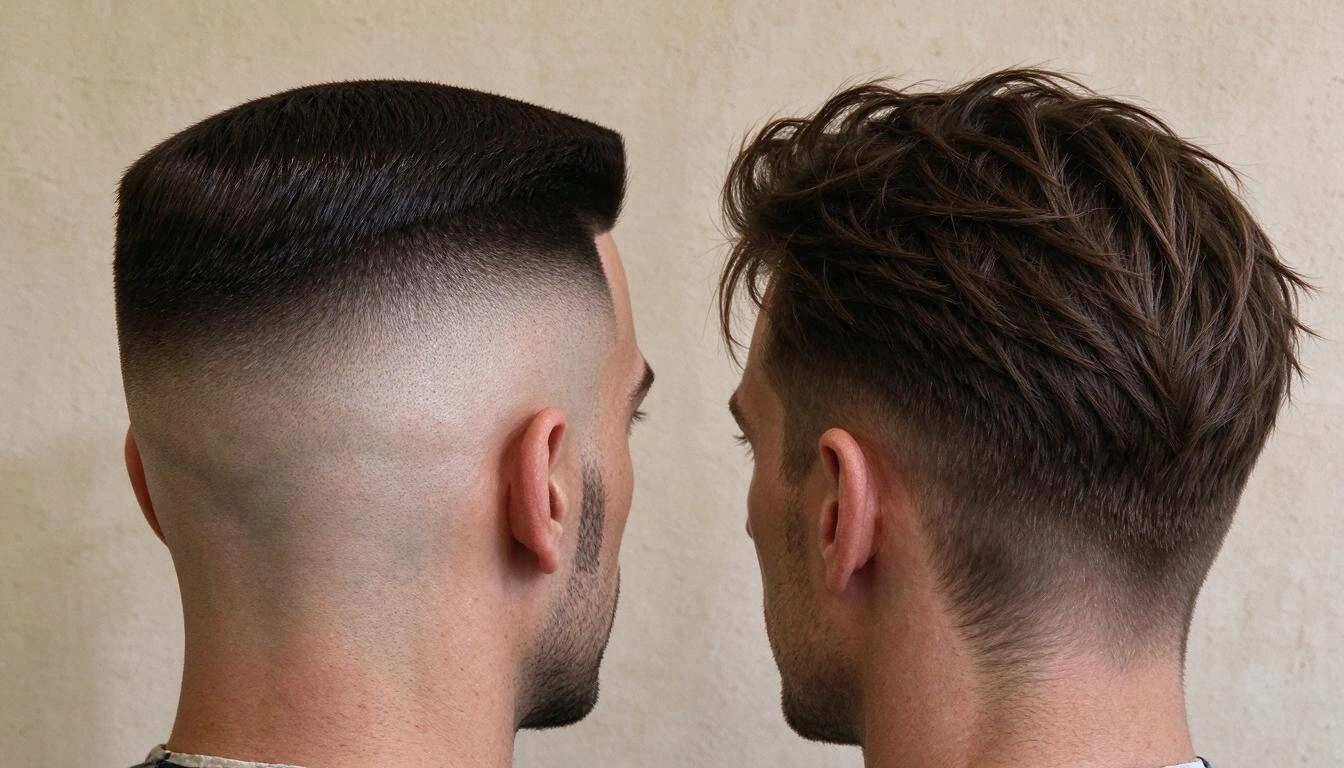
The positions collected by BarberEVO are not unanimous, and that is what makes the debate interesting:
"I think that in 2027 fades are going to be out and longer cuts are going to be in." — Alex Janzen, trainer and brand ambassador at Amighetti.
"For me, it's about keeping the hair short, but without the fade." — Francesco Muscas, founder of Muscas Barbieri.
The same article highlights four other trends for 2027 that are worth keeping on your radar if you get your hair cut at a barbershop: bolder styles with a return of marked tips (Alex Kotsis, creative director of MENSPIRE Netherlands); the fusion of barbershop and hairdressing in the same location, advocated by Andrea Amighetti and Alexander Jordan (Old Soul Barbers); the genderless cut, "cutting without thinking about male or female," in the words of Thaddeus Jayaseelan (Gradient); and the growing influence of the runway on what is requested in the chair, according to Sheil Venkatachalam (MENSPIRE Academy).
Translated to what is requested in the mirror: instead of "a two on the sides and high fade," the request for 2027 looks more like "take down the sides with a soft low taper, and leave me long on top with scissor texture, so it grows well between visits."
The context of the sector: 21% VAT and clients spacing out visits
There is an economic reason behind why the cuts of 2027 are designed to grow well: in Spain, hairdressing, barbershop, and aesthetics services have been taxed at 21% VAT since 2012, and the reduction to 10% has yet to be approved. When each visit costs more and appointments are spaced out, a cut that lasts eight weeks without deforming is worth more than one that looks different after three.
The sector has been advocating for this since the increase in 2012 (from 8% to 21%, presented then as a temporary measure) and the bill proposal is still stalled: the Senate backed processing the reduction to 10%, as reported by Onda Vasca, but in November 2026 the applicable rate remains at 21%, according to the tax review by Pelugest.
At the concentration in front of Congress on February 10, 2025, the Alliance for the reduction of VAT in personal image put figures on the table, reported by Professional Beauty España:
| Personal image sector data (Spain) | Figure |
|---|---|
| Professionals who are women | 85.19% |
| Self-employed professionals | 83.60% |
| Small businesses with a poor or very poor economic situation | 51.39% |
| Revenue drop in 2024 | −1.25% |
| Revenue drop in 2023 | −2.44% |
| Revenue drop in 2022 | −10.07% |
Source: Alliance for the reduction of VAT in personal image, data released on February 10, 2025. For those sitting in the chair, the practical reading is simple: the real cost of making a wrong cut has increased, and with it the value of deciding well before making an appointment.
How to request your 2027 cut without making a mistake
The most common mistake is not choosing the wrong trend, but asking for it with the wrong words. What works is bringing three specific data points to the salon —reference length on your own face, where the front layers start, and what type of bangs— instead of the name of the cut, which each professional interprets in their own way.
- Define the length with a reference from your body, not in centimeters: cheekbone, jaw, collarbone. This is how the sector's own guides formulate it.
- Say where you want the facial frame to start. In the butterfly bob and in long layers, that decision matters more than the total length.
- Talk about texture before shape. "Scissor texture," "invisible layers," "weighted tips," or "feathered bangs" are instructions; "modern" is not.
- Mention how much time you really spend styling each day. A cloud bob and an architectural bob do not require the same maintenance, and the cut that doesn't fit your routine will be abandoned in a month.
- Look at the shape on your face, not on the reference photo. This is where a prior test saves disappointments: in aiLook you can upload a photo or take a guided selfie, and the app analyzes the shape of your face and your hair type to show you cuts generated on your image, with an explanation of why each recommendation is made and a sheet with the maintenance required. There is a before/after comparison, comparison of several candidates at once, and the possibility of sharing the result with your stylist via a link or a QR code, which is the most direct way for both of you to be talking about the same cut.
Frequently Asked Questions About Hairstyles for 2027
What hairstyle will be in style in 2027?
The bob in its various versions —architectural without layers, cloud bob, butterfly bob, and short French bob— along with the short hybrids bixie and shixie, the new generation pixie, and long layers with a face frame. In barbering, the soft low taper with more length and texture on top. Sources: Perfect Corp (October 30, 2026), Marie Claire Spain (November 9, 2026) and BarberEVO (November 5, 2026).
What is the difference between bixie and shixie?
The bixie is a hybrid of bob and pixie: it maintains some length in layers, usually covering the ears, with a clean but not rushed nape. The shixie is a hybrid of shag and pixie: it retains the very layered and messy crown of the shag over the short structure of the pixie, with more length and softness around the face. In practice, the bixie is more polished and the shixie is more textured.
Is the fade out of style in 2027?
It has not disappeared, but it has lost its monopoly. In the review by BarberEVO on November 5, 2026, Alex Janzen predicts that "in 2027 fades will be out and longer cuts will be in," while Francesco Muscas clarifies: "keeping the hair short, but without the fade." The dominant trend is a low and soft gradient with natural texture on top.
What is a wispy fringe and who does it suit?
It is a light and layered fringe, with tapered ends, that can be worn closed or open to the sides. It particularly flatters those who want a visible change without altering the length and those with wide foreheads, as it softens the line without creating a block. It requires touch-ups every three to four weeks.
How do I know if a bob will suit me before cutting it?
The only reliable way is to see it on your own face, taking into account the shape of your face, the density, and the curl —with wavy hair, the bob rises several centimeters when drying—. A simulator like aiLook allows you to try various versions of the bob on a photo of yourself, compare them to each other, and save your favorites before making an appointment.
How much VAT do I pay at the hair salon in Spain?
21%. Hairdressing, barbering, and aesthetic services have been taxed at the general rate since 2012 and, as of November 2026, the reduction to 10% requested by the sector has yet to be approved in Congress, according to the VAT review in hairdressing by Pelugest.
What to do before making an appointment
2027 does not impose a cut: it presents a set of softer shapes and asks you to choose the one that fits your face, your texture, and the time you are willing to dedicate each morning. That choice is made much better by seeing the options on your own image rather than pointing to a photo of someone with a different hair density and proportions. For that, there is aiLook, the AIsToHire app designed to see which cut suits you best: upload a photo, check out the shapes of the season in its gallery of hairstyles and haircuts, compare the candidates with the before and after slider, and show the result to your hairdresser before they take the scissors.
Try the 2027 styles on your own photo at aiLook and go to the salon knowing exactly what to ask for.
Try the 2027 styles on your own photo at aiLook and go to the salon knowing exactly what to ask for.Keep reading
View all articles →
Which haircut suits me best? Measure your face in 5 minutes and try it on your own photo

Why Your Car Insurance Increased in 2026: Average Premium of €1,412 and Historic Record

Discussing via WhatsApp or talking in person: what science says about couple conflicts through messages