aiEnvases — Plastic tax (Model 592) and annual packaging declaration · You know what applies to you, how much you pay, and with what paperwork

For SMBs that package, import, or ship orders with their own box: eight questions and you'll know if you are a packaging producer, if you pay the plastic tax, and what you need to file. From there, a single inventory feeds Form 592 and the annual packaging declaration.
Are you a packaging producer and don't know it yet?
Law 7/2022 and Royal Decree 1055/2022 turned almost any company that packages, imports, or ships orders by adding its box, tape, and packing material into a packaging producer; and the tax on non-reusable plastic packaging adds on top a Form 592 with its territorial register. aiEnvases runs the assessment against the cited regulation, builds the packaging inventory from weight templates, and calculates both sides —AEAT and MITECO/SCRAP— with the same data. The calculation is deterministic: code rules, parameters with their effective date, and every amount can be opened down to the box that originated it.
Start for free
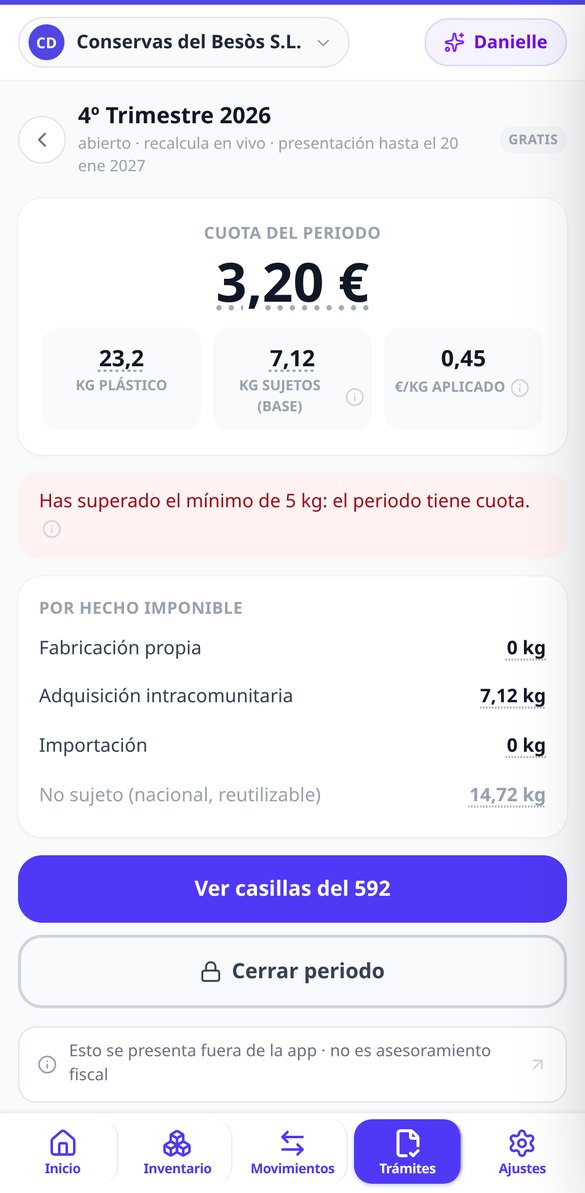
One inventory, two declarations
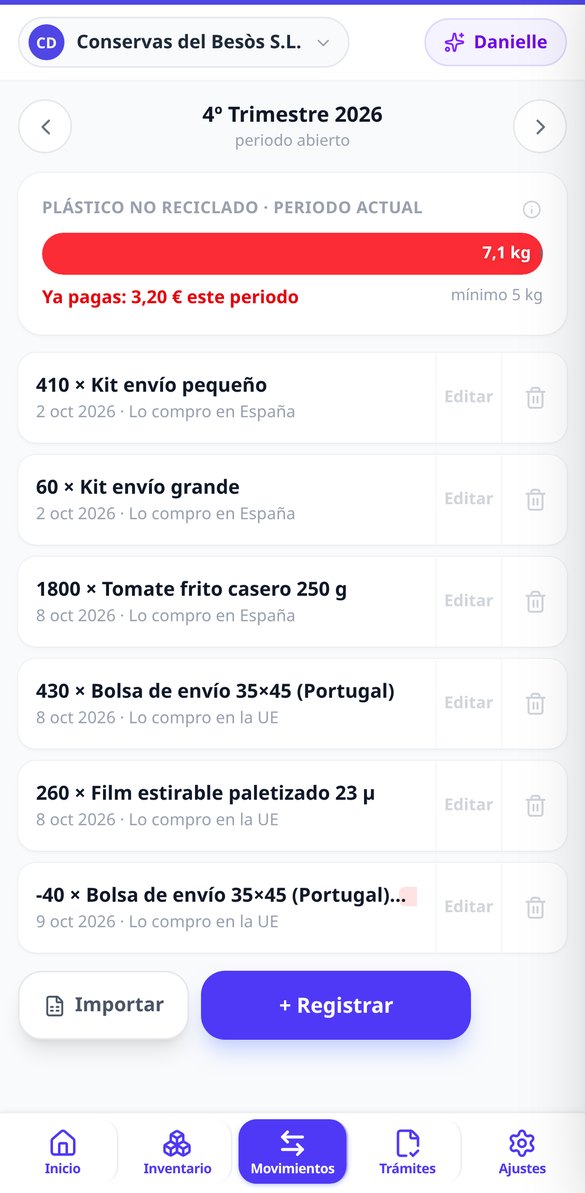
Tax tools calculate Form 592 and forget cardboard; waste tools produce the report and forget the tax. Here both come from the same lines, and every number carries its formula.

Assessment with cited regulation
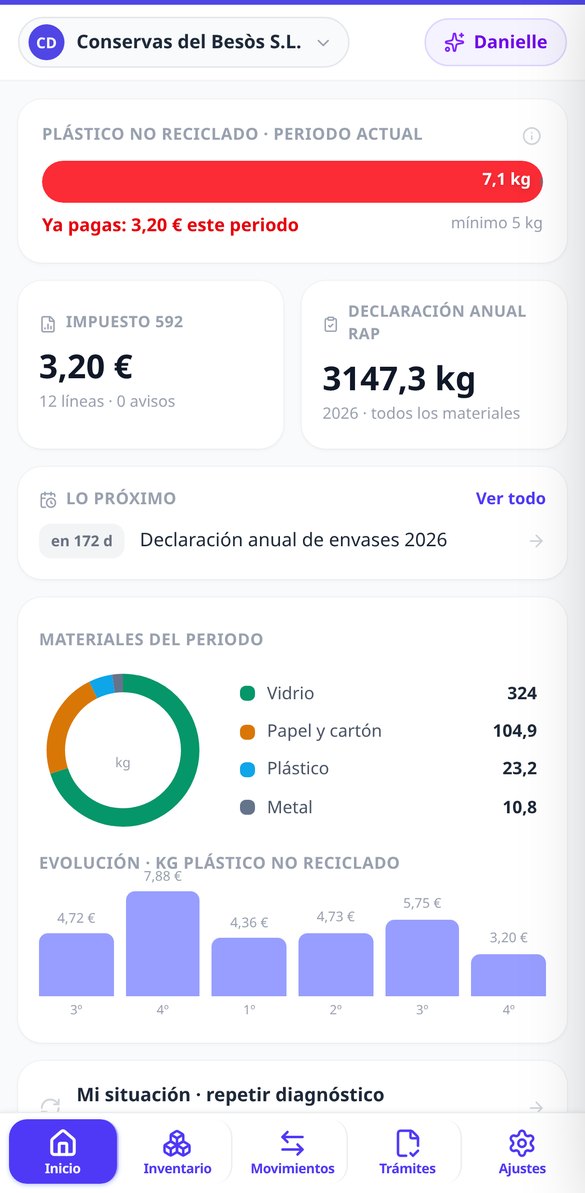
Eight yes/no questions and a three-card traffic light: EPR, plastic tax, and waste. Each verdict explains why, cites the article, and lists pending formalities. Including the most costly mistake: buying boxes in Spain does not make you a Form 592 taxpayer, but it does make you a packaging producer.
Form 592 with its boxes, ready to copy
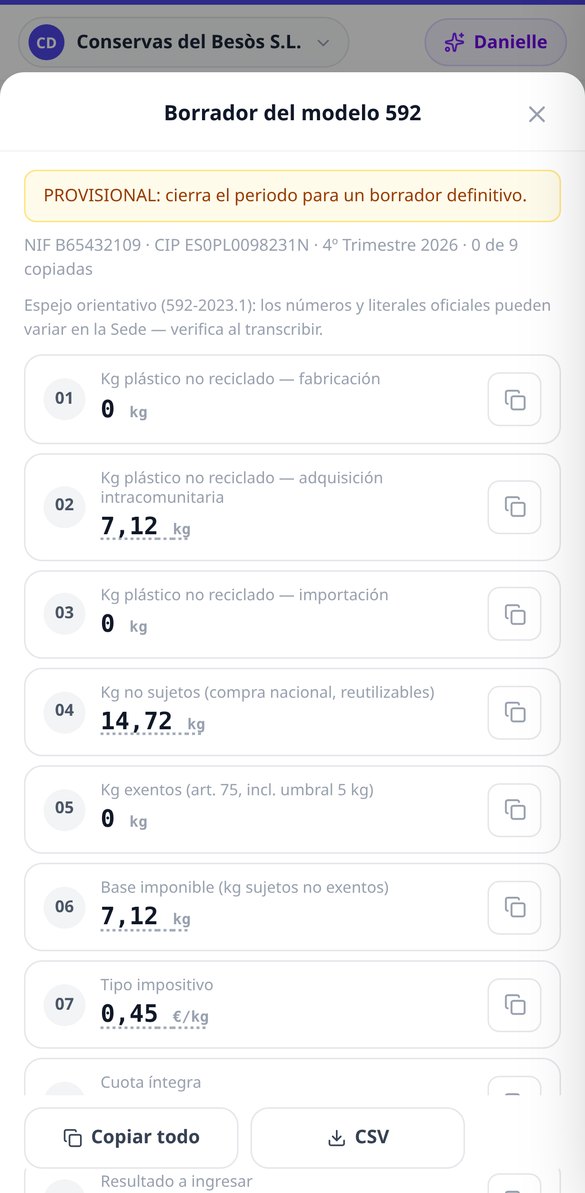
Base in kilograms of non-recycled plastic, 5 kg threshold per period, exemptions, and rate of €0.45/kg, resolved by each line's accrual date and with the recycled percentage applied only if there is a valid certificate. The draft reproduces the form's boxes for transcription, and when the period is closed it is frozen with its snapshot.

Annual declaration and inspection dossier
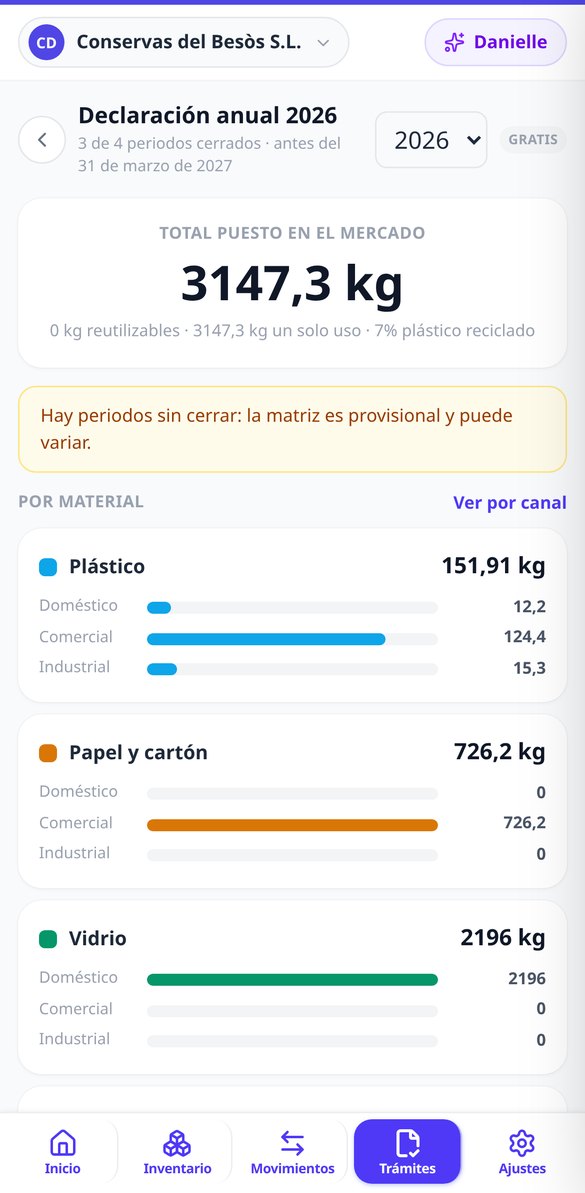
The same inventory generates kilograms by material and by channel (household, commercial, and industrial) for the Producer Registry and your SCRAP, exportable as filterable CSV. And a ZIP with the logbook, the line-by-line breakdown, the recycling certificates, and their manifest.
From zero to your first calculation in three steps
Take the assessment
Eight questions. When you finish, you know which obligations apply to you, and the app hides the sections you don't need.
Set up your packaging
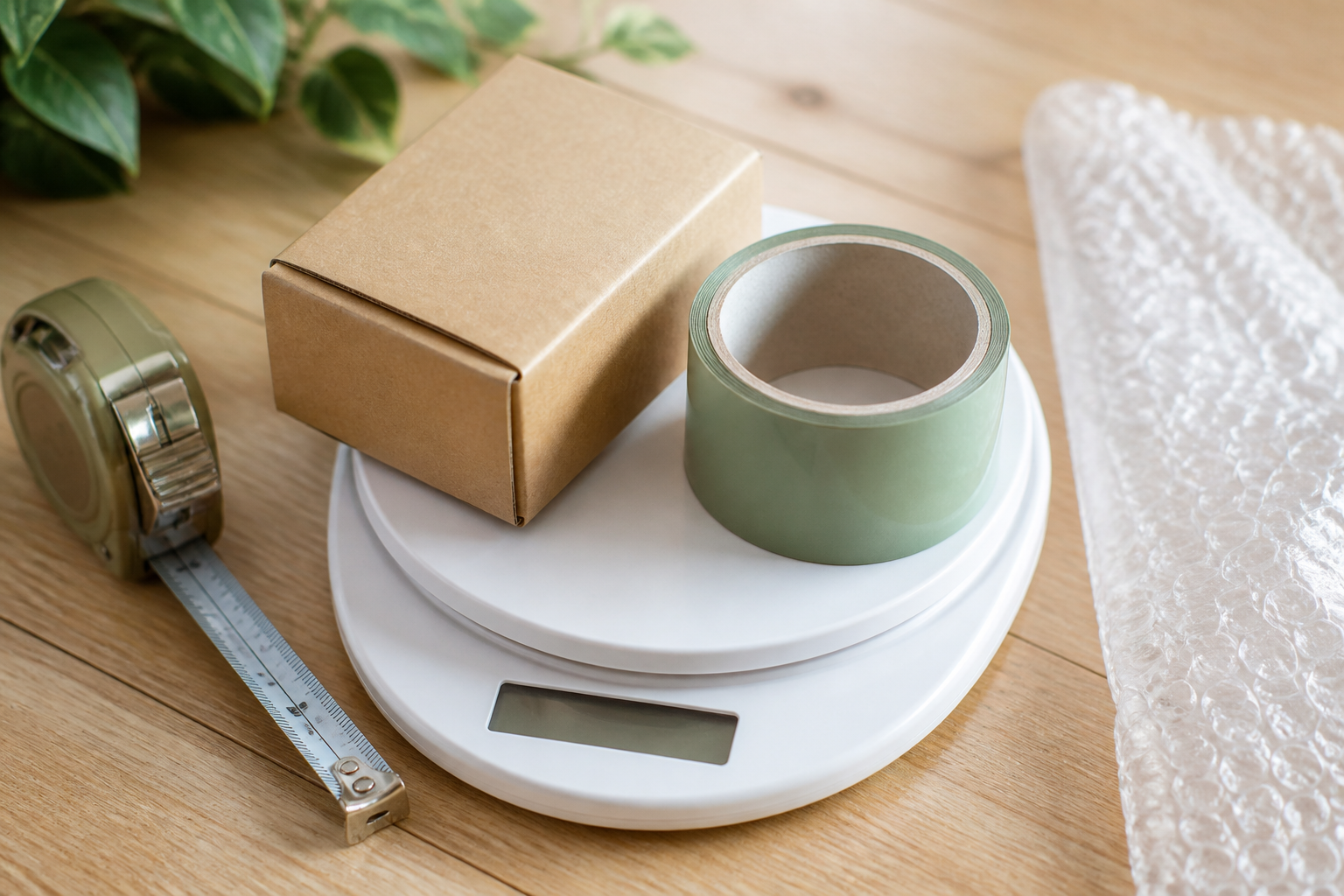
Twenty templates with industry average weights —cardboard box, tape by the meter, film, bubble wrap, bag, PET bottle, pallet— and an estimator for the rest: weigh twenty units and divide, or calculate by dimensions. Group them into reusable shipping kits.
Record and calculate
Declare the period's shipments manually or by importing your store's CSV, and the threshold thermometer, Form 592, and annual declaration recalculate on their own.

SMBs that have already closed their first period
“I used to buy boxes in Spain and assumed nothing applied to me. The assessment made it clear in two minutes that I was a packaging producer because of order packaging, and the annual declaration came from the same inventory I already had set up.”

“We import bags and film, so Form 592 was a spreadsheet full of margin notes. Now each line has its origin, its certificate, and its formula, and when I close the quarter, the draft with the boxes is already done.”

“I manage several companies from the same account, and each one has its own assessment, periods, and deadlines. The ZIP with the logbook and certificates is what used to take me half a morning digging through email.”

Frequently Asked Questions
Find out today what applies to you and how much you'll pay
Create your free account, take the eight-question assessment, and set up your first period.