 AiNotes
Is it legal for an AI bot to record and transcribe your meetings? What has changed in 2026
Team at AiNotesWritten with AI assistance13 min readIn summary
- On August 13, 2026, Judge Eumi K. Lee of the Northern District of California allowed the claims of federal wiretaps (Wiretap Act), California privacy (CIPA), and Illinois biometric privacy (BIPA) to proceed in In re Otter.AI Privacy Litigation, and rejected the notion that appearing on the invitation or attendee list equates to consenting to recording.
- There are more open fronts: two BIPA lawsuits against Fireflies.ai in Illinois (Cruz, Dec 18, 2025, and Fricker, March 2026) and one against Granola (Chamberlain, July 30, 2026) for training models with default conversations.
- In Spain, the AEPD established on January 14, 2026, that voice is personal data, that consent must be free, specific, informed, and unequivocal, and that joining a meeting does not mean consenting to being recorded.
- Recording a conversation in which you participate is legal in Spain (STC 114/1984); transcribing it and processing it with a third-party AI is a different regime: GDPR, LOPDGDD, data processor contract, legal basis, and retention periods.
- The lowest-risk approach is to document the meeting yourself —your notes, agreements, the PDF they sent you, the photo of the whiteboard— instead of recording others' voices.
If you've been seeing a "Notetaker" entering your video calls for a year that no one invited, 2026 is the year that stopped being a product anecdote and became a legal matter. Between August 2025 and July 2026, lawsuits piled up in the United States against the three most popular meeting recorders, and in January 2026, the Spanish Data Protection Agency published its first explicit position on voice transcription with AI. This article summarizes what changed, what you can and cannot do, and how to document meetings without recording anyone —something for which, at AIsToHire, we built AiNotes, an AI notepad that indexes your own material instead of third-party voices.
What has changed in 2026 with AI bots that record meetings?
What has changed is that a U.S. federal court has agreed to thoroughly examine whether an AI meeting recorder is a third party that listens, and not just a simple tool of the host. On August 13, 2026, Judge Eumi K. Lee denied most of Otter.ai's motion to dismiss in In re Otter.AI Privacy Litigation (Northern District of California): claims under the federal Wiretap Act, California Invasion of Privacy Act, and Illinois biometric law are moving forward. The claims of CFAA, CDAFA, and Washington privacy law were dismissed, with the possibility of amendment.
The reasoning is what should concern any company using these tools: as the plaintiffs allege that Otter.ai retains conversations and trains its models with them, the court found it plausible that it acted as a third party listening, not merely as an instrument of the person who convened the meeting. And it expressly rejected that a generic notice like "this meeting may be recorded" in the calendar description equates to affirmative consent.
Open lawsuits, case by case
| Case | Provider | Date | Jurisdiction | Main Claim |
|---|---|---|---|---|
| In re Otter.AI Privacy Litigation (consolidating Brewer, Walker, Theus, Winston) | Otter.ai | Lawsuits from Aug-Sep 2025; consolidated on Oct 22, 2025; ruling on Aug 13, 2026 | N.D. California | Wiretap Act, CIPA, BIPA, CFAA |
| Cruz v. Fireflies.AI Corp. | Fireflies.ai | Dec 18, 2025 | C.D. Illinois | BIPA: voiceprints without written consent |
| Fricker v. Fireflies.AI Corp. | Fireflies.ai | March 2026 | N.D. Illinois | BIPA: no retention policy or biometric authorization |
| Chamberlain v. Granola, Inc. | Granola | July 30, 2026 | — | Recording without knowledge and default AI training |
Source: compilation of lawsuits against AI meeting recorders from tldv and coverage of the ruling in Otter.ai Privacy Lawsuit: Core Claims Survive U.S. Court Bid (UC Today).
These are not judgments: a ruling of this kind does not declare that Otter.ai has violated the law, only that the alleged facts are sufficient to continue litigating. But it marks the direction: the risk is no longer theoretical and implied consent has ceased to be a comfortable defense.
Is it legal to record and transcribe meetings with AI in Spain?
These are two distinct questions with two different answers. Recording a conversation in which you participate is generally legal in Spain: the STC 114/1984 established that the secrecy of communications protects against third parties, not between interlocutors, and Article 197.1 of the Penal Code punishes recording others' conversations, not your own. However, processing that recording through an AI from an external provider constitutes personal data processing, and here the GDPR, the LOPDGDD, and the doctrine of the AEPD apply.
The Spanish Agency for Data Protection published on January 14, 2026, its analysis "Voice transcription with AI: implications for data protection," and its conclusions are quite clear:
- Voice is personal data, to the extent that it allows identifying or making identifiable a physical person; and in certain processing contexts, it may qualify as biometric data.
- Consent must be free, specific, informed, and unambiguous, expressed by a clear affirmative act. It cannot be the default option of the service, and withdrawing it must be as easy as giving it, without detriment to those who refuse.
- Joining a meeting does not equate to consenting to recording or transcribing.
- Two operations must be distinguished: the transcription itself (creating the minutes) and the retraining of the system with voice samples. They are different purposes and require separate analysis.
- Basic obligations: minimize data, establish the legal basis (contract, legitimate interest, or consent), define retention periods, and be transparent about third-party access.
In its second note, from April 2026, the AEPD added two very noteworthy practical nuances: consent to record a session does not authorize the following, and recording or transcribing must automatically cease at the end of the meeting.
What changes depending on who processes the data
| Scenario | Role of the provider | What you need |
|---|---|---|
| You transcribe with a tool that only processes on your behalf | Data processor | Data processing agreement (art. 28 GDPR), legal basis, prior information, retention period |
| The provider uses the recordings to train its models | Becomes responsible for its own purposes | Additional legal basis, enhanced transparency; changes the entire distribution of responsibility |
| You record without notifying attendees | — | Invalid consent: joining is not consenting (AEPD, Jan 14, 2026) |
GDPR penalties for serious violations can reach 20 million euros or 4% of global annual revenue, as noted in the legal risk analysis of transcribing meetings with AI by ORH.
Platforms are already getting ahead
Microsoft has introduced a policy in Teams that requires explicit consent to record and transcribe 1:1 VoIP calls, rolled out in early 2026: until the other participant accepts, their audio, video, and shared content are disabled and excluded from the recording. The important detail for the tenant administrator is that it is disabled by default and must be activated manually. For participants joining by phone (PSTN), Microsoft announced the same consent requirement via the mobile keypad starting in early December 2026. You can see it in the Teams recording and transcription documentation and in the notice about the new explicit consent policy.
The non-legal risks that hurt just the same
Even if you have perfectly obtained consent, an AI recorder introduces operational problems that no form can resolve. The report The AI notetaker risk is now an everywhere problem, published in CSO Online on October 23, 2026, documents five that are already occurring in real companies.
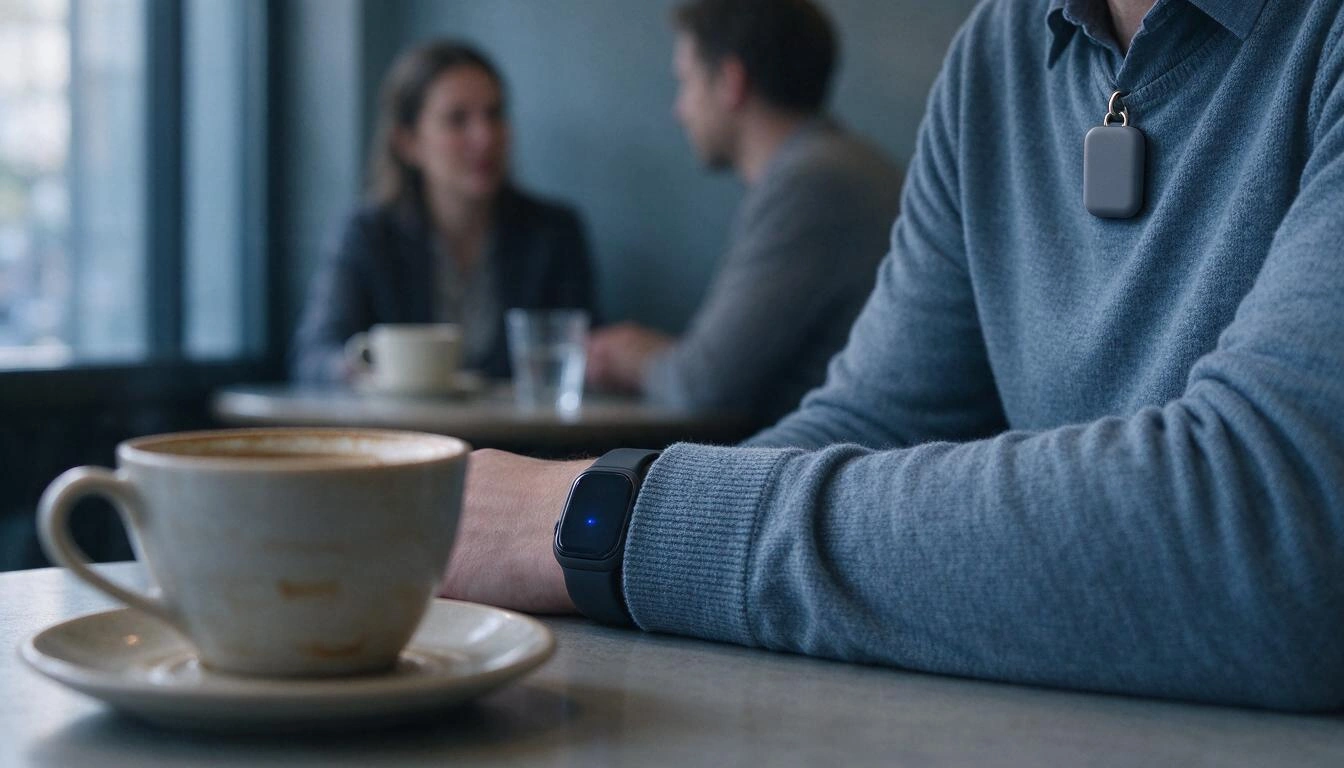
1. Recording without a visible indicator. On July 28, 2026, Granola launched its app for Apple Watch; the authors of the report tested it themselves by hiding the watch under the sleeve of their jacket, pressing once, and recording an entire walk with a clean transcription: "no one could have known it." In the same vein, Meta acquired Limitless, a manufacturer of continuous recording pendants, in December 2025, and DEF CON banned smart glasses in the conference area that same month.
2. Context leakage between meetings. The notetaker's memory drags information from previous conversations into the summaries of the current ones. If you share that minutes with someone outside, you may be sending them the reasoning of meetings they did not attend.
3. Transcription errors that do not distribute equally. A misunderstood word reinterprets the rest of the conversation around the error. And the report states it bluntly: colleagues with accents that the models handle poorly "carry more of that risk than the rest of us." For multilingual teams, that is an operational bias, not a technical curiosity.
4. Manipulation of the minutes. There are already people using live prompt injection who narrate aloud the result they want in the first minutes of recording to condition what the system marks as important. One source even described taking down the competitor's notetaker.
5. The provider that shuts down with your transcriptions inside. The sudden closure of Novacy left transcriptions inaccessible. If your meeting minutes live only in a third-party SaaS, its runway is part of your continuity plan.
Checklist: how to use an AI notetaker without getting into trouble
If you are going to continue using an AI recorder, the fundamental rule is to stop recording by default and start deciding meeting by meeting. That is, literally, the recommendation of the New York City Bar Association in its Formal Opinion 2026-2, dated August 5, 2026: as a default practice, and unless there is a good reason in the specific case, the lawyer should avoid recording the conversation, because recording carries ethical and tactical risks.
- Always notify, before starting, and verbally. A notice in the calendar description does not count: the California court has already stated that this is not affirmative consent.
- Rename the bot. It should not enter as "Notetaker" but with your name and the word recording, so that anyone knows whose it is and what it does.
- Classify the meetings where recording is not done. M&A, legal advice, HR processes and disciplinary matters, board meetings. Put it in writing in the internal policy, not left to individual discretion.
- Review the provider before the function. SOC 2 certification, server location, data processor contract under Art. 28 GDPR, and —key after the lawsuits— whether it uses your conversations to train its models and with what default configuration.
- Set retention separately. Different deadlines for audio, transcription, and metadata, with automatic deletion. Keeping "just in case" is exactly what turns minutes into discoverable evidence.
- A human owner validates the minutes. Someone signs the summary before it circulates. The transcription is a draft, not a fact.
| Decision | Recommended default | Source |
|---|---|---|
| Record the meeting | No, unless there is a specific reason | Formal Opinion 2026-2, NYC Bar (Aug 5, 2026) |
| Consent | Explicit, verbal, per session | AEPD (Jan 14, 2026 and April 2026) |
| Consent by attending | Not valid | AEPD; In re Otter.AI (Aug 13, 2026) |
| Model training with your meetings | Disabled | Chamberlain v. Granola (Jul 30, 2026) |
| Explicit consent in Teams 1:1 | Must be activated: it comes off by default | Microsoft Teams (2026) |
The low-risk alternative: document instead of recording
There is a path that eliminates almost all of the above in one go: do not record anyone's voice and document the meeting yourself. Your notes, agreements, names and deadlines, the PDF they sent you, the photo of the whiteboard. Without any biometric data of others, without third-party consent to collect, without a bot entering the video call, and without your strategic material ending up retraining someone else's model.

The obvious objection is that your own notes get lost: you end up with forty loose annotations and a PDF that you don’t know which folder you left it in. That is a retrieval problem, not a capture one, and it is solved by making the notes searchable instead of recording others.
| AI Notetaker on the call | Your indexed documentation | |
|---|---|---|
| Processed data | Voice of all attendees | Your text and your attachments |
| Third-party consent | Mandatory, explicit, and per session | Not applicable |
| Biometric risk (BIPA type) | Yes, voiceprint | No |
| Provider dependency | High: if it shuts down, you lose the minutes | Low: the material is yours |
| Fidelity | Literal, with transcription errors | What you decided to note |
Frequently Asked Questions
Is it legal to record a meeting with AI without notifying others?
Recording a conversation in which you participate is legal in Spain (STC 114/1984; Article 197.1 of the Penal Code punishes recording others' conversations). However, transcribing it or processing it with third-party AI constitutes personal data processing and requires prior information and legal basis: the AEPD made it clear on January 14, 2026, that joining a meeting does not equate to consenting to being recorded.
Does the notice "this meeting may be recorded" in the invitation count as consent?
No. On August 13, 2026, the Northern District Court of California expressly rejected in In re Otter.AI Privacy Litigation that a generic notice in the calendar description equates to affirmative consent. The AEPD maintains the same position: consent must be a clear, specific, and informed affirmative act.
Has Otter.ai been sued and what has happened with the case?
Yes. Four lawsuits filed between August and September 2025 (Brewer, Walker, Theus, Winston) were consolidated on October 22, 2025, in the Northern District of California. On August 13, 2026, Judge Eumi K. Lee allowed the claims of federal eavesdropping, California privacy, and Illinois biometric privacy to proceed. It is not a substantive ruling: the case continues.
Can I use an AI notetaker in a meeting with my lawyer or HR?
This is exactly the type of meeting that should be excluded. The Formal Opinion 2026-2 from the New York City Bar Association (August 5, 2026) advises lawyers not to record conversations by default, unless there is a good reason, due to ethical and tactical risks. A reasonable internal policy would list the meetings where recording is not permitted: legal, HR, M&A, and board.
What should I ask the provider before allowing their notetaker in my company?
Four things: whether they use your conversations to train their models and with what default value, where the servers are located, if they sign a data processing agreement under Article 28 of the GDPR, and what security certification they have (SOC 2 is the minimum required in the market). Add a fifth: what happens to your transcriptions if they shut down, after the Novacy case.
Is there any way to document meetings without recording anyone?
Yes: take relevant notes yourself and attach the material that was shared (PDFs, images, photos of the whiteboard), without capturing others' voices. This is the approach of AiNotes: you keep notes, files, and documents, they are indexed, and an AI assistant responds about that material citing the note from which each piece of information is drawn.
Documenting the meeting without recording others
The reading for 2026 is simple: the AI recorder in the video call has shifted from invisible convenience to a decision with legal, ethical, and continuity consequences. And in most meetings, the audio of anyone is not necessary: what you agreed upon, and the document that supports it, must be locatable three months later.
This is where AiNotes fits in, the app from AIsToHire for this purpose: it is the AI notepad where you write or dictate your notes, attach PDFs, documents, and images from the meeting, and everything gets indexed. Then you ask in natural language and the assistant responds only with your material, citing the specific note from which it has drawn each piece of information. No bots entering the call, no third-party voice traces, and no external consents to manage: just your documentation, accessible.
Document your meetings without recording anyone: try AiNotes and let an assistant consult your own notes and attachments.
Document your meetings without recording anyone: try AiNotes and let an assistant consult your own notes and attachments.Keep reading
View all articles →
Search for data in your PDFs and notes: why Ctrl+F fails you and what really works

Discussing via WhatsApp or talking in person: what science says about couple conflicts through messages
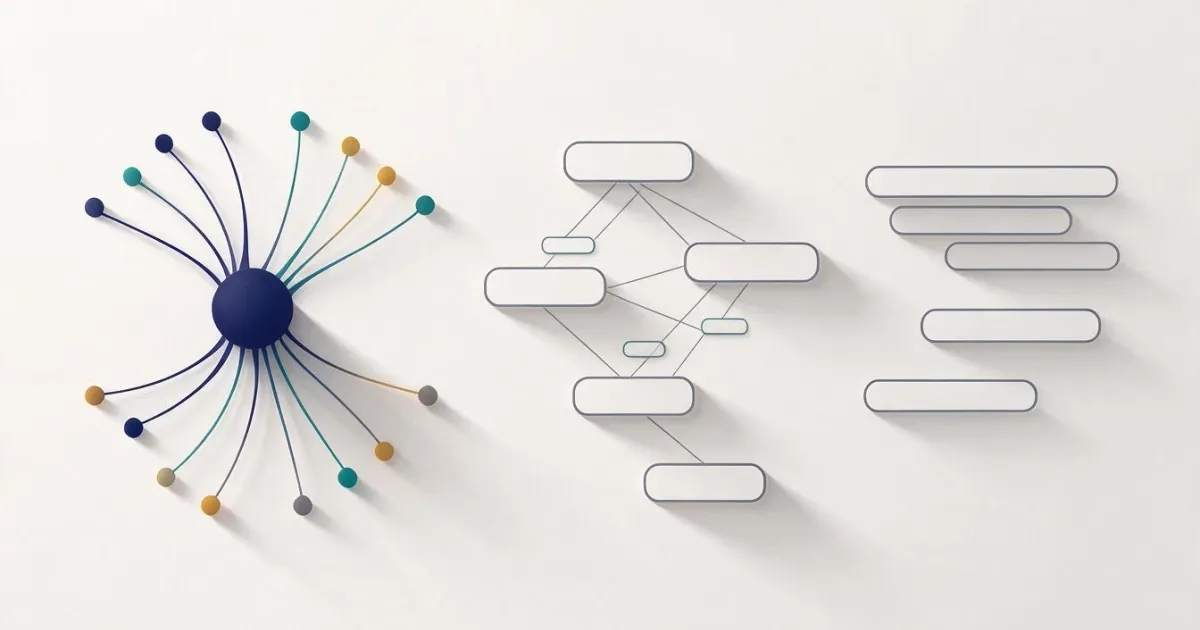
Mind map, concept map, and outline: differences and when to use each one