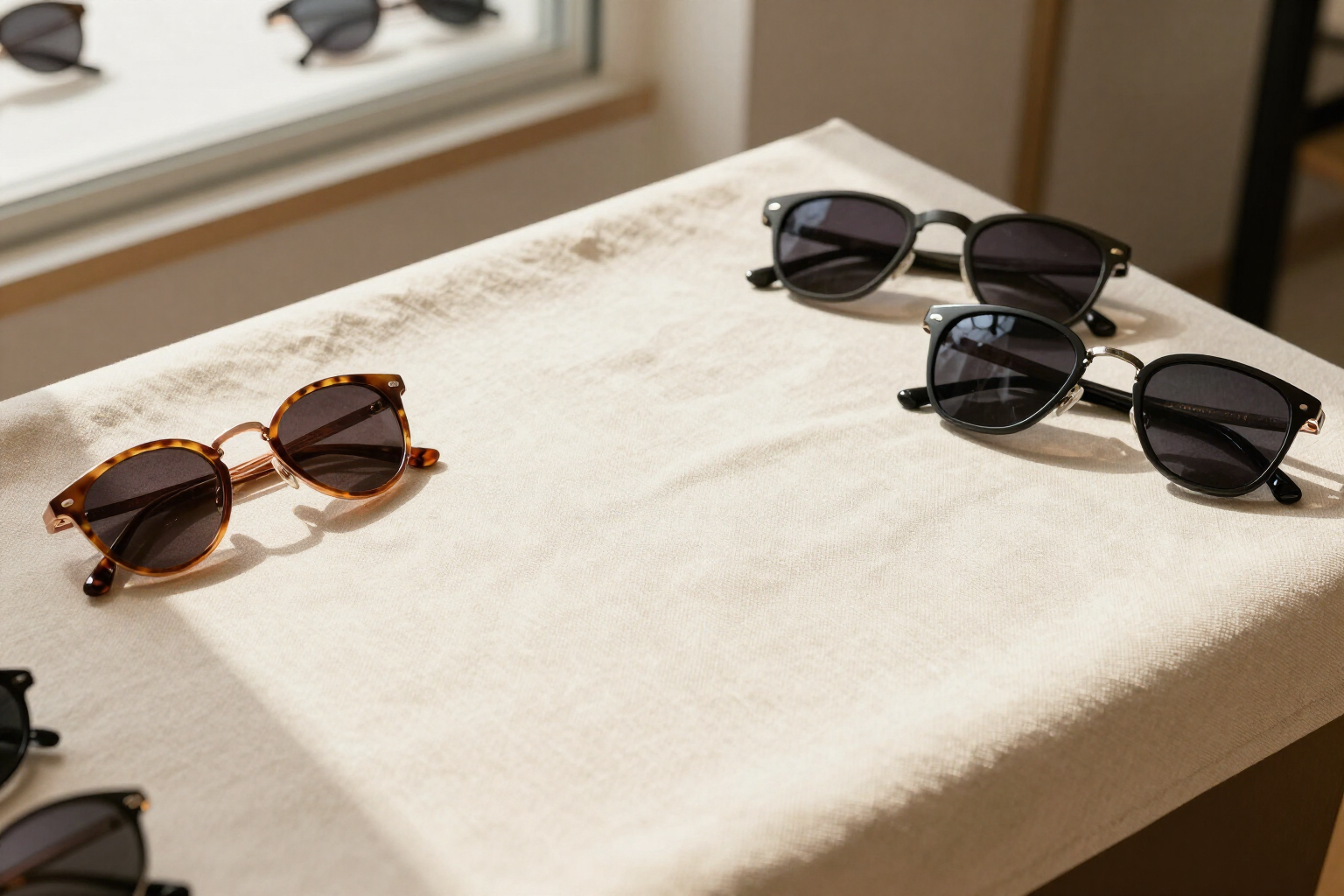
Sunglasses for men or women, without recommendations that clash
aiShades detects your gender presentation in your photo and maintains that consistency throughout the recommendation: shapes, colors, styles, infographics, and virtual try-on.
The worst sunglasses advice isn't the one that fails because of your face shape: it's the one that suggests a frame you would never wear.
When you upload your front photo, aiShades' AI analysis doesn't just stop at face shape and undertone: it also detects your apparent gender presentation and classifies it into one of three labels (masculine, feminine, or unisex). It doesn't ask you anything or require you to fill out a form: it comes directly from the photo itself.
That label becomes the subject of all subsequent recommendations — "a man", "a woman", or "a person" — and travels with your analysis to the three generations of AI in the app: the style analysis itself, the downloadable editorial infographic, and the photo try-on with the sunglasses on. All three receive the same explicit restriction: all proposed frame shapes, colors, and styles must be consistent with that subject.
In practice, this means that a masculine-presenting face won't get a distinctly feminine cat-eye, and a feminine-presenting face won't be suggested aggressive sporty wraps, unless they truly suit them. Consistency isn't just in the text: the frame thumbnails in the infographic and the sunglasses in the try-on are generated with that same restriction, so you won't see an image that contradicts the written advice.
It's a rule of aesthetic consistency, not a barrier: the unisex label exists precisely for faces that the AI doesn't fit into either extreme, and in that case, recommendations remain neutral instead of forcing a gender.
Benefits of Aesthetic consistency by gender
No forms
gender presentation is deduced from your photo, it doesn't ask you or require you to declare it.
Consistency across the three outputs
the same label is carried down to the analysis, the infographic, and the try-on, so none contradicts the others.
The images also comply
the frames you see drawn on your face are generated with the restriction applied, not just the text.
Recommendations you would wear
avoid the classic mistake of suggesting a retro cat-eye to a man or a sporty wrap to a woman who doesn't suit it.
A real third option
there is a unisex label for ambiguous faces, so the advice remains neutral instead of inventing a gender.
The criteria do not replace geometry
the shape of your face, your undertone, and your palette still take precedence; gender only filters out what doesn't fit you.
No labels on screen
the classification works internally to refine the result, it is not shown to you as a judgment about you.
Let the recommendation fit you, not a mannequin
A front photo and you'll get your analysis, your infographic, and your virtual try-on, all consistent with your style.