Your facial analysis, turned into a beauty editorial poster
AI takes your selfie and returns it as a vertical infographic in the style of a 'beauty clinic scan': your face centered, labeled panels, and your palette in color samples.
The same diagnosis that other apps deliver in a text list comes here as an image that you’ll want to save and share.
aiMakeup doesn’t show you a results table: it edits your own photo and turns it into a vertical beauty analysis poster with a magazine finish. Your portrait is in the center, and around it are fine lines and small arrows leading from your face to labeled panels with the actual analysis data.
In those panels are your skin type, your skin undertone, your eye shape with the flattering look, your face shape, your highlighting and contouring areas, and your ideal palette represented with circular color samples (lips, blush, and eyeshadow). The labels are short, editorial-style tags, and are in English, like the facial analysis posters circulating on social media.
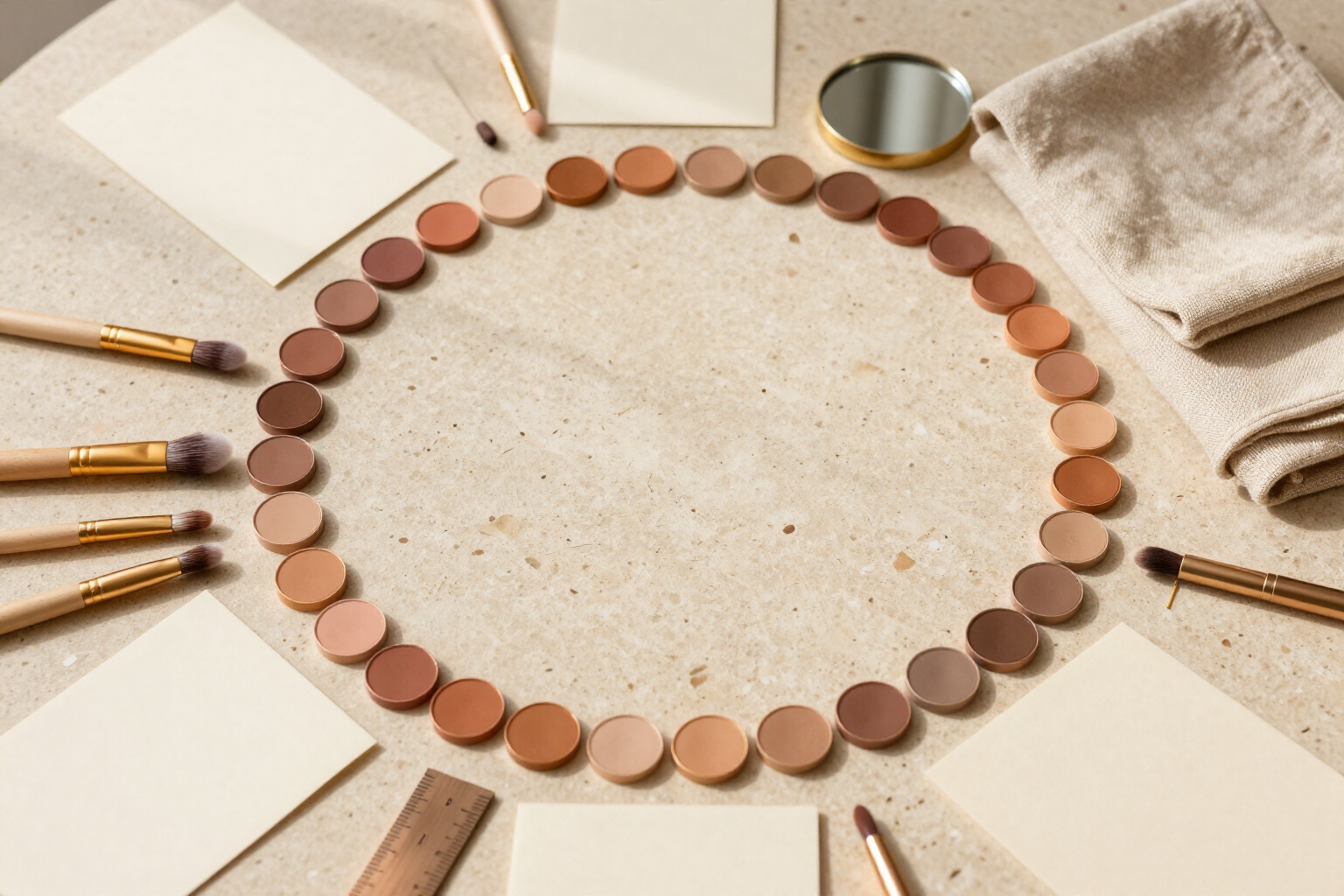
The aesthetic is set in the engine itself: warm-neutral palette with bronze, taupe, and gold, fine lines, refined typography, and plenty of space around the face. The result looks more like a beauty guide page from a magazine than a screenshot from an app.
And one rule that the app takes seriously: the fidelity of your face is prioritized over aesthetics. The generation prompt prohibits altering your features, widening you, changing your skin tone, weight, age, or pose. You must be instantly recognizable: it’s your face with the analysis layer on top, not an idealized version of you.
Benefits of Shareable beauty infographic
Image, not a list
your diagnosis arrives as a finished vertical poster, ready to save in your camera roll or send via message, without you having to format anything.
Editorial aesthetic by default
warm-neutral palette of bronze, taupe, and gold, fine lines, circular samples, and space around the face, with the same finish in each generation.
Your real data within the design
the panels are not decorative; they include skin type, skin undertone, eye shape, face shape, contour areas, and the color palette calculated by the AI from your photo.
Your face remains your face
the generation has explicit instructions not to retouch features, proportions, weight, skin, or age; the poster is your photo with the analysis layer, not an enhanced portrait.
Visible palette in samples
lip colors, blush, and eyeshadow appear as color circles on the poster, and on the results screen, you can see their hex codes.
Real zoom viewer
the shareable poster image opens in full screen and supports pinch, drag, double-tap, and mouse wheel to read each panel closely.
Save and share with one touch
direct download on any device and, on mobile, a native share sheet to send or save it in Photos.
It stays in your history
each poster serves as a thumbnail of its analysis, so you can reopen it, enlarge it, and share it whenever you want.

Upload a selfie and receive your beauty poster
A front-facing photo with good lighting is all you need: in a couple of minutes, you'll have your editorial infographic ready to save or share.