
Aeopro · Find out if ChatGPT can read and cite you

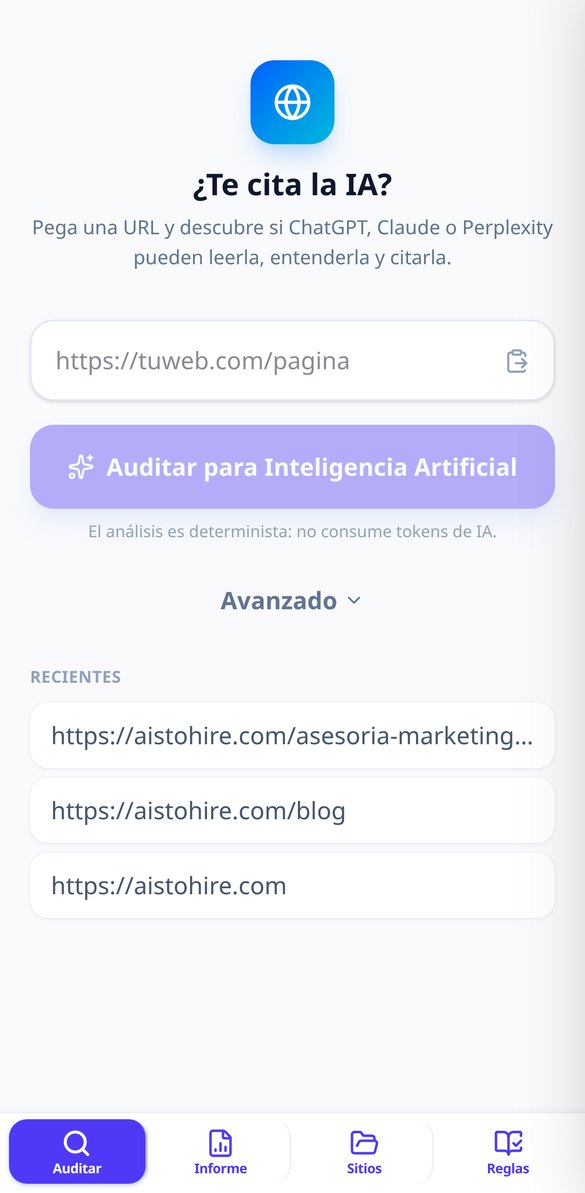
For anyone with a website who sees generated answers take the click: paste a URL and Aeopro tells you whether the bots that cite sources can read your page, what's stopping them, and what to change today — with the fix already written.
What if AI is already answering your customers without mentioning you?
More and more searches end in a generated answer that cites three or four sources. If your robots.txt blocks the bots that cite, if your text only appears after JavaScript runs, or if you don't have structured data, you're not in that list: it's not that you drop in ranking, it's that you don't exist. Aeopro runs your URL through 99 checks, gives you an AEO score and an SEO score with a breakdown of how they're calculated, and for each issue shows you the exact snippet of your HTML causing it and what to do about it.
Audit your website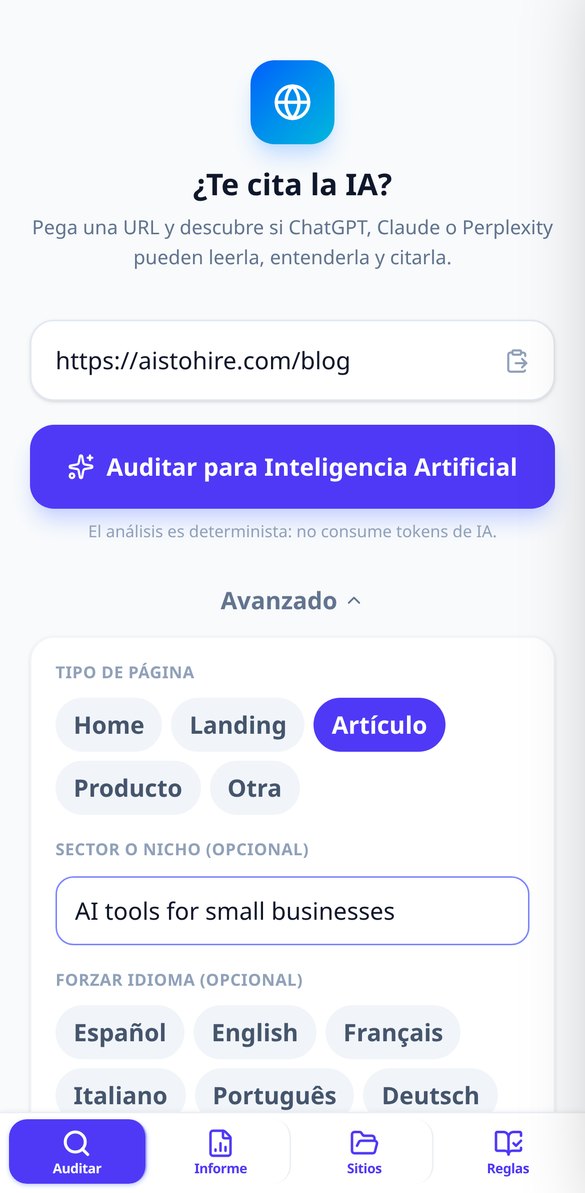
Discover every feature in detail

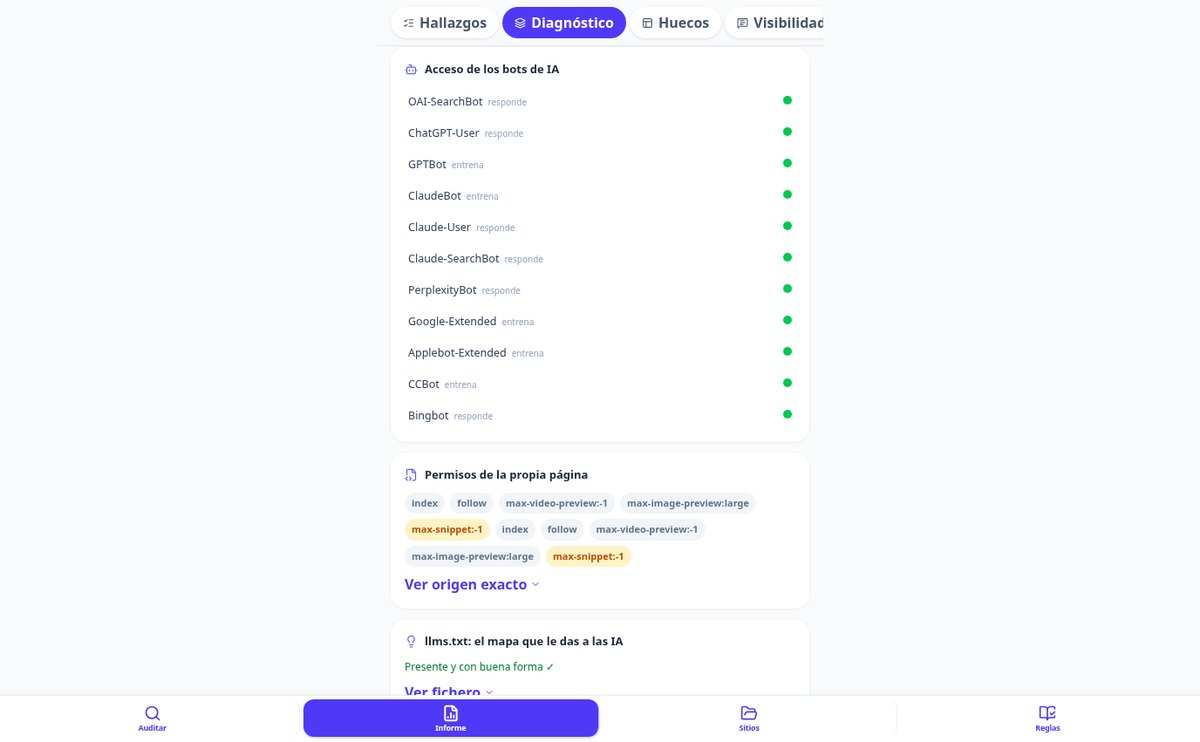
Check robots.txt for AI bots: Are you blocking GPTBot or ChatGPT?
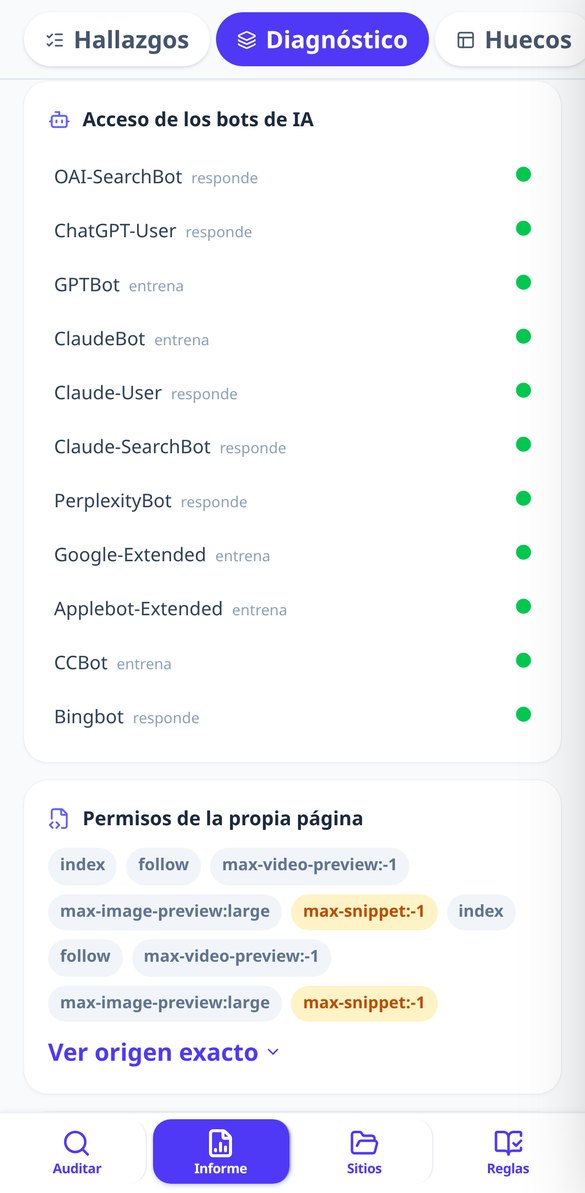
Analyze your robots.txt against 11 AI bots (GPTBot, OAI-SearchBot, ClaudeBot, PerplexityBot...). See which bots you block, the exact line causing it, and the patch ready to copy.
View feature
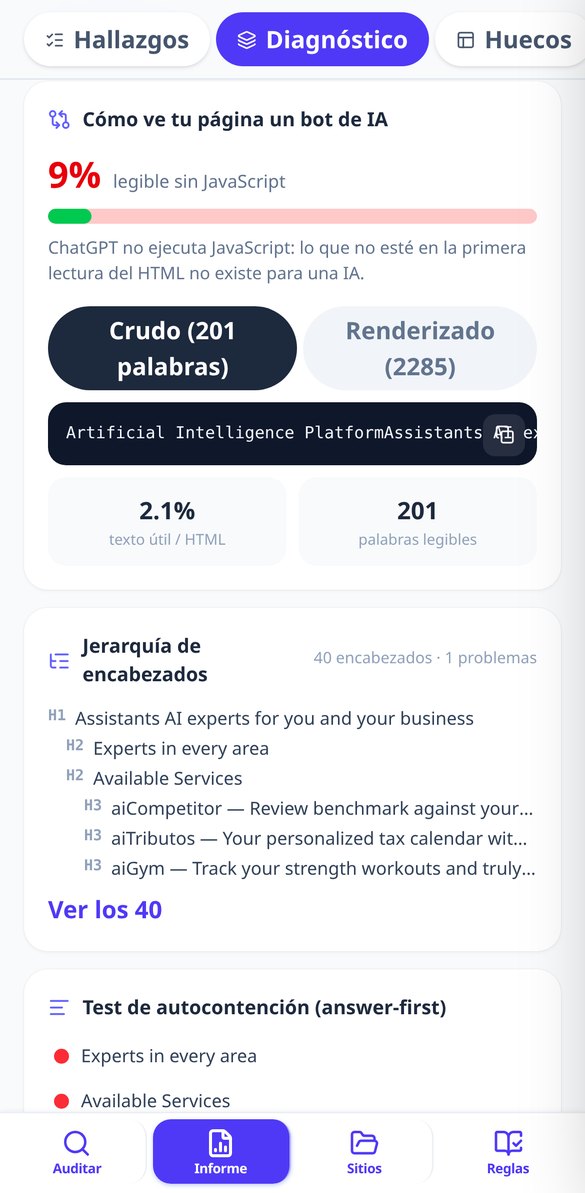
Answer-first test (BLUF): Is your first paragraph citable by AI?
Check section by section if the first paragraph after each H2 is self-contained. Deterministic traffic-light status without using AI: dangling anaphoras, fillers, length by language, and heading term.
View feature
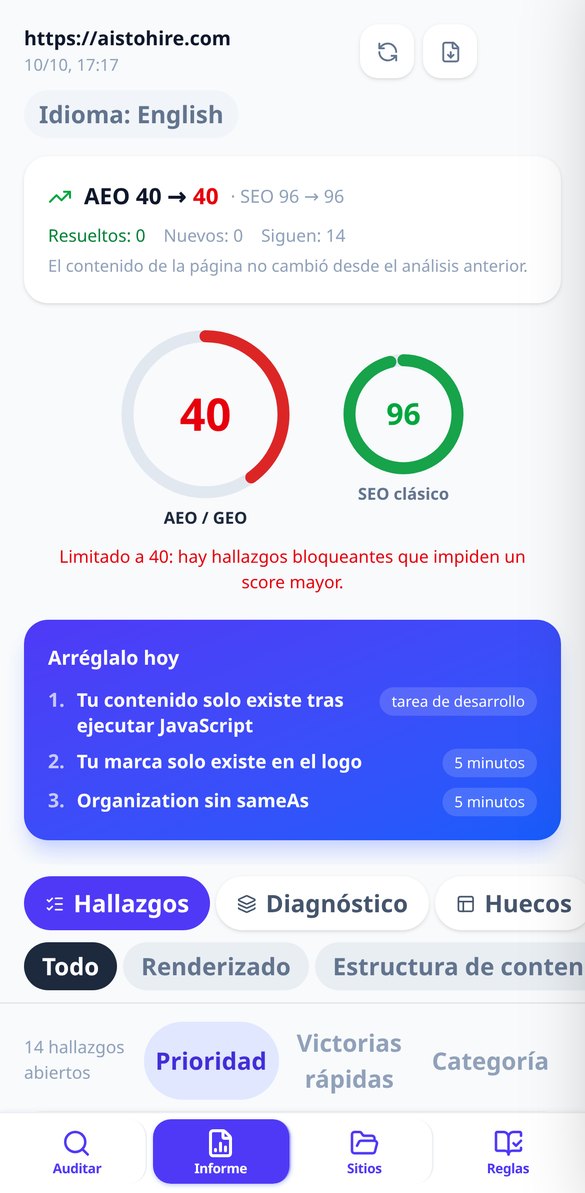
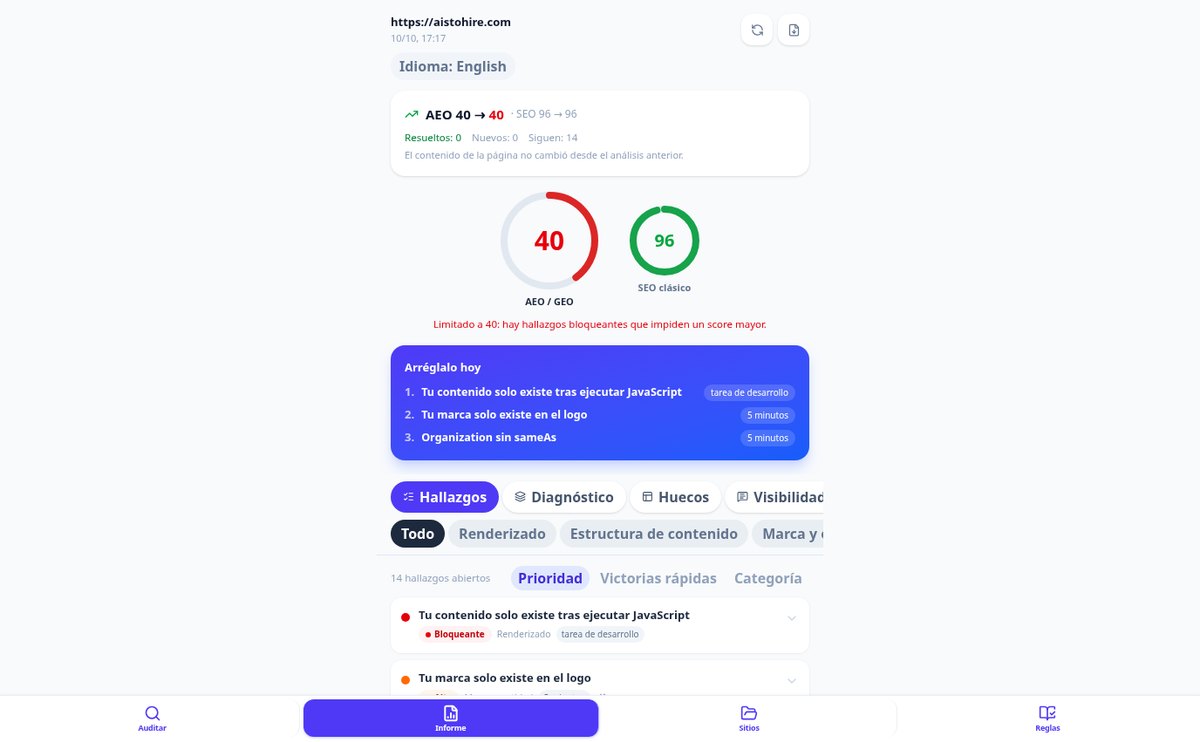
AEO and SEO Score: how it is calculated and where each point comes from
Two separate scores, AEO and SEO, with the weights of the 12 published categories, points by severity visible, and a cap of 40 when there is a blocking finding.
View featureFrom diagnosis to code, on the same screen
99 deterministic checks on what truly decides whether an AI engine reads, understands, and cites you. The report doesn't consume tokens.

Can the bots that cite read you?
Aeopro cross-references your robots.txt with 11 AI bots and separates training bots — blocking them is a legitimate decision — from answer bots: OAI-SearchBot, ChatGPT-User, Claude-User, Claude-SearchBot, PerplexityBot, and Bingbot. It also probes your site with a bot user-agent to catch 403s, WAF walls, and noindex or nosnippet directives that self-limit you, and it reviews your llms.txt and sitemap.

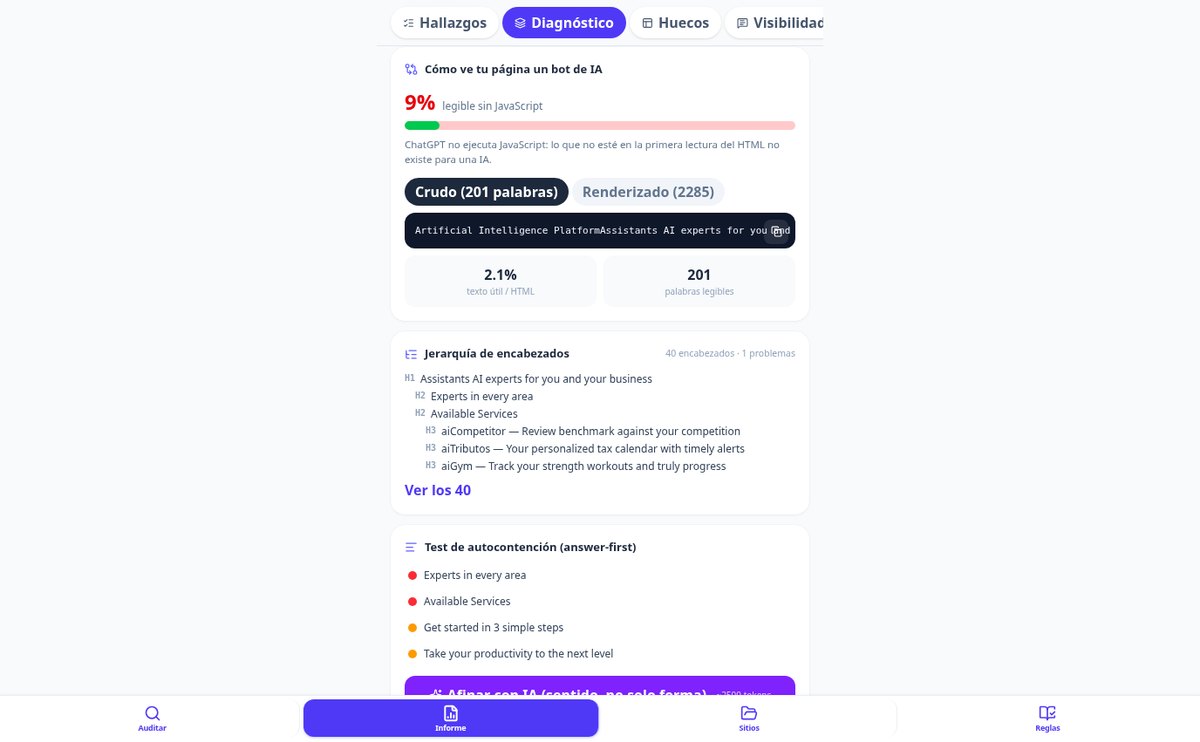
What a bot reads without running JavaScript
Your page is downloaded twice: the raw HTML, without JavaScript, and the rendered DOM. Aeopro compares the two and tells you what percentage of your content is available without hydration, with both texts side by side and the list of missing blocks. If your site is a single-page application, that's where you see why it's almost empty to an AI.

The fix written out, not just the diagnosis
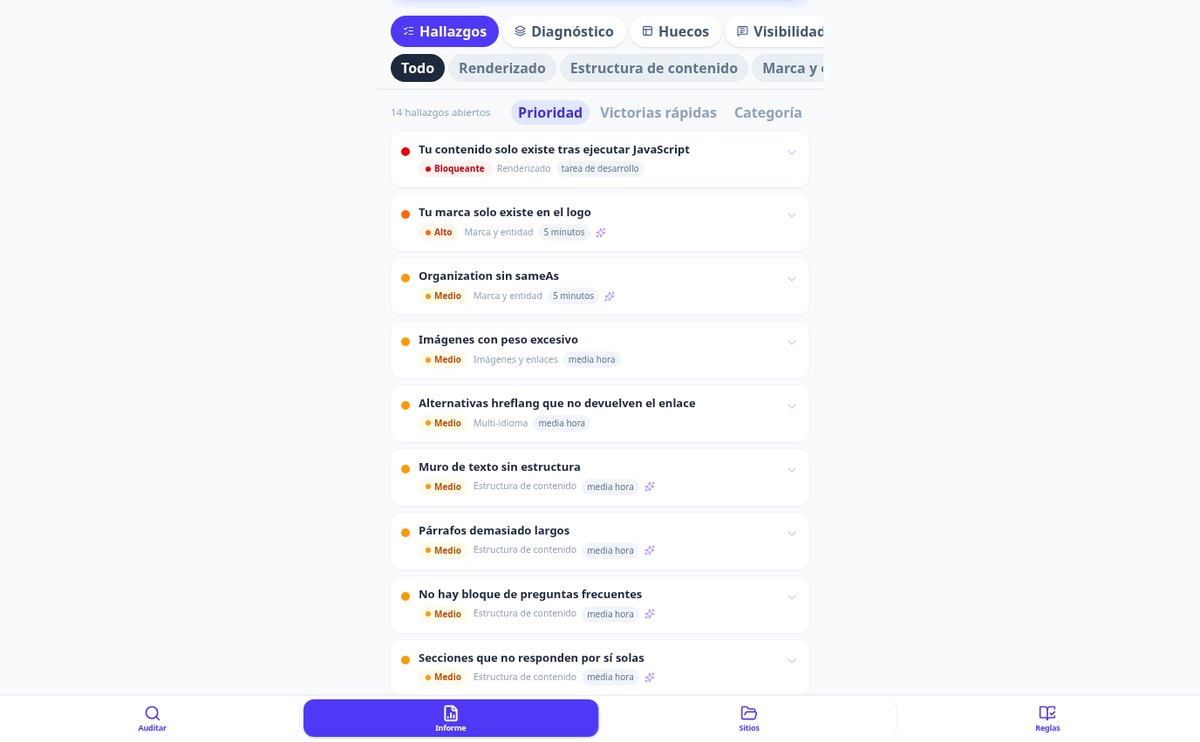
Each finding expands to show its evidence and recommendation, and 44 of the 99 rules also include a generatable patch: the complete JSON-LD with the fields engines actually use, the TL;DR and FAQ written for your content, the section rewritten in answer-first format, the llms.txt, and the meta tags. The robots.txt one is assembled without AI, with a toggle per bot and the final file regenerating live.
Your report in three steps
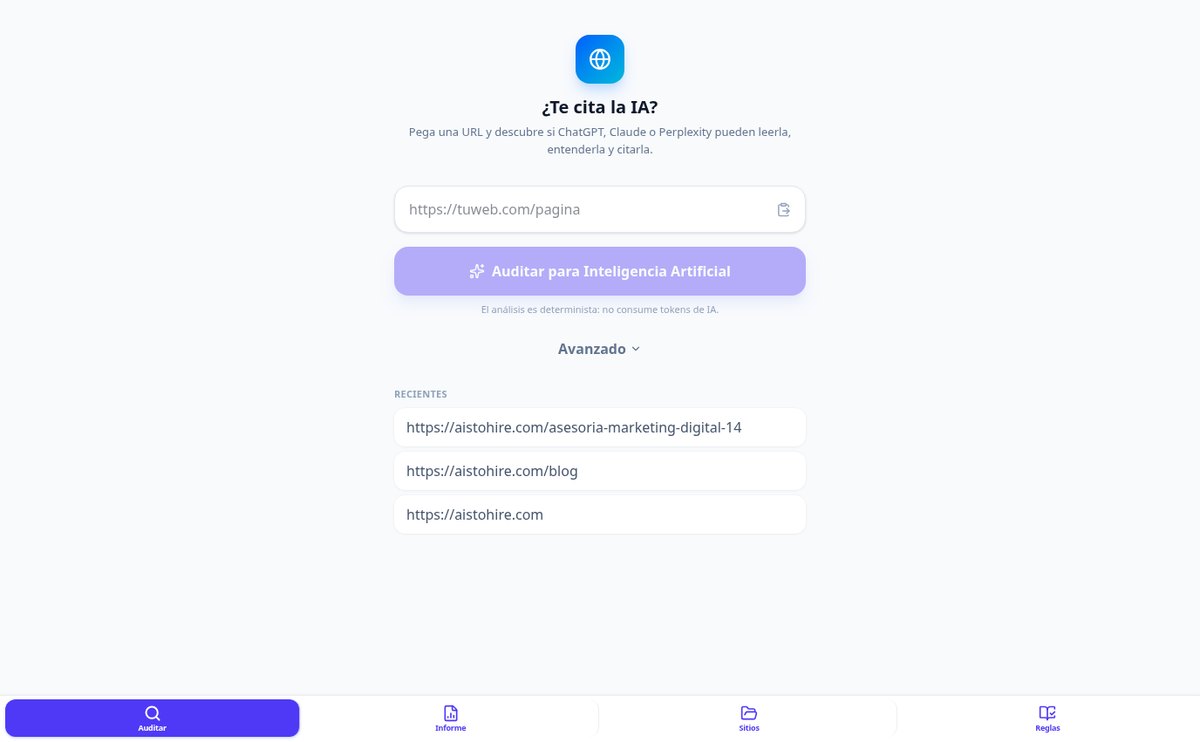
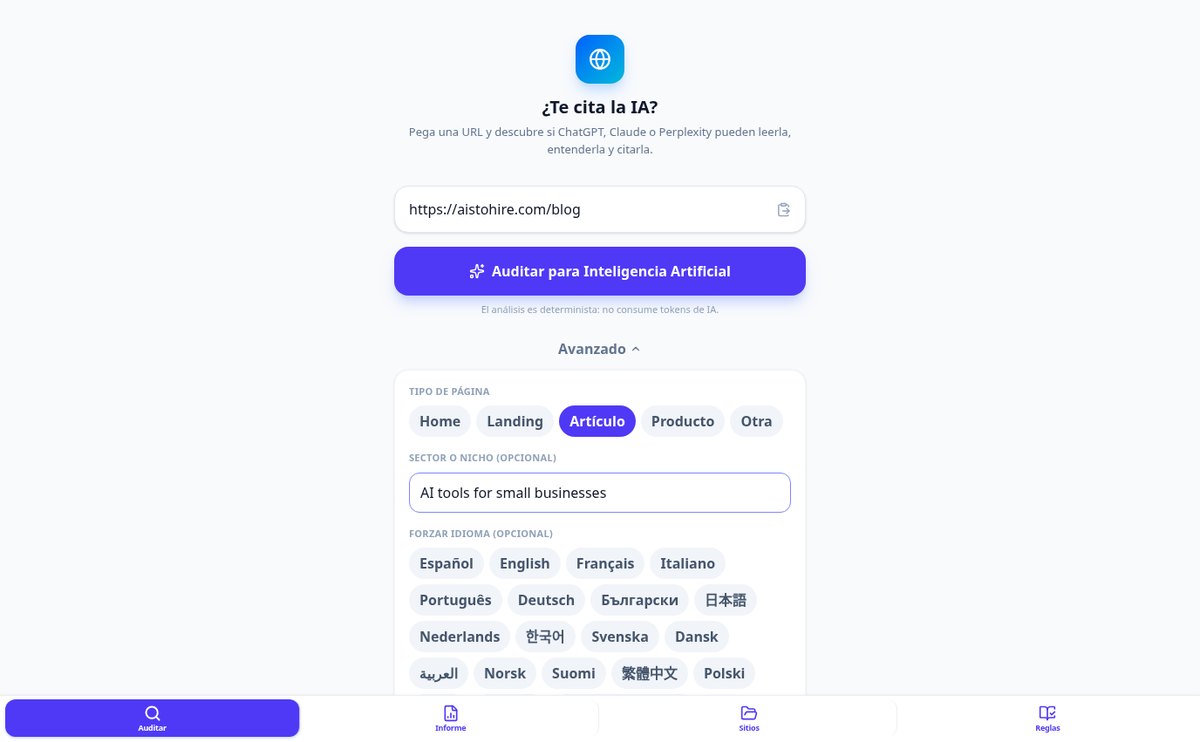
Paste the URL
The page you want to audit: your homepage, a landing page, an article, or a product page. If you want to refine it, add the page type and industry.
Read your report
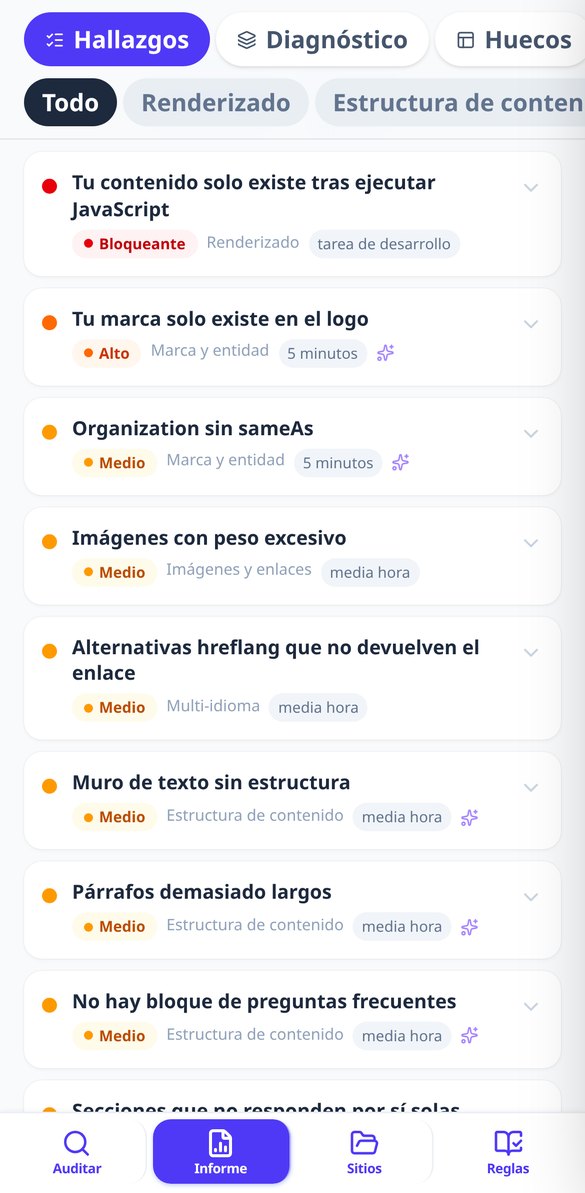
In under a minute you have the AEO and SEO scores, the score for each category with its published weight, and findings sorted by impact and effort, with 'fix it today' at the very top.
Copy the fix
You open the finding, generate the patch, and paste it into your site. Once it's deployed, you re-audit and the report shows you the before and after.

Who is it for?
Built for these profiles
Frequently Asked Questions
Latest blog articles
Guides and news to get more out of it

93% of searches in AI Mode generate no clicks: what it means for your website in 2026
93% of searches in AI Mode end without a click. 2026 data from AI Overviews, CTR decline, and how to become the source that AI cites.

Why ChatGPT Doesn't Cite Your Website: The AEO Audit That Almost Nobody Does Right
The citing bots are not the ones training models. Check if ChatGPT, Claude, and Perplexity can read your website and what to change, with data and sources.
Find out today if AI can cite you
Paste a URL and get your AEO report in under a minute.